

Most advice about cutting grocery waste asks you to change what’s in your cart. Eat less meat. Buy the weird vegetables. Give up your favorite snack because it comes in a foil pouch. That’s a lot to ask on a Tuesday night when you just want dinner sorted, and I think it’s why so much of this advice never sticks. 🛒
Here’s a habit that skips all of that. You keep buying exactly what you already buy: the same apples, the same rice, the same cheddar. You just stop letting the store choose the packaging for you. One simple question, asked at every aisle, at every trip: is there a version of this without the wrapper? That’s the whole trick, and it works better than almost anything else on the zero-waste checklist. 🌍
The habit itself: buy naked, not bagged
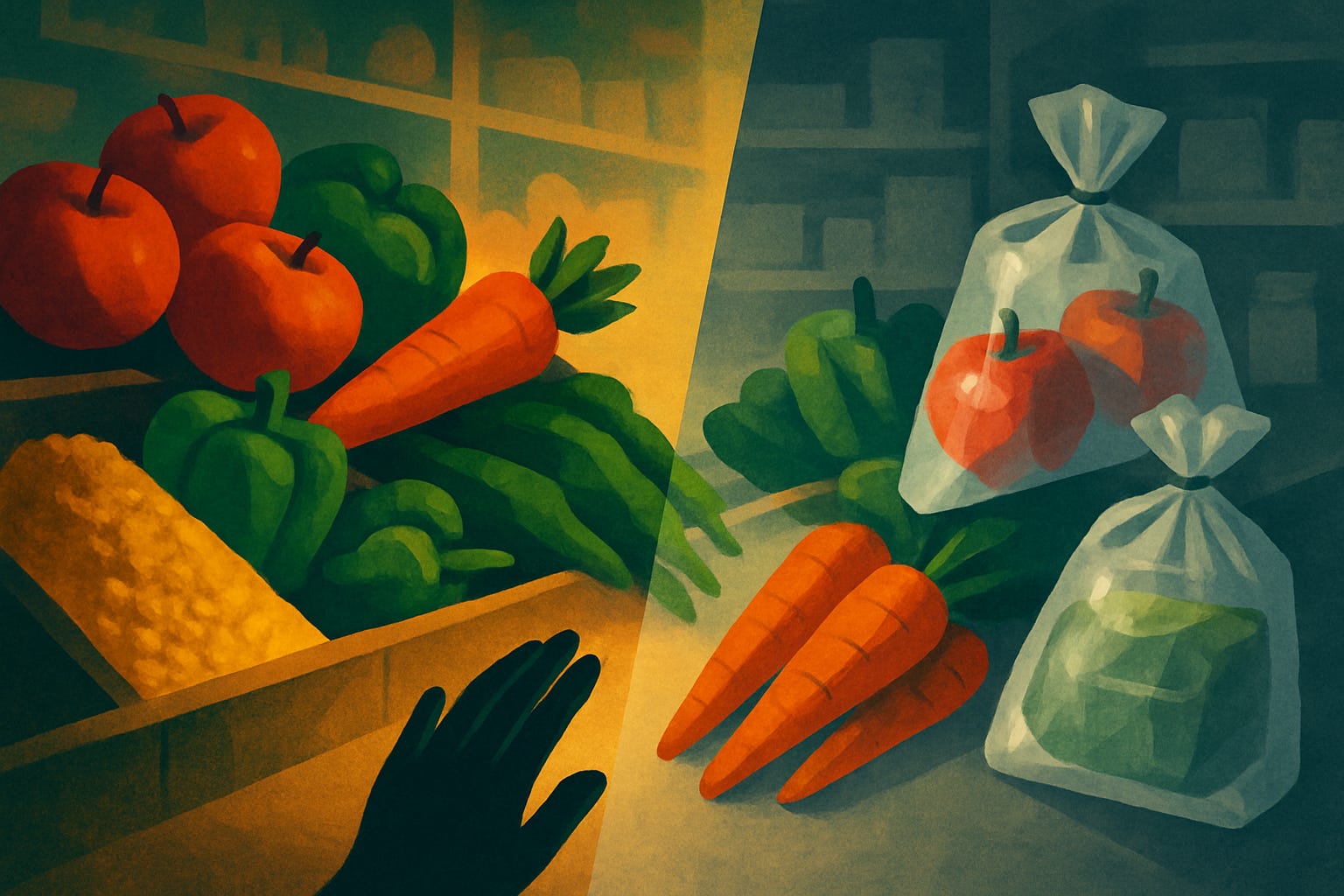
Grocery stores sell the exact same product in two forms constantly, and most shoppers never notice. Apples sit loose in a bin two feet from a plastic clamshell of the identical apples. Rice sits in a bulk dispenser near a wall of the same rice in a box. Cheddar waits at the deli counter, cut to your exact order, right next to a pre-wrapped block of the same cheddar. Choosing the unpackaged version costs you nothing extra in taste, nutrition, or effort, and it quietly removes a piece of plastic from your trip every single time. 🧀 It’s the smallest possible decision with an outsized payoff. ✅
The scale here is bigger than people expect. Packaging accounts for roughly 40% of all plastic waste generated globally, and in the United States specifically, packaging makes up about 37% of total plastic waste, according to data compiled by Our World in Data from the OECD’s Global Plastics Outlook. Groceries are a huge chunk of that. You’re not fixing global plastic policy with one shopping trip, obviously, but you’re removing yourself from the biggest single category driving the problem, one bin and one bulk dispenser at a time. 📦
A few reasons this particular habit beats most others:
It requires no new recipes or ingredients
It doesn’t cost more, and often costs less per ounce
It works at almost any regular supermarket, not just specialty stores
It builds automatically into a trip you’re already taking
It doesn’t demand you carry a special kit everywhere you go
Where this habit hides in plain sight
Once you start looking, the naked version of things shows up in more places than you’d guess. 👀 Here’s where to check first on your next trip: 🧺
Produce: loose fruits and vegetables instead of the pre-bagged three-pound sacks, which almost always cost more per pound anyway
Bulk bins: rice, oats, flour, nuts, dried beans, and pasta, scooped into your own bag or a store-provided paper one
Deli and butcher counters: cheese, meat, and fish cut to order and wrapped in paper instead of the pre-sealed plastic tray version
Bakery: fresh loaves from the in-store bakery instead of the same bread pre-bagged on the shelf
Bar soap and refill stations: a growing number of stores now offer refillable dispensers for things like laundry detergent and dish soap
I used to grab the bagged apples out of habit, mostly because they were closer to the entrance. 😅 Once I started walking the extra ten feet to the loose bin, I realized I was also picking better apples, since I could actually inspect each one instead of trusting whatever got sealed in with three bruised ones.
Why this beats every other zero-waste grocery tip
Most sustainability advice fails for a boring reason: it asks for a decision every single time, and decisions run out of steam by Thursday. This habit is different because it becomes automatic fast. You’re not adding a step to your routine, you’re just redirecting a choice you were already making anyway. 🔁
There’s also a money angle that makes it stick even harder. A recent national study by the food-waste nonprofit ReFED, conducted with YouGov, found that rising grocery prices are pushing more households toward smaller, smarter buying habits, including buying only what they need instead of oversized pre-packaged bundles. 💰 Buying loose produce and bulk staples plays directly into that shift, since you only take the amount you’ll actually use instead of whatever quantity the packaging decided for you.
What makes this specific habit outperform most zero-waste advice:
It doesn’t require remembering a new rule at checkout, just a glance at the aisle
It saves money as often as it costs the same, rarely more
It scales with however busy your week is, no extra planning required
It works whether you’re shopping for one person or a full household
It compounds automatically, since every trip repeats the same small choice
If you want the deeper habit-formation side of grocery shopping, we’ve written about six habits that cut food waste in half without overhauling your routine, and about everyday swaps designed to survive past the first week. 🌍
Quick gut check: think back to your last three grocery trips. How many times did you grab the bagged version of something that was sitting loose ten feet away, just because it was closer or faster?
The limits of this trick, and what to do about them
I want to be honest here, because pretending this fixes everything would be dishonest. Not every product has a naked equivalent. Yogurt, most dairy, frozen food, and anything requiring refrigeration or a hard seal for safety reasons is going to stay packaged no matter how committed you are. ⚠️ Some stores also don’t have bulk bins or a real deli counter at all, especially smaller chains and discount grocers. 🏪
A few honest caveats worth knowing before you build this habit:
Bulk bin prices vary by store, and occasionally the packaged version is genuinely cheaper per unit, so it’s worth a quick price check
Not all deli counters will use paper instead of plastic film unless you specifically ask
Some stores require you to weigh your own bag first, empty, before filling it, so it’s worth learning your store’s system once
Loose produce still needs proper storage at home or it spoils faster than the bagged version, which was partly designed to extend shelf life
None of that erases the value of the habit. It just means you’re aiming for a meaningfully lower packaging footprint, not a perfect one, and that’s a far more sustainable goal in the literal sense of the word. 🌱
How to actually start this week
You don’t need to overhaul your next shopping trip. Pick one department and try it once. 🚀
Walk past the bagged fruit and grab the loose version instead, just this once
Ask the deli counter to wrap your cheese in paper instead of taking the pre-packed block
Locate your store’s bulk bins, if it has them, and buy one staple item from there instead of the boxed version
Bring one reusable bag or container from home, even if it’s just a repurposed produce bag from last week
Notice, at checkout, how much less plastic ended up in your cart than usual
For the bigger picture on how small purchasing decisions add up, this breakdown of what impulse buys actually cost the planet is a good next read once this habit feels automatic. 💡
Next time you’re at the store, pick one item you always buy pre-packaged and find its naked version instead. 🛍️ What’s the first thing you’re going to switch?