

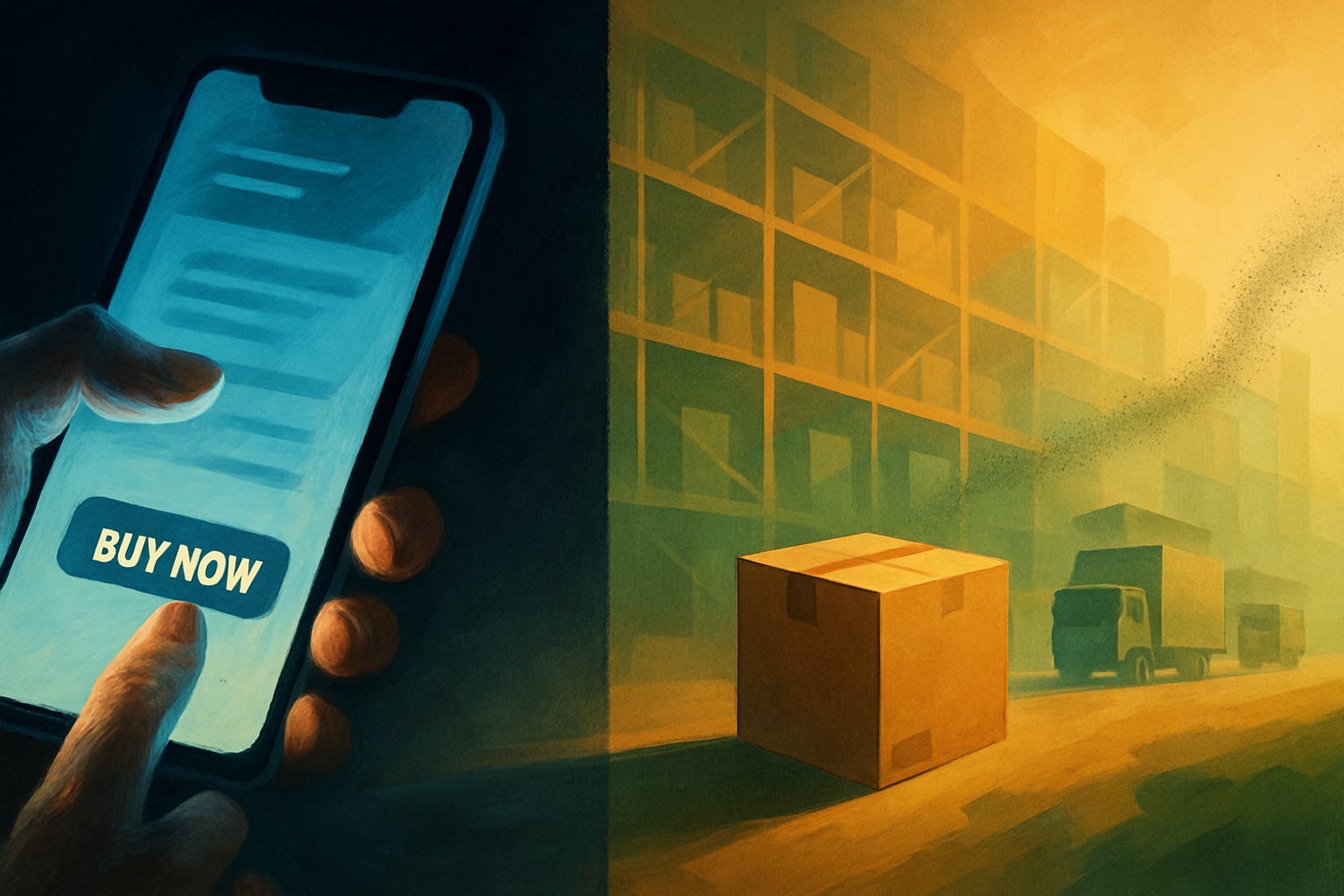
You know the feeling. You’re scrolling in bed, a dress or a gadget pops up, and thirty seconds later it’s in your cart with free shipping and a countdown timer telling you the deal ends in four hours. It feels harmless. It’s one item. But zoom out, and the picture changes fast: the median spend among shoppers who make impulse purchases over $250 is $497, according to Capital One Shopping’s 2026 research, with impulse shoppers who make purchases over $250 spending a median of $497. Call it the €500 wake-up call. 💳 One purchase rarely feels like a crisis. A year of them, multiplied across millions of shoppers, absolutely is.
The real math behind “just one purchase”
Here’s the number that should make you pause before your next checkout: the average American now spends roughly $3,650 a year on stuff they never planned to buy, with the average person’s impulse spending habit worth more than many people’s retirement savings. And this isn’t a fringe habit. Around 40% of all online shopping globally is now driven by impulse buying, which means the “quick add to cart” isn’t the exception on e-commerce sites, it’s basically the business model. 🛒
What makes this an environmental story and not just a budgeting one is what happens after checkout:
Shipping emissions from single-item, rushed orders instead of consolidated ones
Packaging waste, since impulse buys rarely arrive bundled efficiently
Returns, which spike dramatically for anything bought on a whim
Landfill risk, since a huge share of returned goods never get resold
Manufacturing demand, because every “just because” purchase is a signal to make more of that product
Individually these look small. Stacked across hundreds of millions of impulse purchases a year, they add up to something closer to an industrial process than a personal choice.
Clothes are the worst offender, and it’s not close
Ask people what they impulse buy most and the answer is almost always the same: clothing. It’s the single most common impulse purchase category, ahead of groceries, electronics, and home goods. That matters because fast fashion is already one of the dirtier corners of the consumer economy. The industry produces an estimated 92 million tons of textile waste every year and accounts for roughly 10% of global carbon emissions 👕🌍, more than international flights and maritime shipping combined, according to widely cited industry figures.
An impulse-bought t-shirt worn twice before it’s forgotten in a drawer doesn’t just waste your money. It represents water, dye, cotton, and fuel that got burned through for almost nothing. If you’re rebuilding a wardrobe with intention instead of impulse, GreenInch’s guide to budget-friendly green wardrobe habits is a good place to start, since sustainable clothing doesn’t have to mean expensive clothing. And if you want to spot when a brand is pretending to be sustainable to catch your impulse-buying eye, this breakdown of greenwashing tricks is worth a read before your next “eco-friendly” flash sale email.
Quick gut check for you 🤔: think about the last thing you impulse bought. Do you still use it, or is it sitting somewhere unused right now?
Returns are the part nobody accounts for
The part of impulse buying that quietly does the most damage is what happens when you send it back. E-commerce returns generate an estimated 16 million metric tons of carbon emissions annually, and about 25% of returned items end up in a landfill instead of getting resold, because processing and reselling a returned item often costs retailers more than just tossing it, with e-commerce returns alone generating 16 million metric tons of carbon emissions annually and 25% of returned items ending up in landfills rather than being resold. 📦
Researchers looking at fast fashion specifically found something particularly telling: shoppers who buy on impulse are significantly less likely to bother returning items at all once return fees or friction get added, which means the “buy three sizes, keep one” habit isn’t actually solved by charging for returns, since impulse buying generates almost 40% of all online spending globally with clothing the most frequently purchased category, and impulse buyers faced with return fees are significantly more likely to avoid the return process entirely. In practice that means more unworn clothes sitting in closets rather than in landfills, which is a little better, but it’s not exactly a sustainability win either. It’s just waste that moved location.
What actually breaks the cycle
The good news, if there is one, is that the fix isn’t complicated. It’s just unglamorous. Research on impulse-buying interventions consistently points to the same few tactics working best:
Add a waiting period. People who wait 72 hours before buying skip roughly 73% of the purchases they thought they wanted, since people who implement a 72-hour waiting period skip 73% of intended purchases. ⏱️
Delete saved payment info. Removing stored cards cuts impulse purchases by up to 35%.
Unsubscribe from the emails. Promotional inbox clutter drives a meaningful share of “trigger” purchases; cutting it drops impulse buys by around 40%.
Track what you skip. Logging money you didn’t spend reinforces the habit better than logging what you did.
None of this requires austerity. It just requires friction, the same friction retailers spend millions engineering out of the checkout process. If you want to shop online without contributing to this cycle in the first place, GreenInch’s guide to smarter online shopping walks through how to buy less impulsively without giving up convenience entirely.
So here’s the actual question worth sitting with: the next time something lands in your cart at 11 p.m., can you give it 72 hours before you decide it’s worth the water, the shipping, and the landfill odds? 🌱