

You just spent $140 at the grocery store, and by next Sunday roughly a third of it is probably headed for the trash. That’s not a guess or a scare tactic. The USDA puts the average American family of four at $1,500 a year in food they buy and never eat, and a 2026 report from the food-waste research group ReFED puts the number even higher once you count meals eaten out too, at $762 per person annually. I used to think I was pretty decent about this. Then I actually counted the bags of forgotten spinach and the mystery containers stacked in my freezer, and I was, frankly, humbled.
The good news is that almost none of this waste comes down to bad luck or bad produce. It comes down to habits, the kind you build once and then barely think about again. Below are six of them, the ones that actually move the needle, drawn from what the USDA, the FDA, and food-waste researchers have found works in real kitchens. None require a fancy gadget or a full pantry overhaul. Ready to stop feeding your trash can instead of your family?
Take inventory before you write the list
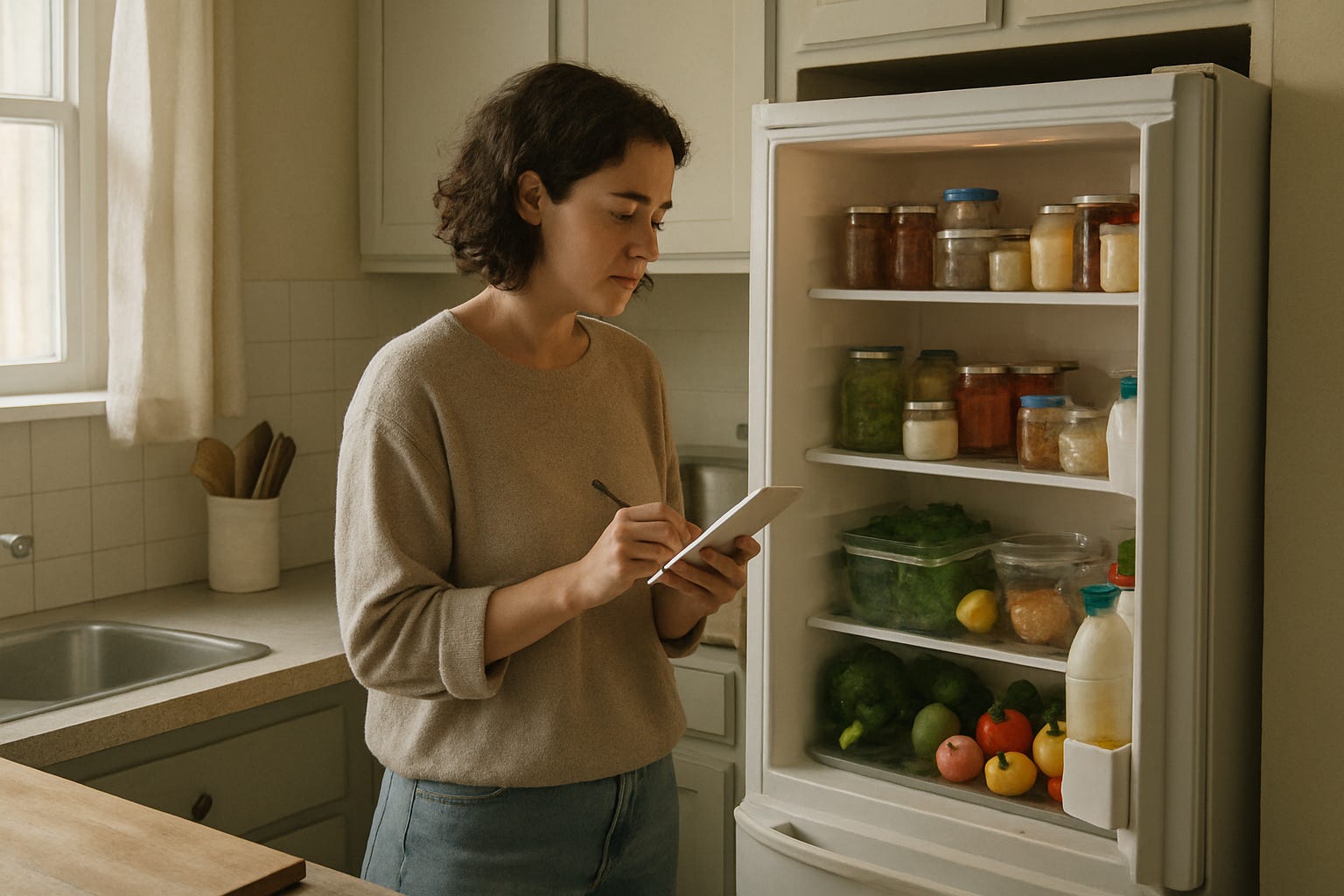
Most food waste starts before you ever leave the house. You open the fridge, forget what’s already in there, and buy a second bag of spinach to keep the lonely first one company. This is the single most preventable step in the entire process, and it’s also the one almost everybody skips. 🧊
Before you write a grocery list, spend 60 seconds scanning your fridge, freezer, and pantry. It costs nothing and takes less time than scrolling your phone in the checkout line. The USDA’s guidance on food loss and waste treats this kind of pre-shopping scan as one of the most effective tools a household has, mostly because it’s so easy to build into a routine you already run every week. 🥬
A few things worth noting during that scan:
What’s close to its best-by date and needs to get eaten this week
What you already have two or three of (be honest about the ketchup situation)
What’s buried in the back of the freezer and needs an actual plan
Produce that’s starting to look sad but is still perfectly fine to cook
Staples like rice, pasta, or canned beans you’re genuinely running low on
Do this consistently and something shifts fast: you buy less, and what you do buy actually gets used. 🛒 Have you ever done a real fridge audit, or do you just wing it every week?
Build the list around your week, not your cravings
A list built on vibes is how you end up with a rotisserie chicken, a bag of kale, and no plan connecting the two. The fix is a little boring, but it works: match your list to meals you’ll actually cook, based on the week you actually have, not the one you wish you had. 📝
Think through which nights you’ll cook and which nights you won’t, then build the list backward from there. The FDA’s tips for reducing food waste specifically calls out meal planning before shopping as one of the top ways households cut waste, right alongside sticking to the list once you’re actually standing in the store.
A few rules that keep this from becoming a chore:
Plan 4 to 5 dinners, not seven. Life happens, and leftovers fill the gaps
Buy proteins and produce with a use in mind, not just because they looked good
Don’t skip “ugly” produce. It’s usually cheaper and tastes exactly the same
Watch bulk deals on anything with a short shelf life. A 5-pound bag of clementines is only a bargain if you eat all 5 pounds
Keep a running “use it up” note on your phone for ingredients you already own
This is also where an app can genuinely help if you’re the type who forgets what’s hiding in the crisper drawer by Wednesday. GreenInch has rounded up the food-waste apps and gadgets that actually make a dent, and a couple of them are built almost entirely around this exact problem: matching what you buy to what you already own.
Practice FIFO the second groceries hit the counter
Grocery stores and restaurant kitchens run on a rule called FIFO, first in, first out, and it’s the cheapest habit on this whole list. New groceries go to the back. Older items move to the front, at eye level, where you’ll actually see them. ⏱️
It sounds almost too simple to matter, but it works because of a basic truth about how people shop and cook: if you can’t see it, you won’t eat it. Half-empty jars and forgotten bags shoved behind a fresh delivery are exactly how good food quietly turns into landfill methane, a gas that’s roughly 80 times more potent than carbon dioxide over a 20-year span, according to EPA estimates on landfill emissions. 🌍
Setting up FIFO takes about 90 extra seconds per shopping trip:
Move older dairy, eggs, and condiments to the front before restocking
Push new produce underneath whatever’s already in the crisper drawer
Label anything you freeze with the date, since “mystery meat, sometime last winter” isn’t a food group
Keep a small “eat me first” bin at eye level for anything nearing its limit
Do a quick check before each shopping trip so nothing gets a second forgotten life
The habit costs nothing, and it’s the difference between a fridge that quietly polices itself and one where good food dies alone in the back corner. That’s a fate no vegetable deserves.
Store produce like it actually matters
Not all produce wants to live in the same place, and getting this wrong is one of the fastest ways to turn a $6 bag of berries into compost. 🍓 A few minutes of sorting when you unpack groceries can double or triple how long produce actually lasts.
Some quick, research-backed rules worth taping inside a cabinet door:
Berries: skip washing until you’re ready to eat them, and store in a container lined with a paper towel to soak up moisture
Leafy greens: wrap in a slightly damp paper towel, then seal in a bag, rather than leaving them loose in the crisper
Herbs: treat like cut flowers, trimmed stems standing in a glass of water, except basil, which prefers the counter
Avocados and bananas: leave at room temperature until ripe, then move to the fridge to pause the clock
Onions and potatoes: keep in a cool, dark spot, away from each other, since one speeds up the other’s sprouting
None of this requires special containers or a trip to a container store, though a few good airtight ones certainly help. 🥕 It just requires knowing that a tomato in the fridge and a tomato on the counter are living two very different lives.
Learn what the date labels actually mean
Here’s a fact that should make you a little annoyed: confusion over date labels causes an estimated 20 percent of consumer food waste in the US, according to the FDA. That’s a fifth of everything wasted, tossed not because it went bad, but because a label got misread. 🏷️
“Best by,” “sell by,” and “use by” are not interchangeable, and outside of infant formula, none of them are federally required to mean what you probably think they mean. “Best by” is about peak quality, not safety. Milk a day past its date is very likely fine. Use your nose and your eyes before you use the trash can.
A quick reality check worth keeping in mind:
“Best by” and “sell by” dates are about quality, not spoilage
“Use by” dates come closest to an actual safety cutoff, and matter more for things like deli meat and soft cheese
Frozen food doesn’t really “expire,” it just slowly loses quality over months
Canned goods are typically safe well past their printed date if the can isn’t damaged
When in doubt, smell, look, and taste a small amount before you toss it automatically
Have you ever thrown out something perfectly good because a date looked scary? 🙋 You’re far from alone, and it’s a genuinely easy habit to unlearn.
Give scraps and leftovers one more job before the trash
The last habit is the one people skip because it feels like extra work, and it’s usually the most satisfying once it’s routine. Almost nothing needs to go straight in the bin. ♻️
Vegetable peels, onion ends, and herb stems make a genuinely good stock with almost zero effort, just a bag in the freezer that fills up over a couple of weeks. Stale bread becomes croutons or breadcrumbs. Wilting greens go into a smoothie or a soup instead of the compost bin, which, worth remembering, is still a far better outcome than a landfill, even if it’s not quite as good as eating the food in the first place.
A few easy “second life” moves:
Keep a freezer scrap bag for vegetable trimmings, then simmer into stock once it fills up
Blend overripe fruit into smoothies, or bake it into muffins before it turns
Turn stale bread into croutons, breadcrumbs, or a quick panzanella
Compost what genuinely can’t be used. The EPA’s home composting guide is a solid starting point if you’re new to it
If your fridge or freezer struggles to hold temperature, it might be quietly wasting more than you think. GreenInch’s 5-minute home energy audit walks through exactly this kind of check
None of these six habits require a special trip to the store or a full personality overhaul. They’re small, slightly boring, and they add up fast: a 2026 ReFED food waste report found that pairing better meal planning with basic storage habits like these is a big reason households are finally starting to waste less, even as grocery prices stay stubbornly high. 📉
So pick one habit from this list, just one, and try it for the next two weeks. Which one are you starting with?