

Every EV showroom has a glossy pitch about home charging. Plug in at night, wake up to a full battery, never see a gas station again. That is mostly true, and it is also missing about five footnotes. 😅
Some of those footnotes save you money. Others cost you a few thousand dollars if you find out too late. Here is what I think deserves a place on the brochure, with US figures throughout, since rates and rules differ a lot by country. 🚗
You might not need a Level 2 charger
Most people assume a Level 2 charger is mandatory, and the install quotes can scare a buyer straight into a decision. Slow down. Your car probably came with a Level 1 cord that plugs into a regular 120-volt outlet, and it adds roughly 3 to 5 miles of range per hour. That sounds pitiful until you do the overnight math. 🌙
According to this Level 1 versus Level 2 breakdown, which cites the Department of Energy, eight hours on a wall outlet replenishes about 40 miles of range for a mid-size EV. A Level 2 setup adds around 25 to 40 miles per hour instead. So the real question is how many miles you drive on a normal day. ⚡
Level 1 usually works for short commutes, plug-in hybrids, and drivers who cover under 30 to 40 miles a day.
Level 2 makes sense for long commutes, big battery packs, two-EV households, and odd schedules with a short charging window.
Cold weather eats into a slow charger’s trickle, so add a buffer if winters are harsh. ❄️
Cost per kWh stays the same at either level, because your utility charges for the electricity, not the speed.
Try Level 1 for a couple of weeks before you spend anything. If you never dip below your comfort zone, you just saved yourself real money. 💰
The install price depends on your panel, not the charger
Here is the part that surprises people. The charger itself is a commodity. Qmerit’s 2026 installation data puts a home Level 2 install between $749 and $2,500, with an average of $1,700, according to Qmerit’s installation cost guide. Its own director of program strategy says the two big factors are your electrical panel capacity and the distance from the panel to the charger. 🔧
That panel question is where a $1,000 job turns into a $5,000 one. Panel upgrades run from roughly $800 to $4,500 or more, per SimpleSwitch’s 2026 pricing guide. Before you accept that number, ask about alternatives. One installer guide says a load management device costing $300 to $500 can often replace a $1,500 to $3,000 panel upgrade. 🧠
Get 2 or 3 quotes. The same job can price out very differently between electricians.
Ask for a load calculation from a licensed electrician before anyone quotes an upgrade.
Compare hardwired and plug-in. A plug-in NEMA 14-50 outlet is portable, but the 2023 electrical code requires a GFCI breaker on it, which narrows the savings.
Note the distance. A charger 10 feet from the panel and one 100 feet away are different projects entirely. 📏
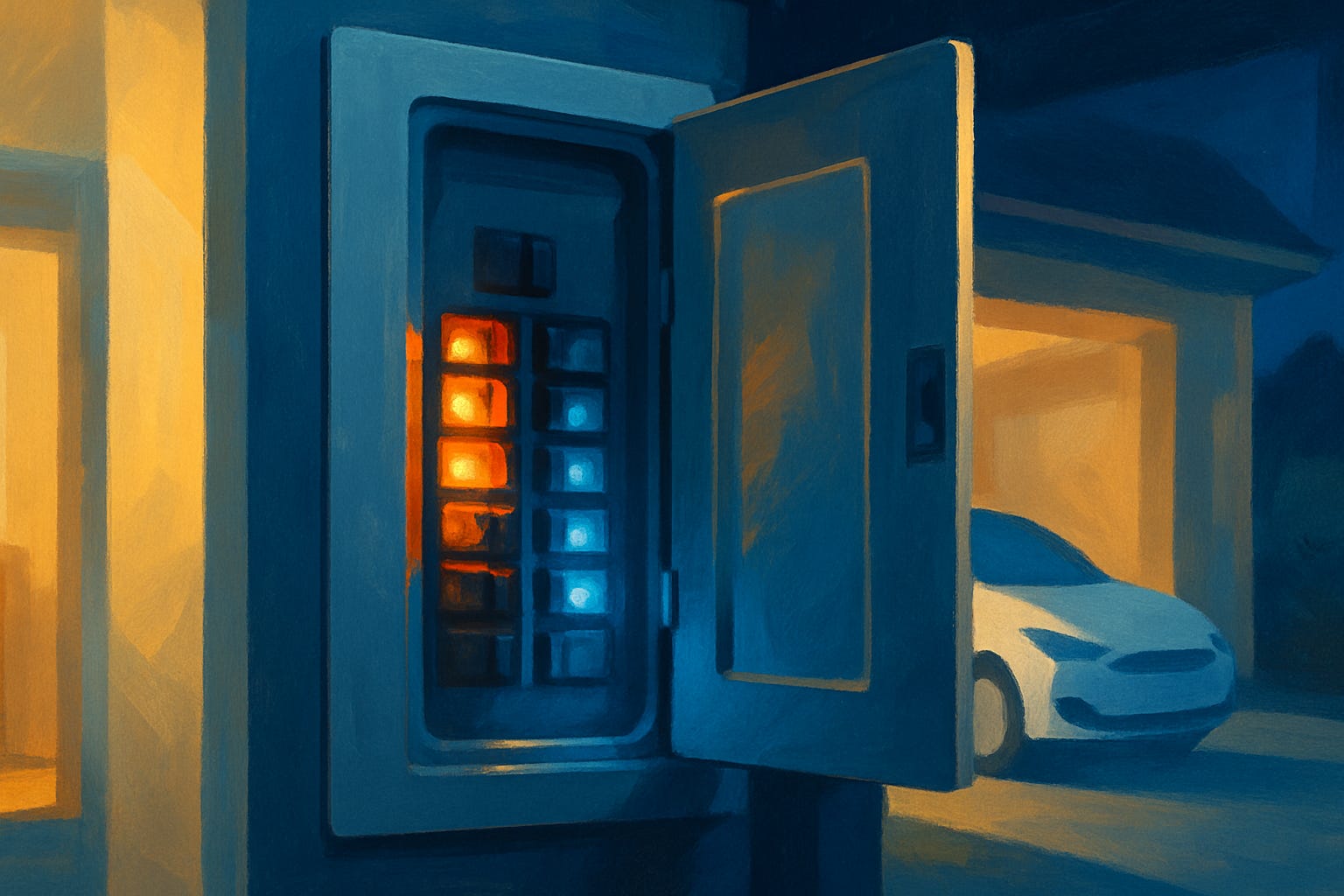
Have you looked inside your own panel yet? It takes two minutes, and it tells you which kind of quote to expect.
The federal tax credit is gone, but rebates are not
If you read an older guide that says “claim the 30% credit, up to $1,000,” ignore it. The federal home charger credit covered property placed in service through June 30, 2026, according to the IRS page on the credit. The One Big Beautiful Bill Act moved the deadline up from 2032, so a charger installed today gets $0 federally. 😬
The mood here is grim but not hopeless. Local incentives still exist, and they are easy to miss because nobody advertises them. 🔍
Utility rebates: one 2026 installer guide puts them at roughly $100 to $700, and another says some reach $1,000.
State programs: these change often, so check your state energy office before you buy.
Rate plan perks: some utilities pair rebates with a special EV rate, which matters more than it sounds (see the next section).
Timing: apply before you install, because many programs require pre-approval. ⏱️
Call your utility first. Ten minutes on the phone is worth more than an hour comparing charger brands.
The rate plan matters more than the charger
This is the biggest money lever, and it costs nothing to pull. Most utilities offer time-of-use (TOU) rates, which charge less at night when demand is low. Since your car sits in the driveway for hours anyway, it is the perfect customer for cheap overnight power. 🌙
The numbers can be dramatic. Qmerit’s TOU guide cites PECO in Pennsylvania at $0.32 per kWh during the 2 to 6 pm peak, but only $0.053 per kWh from midnight to 6 am. Meanwhile, ElectrifyCost’s 2026 guide says public DC fast charging averages about $0.42 per kWh, roughly 2 to 3 times the typical home rate. Your driveway wins. 🏠
There is a catch, and it is a real one. The same guide warns that the rest of your household usage may cost more on a TOU plan, so run your last bill through the numbers first. Some quick rules:
Schedule charging in the car or app so it starts at the cheapest hour automatically.
Check the peak window and avoid running the dryer or oven during it.
Shop your supplier if you live in a deregulated market, because a drop of just 3 cents per kWh saves about $130 a year for a 12,000-mile driver, per Electric Choice.
Budget for losses. AC home charging wastes around 10% in the car’s onboard charger. 📉
If you are still weighing the purchase itself, GreenInch has a comparison of EV vs. hybrid vs. gas costs by year three. And a plug-in car makes household waste more visible, so this list of energy vampires quietly inflating your electric bill is a good next read. 🧛
Your daily charge limit is a battery decision
The last footnote lives in your car’s settings. Lithium-ion batteries wear faster when they sit at a full charge, so most manufacturers let you cap the daily limit. ScienceInsights reports that Tesla suggests a daily limit between 50% and 90%, Ford suggests 80% to 90%, and Hyundai and Kia recommend the 20% to 80% band. 🔋
Two honest caveats. First, batteries built with LFP chemistry usually tolerate a 100% charge, so check your manual. Second, an occasional full charge before a road trip does no harm. So the rule is habit, not panic. Here is what I would do:
Set the limit to around 80% (or your manufacturer’s number) and forget it.
Charge to 100% only before long trips, ideally finishing close to departure.
Save fast charging for road trips, since frequent high-power charging is the top degradation risk in one fleet analysis.
Expect winter dips. EVs lose 10% to 25% of their efficiency below 32°F, so a cold month costs more to charge. 🥶
Pull up your car’s charging screen tonight and see what limit it is using right now. Was it set to 100% by default, or did somebody already fix it for you? 🤔