

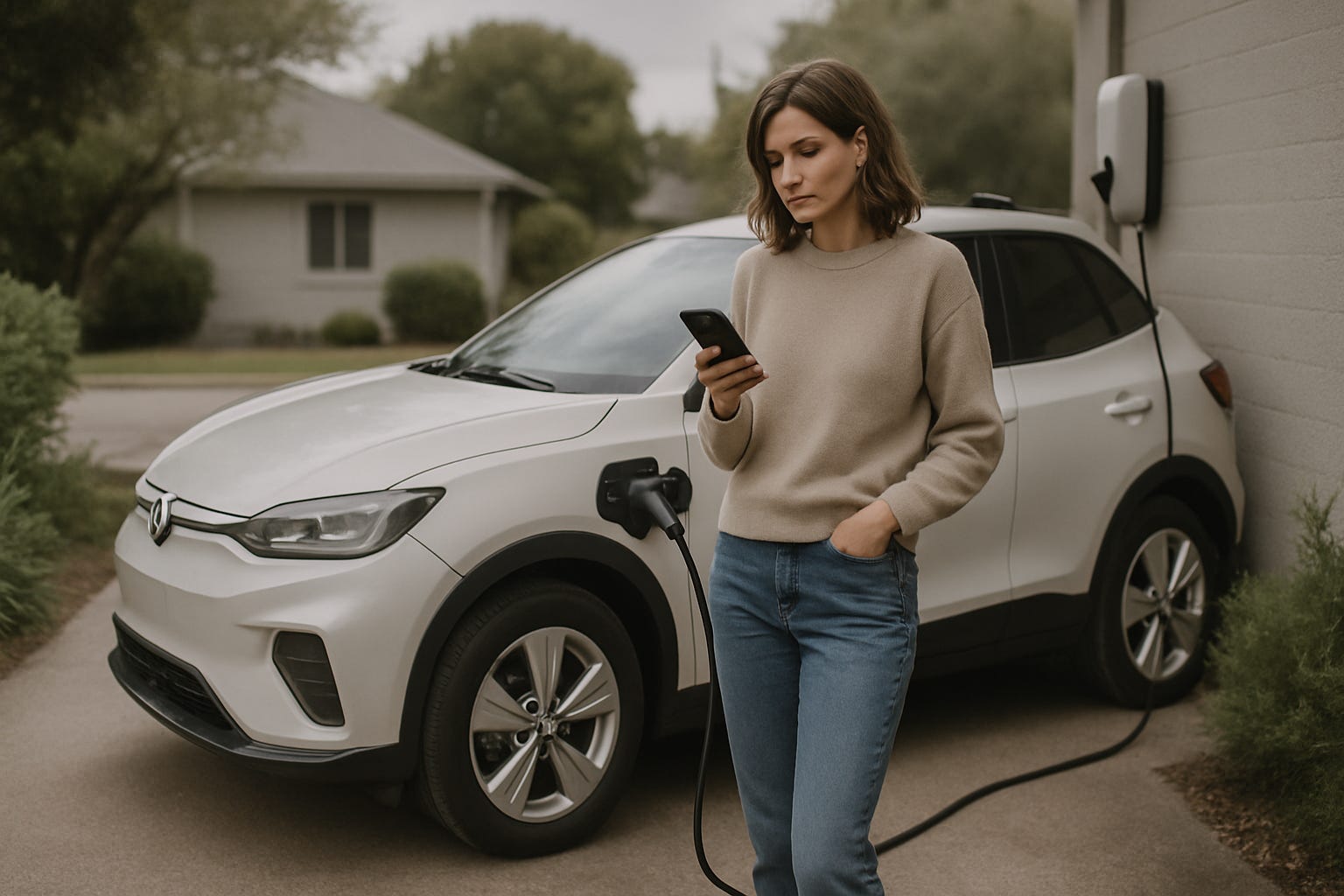
Let’s put a number on the table right away. According to Coltura’s EV Savings Index, the average American driver doing 15,000 miles a year saves $1,396 annually just from fuel and maintenance by going electric. Push your mileage higher, live in a state with cheap electricity, or drive something bigger than a compact sedan, and that number climbs past $2,000 without much effort. This isn’t theoretical — it’s what EV owners are actually experiencing in 2026, after years of early-adopter premium have quietly evaporated.
The story has gotten more complicated lately. The federal $7,500 tax credit for new EVs ended on September 30, 2025, cut off by the One Big Beautiful Bill Act. That stings, and I’m not going to pretend otherwise. But the per-year running costs of EVs have only gotten better as electricity rates stay relatively stable and gas prices keep doing their unpredictable yo-yo thing. The question isn’t really “should I switch?” anymore. It’s “how much am I leaving on the table by not switching?”
Here’s where the money actually goes — and comes back.
The fuel savings are real, and they’re large
The single biggest savings category is fuel. Not by a little. A typical gas car getting 30 miles per gallon, driven 15,000 miles a year at $4 per gallon (roughly where national averages have been sitting), costs about $2,000 a year just to fill up. 🚗 An EV covering the same distance on home electricity at the national average rate of roughly 17–19 cents per kWh runs between $550 and $700 per year instead.
That’s not a rounding error. That’s $1,300 to $1,450 in your pocket every year, just from skipping the pump.
The math gets even more favorable if you do what most EV owners do and take advantage of time-of-use electricity rates. Many utilities charge significantly less for power used overnight, typically 11 PM to 7 AM, when grid demand is lowest. Getneocharge’s analysis found that switching to off-peak charging can reduce your electricity costs by 30–50%, dropping the cost per mile to as low as 3 cents. At that rate, fueling 15,000 miles costs somewhere around $450. Some utilities also offer dedicated EV rate plans that go even lower.
A few things worth knowing before you run the math for yourself:
Home charging is the foundation of the whole savings argument. Public DC fast charging (the kind you use on road trips) costs $0.35–$0.60 per kWh at most commercial stations, which can push your per-mile cost close to what a gas car pays. If you can’t charge at home, the calculus changes substantially.
Which state you live in matters. Washington state, with high gas prices and cheap hydroelectric power, offers some of the best EV fuel economics in the country. High-electricity states like California and Hawaii narrow the advantage.
Vehicle efficiency varies. The 2025 Hyundai Ioniq 6 uses just 25 kWh per 100 miles. A Ford F-150 Lightning uses considerably more. The U.S. Department of Energy’s fuel-savings calculator lets you plug in your specific situation and get real numbers.
What’s your monthly gas bill right now? If it’s over $150, you’re likely looking at annual fuel savings well above $1,000 by going electric — worth the 30 seconds to actually check.
Maintenance savings: the category people underestimate most 🔧
Fuel savings get all the headlines. Maintenance savings quietly do a lot of the heavy lifting.
DOE 2025 data puts EV maintenance at $0.061 per mile versus $0.101 per mile for gas cars. Over 15,000 annual miles, that works out to roughly $600 in savings per year on scheduled service alone. Multiple analyses from Recharged covering 2024–2025 ownership data consistently land on 30–50% lower lifetime maintenance costs for battery-electric vehicles compared to comparable gas cars.
The reason is structural, not incidental. A modern gas engine has around 200 moving parts. An electric motor has closer to 20. Here’s a partial list of what you stop paying for entirely when you switch:
Oil changes ($50–$100 each, two to three times a year — gone forever)
Spark plugs, ignition coils, timing belts
Exhaust system repairs, catalytic converter replacements
Transmission fluid services
Fuel pump and fuel injector work
Brake pads also last dramatically longer. Regenerative braking — where the motor does the work of slowing the car and recovers energy in the process — means friction brakes barely get touched in everyday driving. Consumer Reports data shows many EV owners going 100,000 miles or more before needing new brake pads. Gas car owners typically replace theirs every 25,000–35,000 miles.
There are legitimate maintenance items that remain on the list, though:
Tire rotations (EVs are heavier and accelerate harder, so tires wear faster)
Cabin air filters
Coolant checks
An annual inspection just to catch anything you’d otherwise miss
Budget roughly $150–$400 per year for a typical EV’s routine service, compared to $900–$1,800 for a comparable gas car. That $500–$1,400 annual gap compounds nicely over seven or ten years of ownership.
The one legitimate wildcard is battery replacement. It’s expensive if it happens — replacement costs can run $5,000–$12,000. But it almost never happens within the warranty window, and modern EV batteries typically lose only 1–2% capacity per year. Most major manufacturers cover the battery for 8 years or 100,000 miles. This is a real thing to think about for high-mileage buyers of older used EVs, but it’s a poor reason to avoid EVs generally. 🔋
Incentives in 2026: the federal credit is gone, but the story isn’t over 💡
The $7,500 federal EV tax credit is off the table for vehicles purchased after September 30, 2025. That’s a meaningful loss, and automakers are scrambling to compensate with manufacturer discounts, zero-interest financing, and stronger lease deals. But it’s worth knowing what’s still available, because the picture is more optimistic than most people realize.
State programs have stepped up significantly. According to ElectricNiverse’s 2026 incentive guide, here’s a snapshot of what strong-incentive states currently offer:
Colorado: up to $9,000 combined through a state tax credit and the Vehicle Exchange program
California: up to $7,500 for income-qualifying buyers through Clean Cars 4 All, with additional local programs stacking on top
New Jersey: $4,000 plus a full sales tax exemption through Charge Up NJ
New York: up to $2,000 through the Drive Clean Rebate program
Oregon, Massachusetts, Maine, and Maryland all have active programs
Utility rebates are the other piece most people miss. Many electric utilities offer separate rebates of $200 to $2,500 for EV purchases or home charger installations, completely independent of state programs. Call your utility — seriously — before you buy. A quick conversation could save you a thousand dollars that most buyers leave on the table.
There’s also a relatively new federal loan interest deduction worth knowing about. Buyers who finance an American-made vehicle with a qualifying loan between 2025 and 2028 can deduct up to $10,000 per year in loan interest. Depending on your tax bracket, that’s a meaningful offset for buyers who were counting on the old $7,500 credit. And if you stack a state rebate, a utility rebate, and a manufacturer discount, it’s entirely possible to walk away with $5,000–$10,000 or more off the effective purchase price in certain states. Worth doing the research.
One more thing: the 30% federal tax credit for home EV charger installation technically expired June 30, 2026, but state and utility charger rebates remain widely available. A standard Level 2 charger installation typically runs $800–$1,500 out of pocket after rebates in most markets — and it pays back in charging cost savings within a year.
The honest look at total cost of ownership 📊
Adding up fuel savings ($1,300–$1,450/year) and maintenance savings ($500–$1,400/year) gets you comfortably past $2,000 annually for most drivers with home charging access. A 2025 study from Atlas Public Policy, commissioned by the NRDC and covered here, compared total 7-year ownership costs across five vehicle classes and found EVs cheaper in four of the five categories — the pickup truck being the exception.
The upfront cost gap is also shrinking fast. By February 2026, Cox Automotive data showed the average new EV sold for about $55,300, a premium of roughly $6,500 over the average new gas vehicle — the smallest gap on record. Used EV prices have dropped more than 30% in some segments since 2024, making the used market particularly attractive right now.
What doesn’t fully work for EVs in 2026? A few real scenarios:
You live in an apartment with no reliable home charging access
You regularly drive 400–600-mile days through areas with sparse charging infrastructure
You drive very few miles per year (under 7,000) and a cheap used gas car still makes better financial sense
For most suburban and urban families who drive 12,000–20,000 miles a year and can plug in at home overnight, though, the numbers have tipped. GreenInch’s detailed piece on whether an EV is actually worth it in 2026 breaks down the calculation further if you want to go deeper on your specific situation.
Switching to an EV doesn’t just change your gas receipts. It changes the entire rhythm of how you interact with your car — you wake up to a “full tank” every morning, you stop thinking about oil changes, and you stop watching the gas price signs on the highway with low-level dread. ♻️ The GreenInch guide on what nobody tells you before buying an EV covers the practical surprises — the good and the slightly annoying — so you know what you’re signing up for before you sign anything.
So, here’s the question worth sitting with: if switching your car could reliably put an extra $2,000 or more back in your household budget every year, what’s the number that would make that feel like a genuinely obvious decision for your family?