

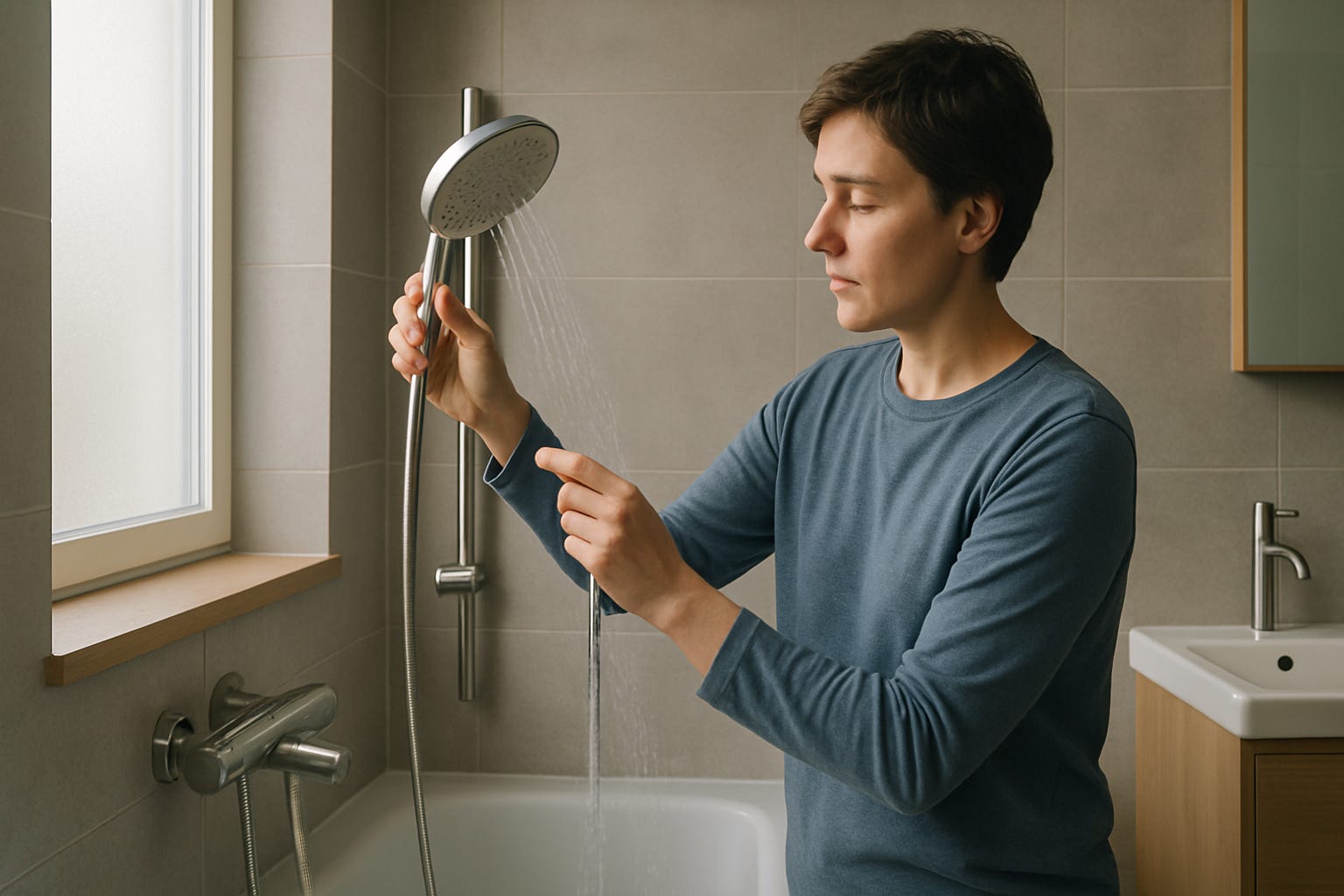
Here’s a number that might ruin your morning routine, in a good way: water heating is typically the second-largest energy expense in the average home, right behind heating and cooling the house itself. The Department of Energy puts it at roughly 18 percent of your total home energy use, and a big chunk of that is just you, standing under hot water, thinking about your day.
I want to be upfront about something before we go further: this isn’t going to be one of those articles telling you to take three-minute cold showers and call it sustainability. Nobody sticks with that, and I don’t blame them. The fixes that actually work are almost all invisible once they’re in place. You keep your hot, long, glorious shower. Your bill and your carbon footprint just quietly shrink around it. 🚿
Why your shower is a bigger expense than it looks
A shower feels free because you’re not swiping a card for it, but the meter is running the whole time, both on the water and on the energy used to heat it. An older showerhead pushes out 2.5 gallons per minute or more, and every one of those gallons has to be heated from tap temperature to comfortable-scalding before it ever touches your skin. 🔥
Do the math on a typical eight-minute shower and it adds up fast: 20 gallons of water, heated, for one person, once a day. Multiply that across a household of three or four people, and you’re heating a genuinely large amount of water just so everyone can start the day clean. The Department of Energy’s own guidance on reducing hot water use for energy savings treats this as one of the biggest, most overlooked line items in a home energy bill.
A few numbers worth knowing before we get to the fixes:
Water heating: roughly 18 percent of a typical home’s total energy use
An older showerhead: 2.5 gallons per minute or more
A WaterSense-certified low-flow model: 2.0 gallons per minute or less
A single dripping showerhead or faucet: thousands of wasted gallons a year
Setting your water heater above 140°F: pure wasted energy for most households
Have you ever actually timed your morning shower? Most people guess low. 😅
The showerhead swap that pays for itself in weeks
If you do exactly one thing after reading this, make it this one. Swapping to a WaterSense-certified low-flow showerhead is genuinely the highest return per dollar you can get in a bathroom, and it takes about fifteen minutes with a wrench, no plumber required. 💧
The trick with modern low-flow heads is that “low-flow” no longer means “weak and sad.” Good ones use air-infusion technology that makes each droplet feel bigger and denser, so the pressure feels the same or better even though less water is actually flowing. The EPA’s WaterSense program certifies models that cap out at 2.0 gallons per minute while still delivering real pressure, which is the whole ballgame here.
Here’s why the payoff is so fast:
A family of four showering eight minutes daily can save around 5,600 gallons a month by switching from a 2.5 GPM head to a 1.8 GPM one
A quality low-flow showerhead costs roughly $20 to $50
Most households recover that cost in six to eight weeks through lower water and heating bills
You’re also cutting the electricity or gas used to heat that water, which is a direct emissions cut too
Handheld models tend to waste less, since you aim the spray instead of letting it bounce off your shoulders
If you want a deeper dive into which specific models are worth buying, GreenInch’s roundup of ways you’re wasting water every morning covers exact brands and flow rates. That’s the article I’d start with if this is the only fix you make this year.
Habits that cost you nothing
Not every fix needs a hardware store trip. Some of the biggest savings come from adjusting things you already own, and none of them require you to shower faster or colder. ♻️
Your water heater’s thermostat is the single most overlooked dial in the house. Most units ship set to 140°F, which is hotter than almost anyone actually needs. Dropping it to 120 to 130°F keeps showers comfortably hot, reduces the risk of scalding, and can meaningfully cut your water heating energy use, all with zero change to your daily routine.
Small habits worth building into your week:
Turn the thermostat on your water heater down to 120 to 130°F
Fix any dripping showerhead or faucet immediately. A single drip per second can waste over 1,600 gallons a year
Wrap exposed hot water pipes in cheap foam insulation, sold for under a dollar a foot at any hardware store
Wash laundry in cold water whenever you can. Roughly 90 percent of a washing machine’s energy use goes toward heating the water, not spinning the drum
Insulate the tank itself if it feels warm to the touch on the outside. That warmth is heat you paid for, leaking into your basement or closet
None of this asks you to suffer through anything. It just asks you to adjust a few dials once and forget about it. Which of these have you actually already done, and which one is news to you?
Bigger upgrades, if you’re ready for them
If you’ve done the free and cheap stuff and want to go further, the next tier involves actual hardware, and the math still works out in your favor over time, even if the upfront cost is real. 💡
A tankless water heater heats water on demand instead of keeping 40 or 50 gallons hot around the clock, which eliminates a lot of standby energy loss. A heat pump water heater goes even further, using roughly a third the energy of a standard electric tank by moving heat rather than generating it directly. Worth knowing before you shop: the federal 25C tax credit that covered 30 percent of a heat pump water heater’s cost expired at the end of 2025, so installs completed in 2026 no longer qualify for that specific credit. State and utility rebates are still very much alive in a lot of places, though, so it’s worth checking the ENERGY STAR federal tax credit page for what’s current before you buy.
A few upgrade paths worth comparing:
Tankless water heaters: no standby losses, endless hot water, moderate upfront cost
Heat pump water heaters: the most efficient option for most homes, bigger upfront investment, often eligible for state or utility rebates
Drain water heat recovery: a coil that captures heat from your shower drain to preheat incoming cold water, quietly reducing how hard your water heater works
Hot water recirculation pumps: eliminate the wait (and wasted cold water) before hot water arrives at the tap
GreenInch’s guide to water-saving devices that pay for themselves in under a year breaks down the actual payback timelines on several of these, which is worth reading before you commit to anything with a four-figure price tag.
You don’t have to give up the long hot shower
I said it at the top and I mean it: none of this requires cold showers, timers taped to your shower wall, or guilt every time you linger under the water a little longer than planned. The habits and upgrades above work quietly in the background, which is exactly why they stick. GreenInch’s guide to saving water at home without shorter showers or less comfort makes the same case in more detail, if you want the fuller picture.
Pick the cheapest fix from this list, the showerhead swap, and do it this weekend. Everything after that is optional. What’s stopping you from doing it today?