

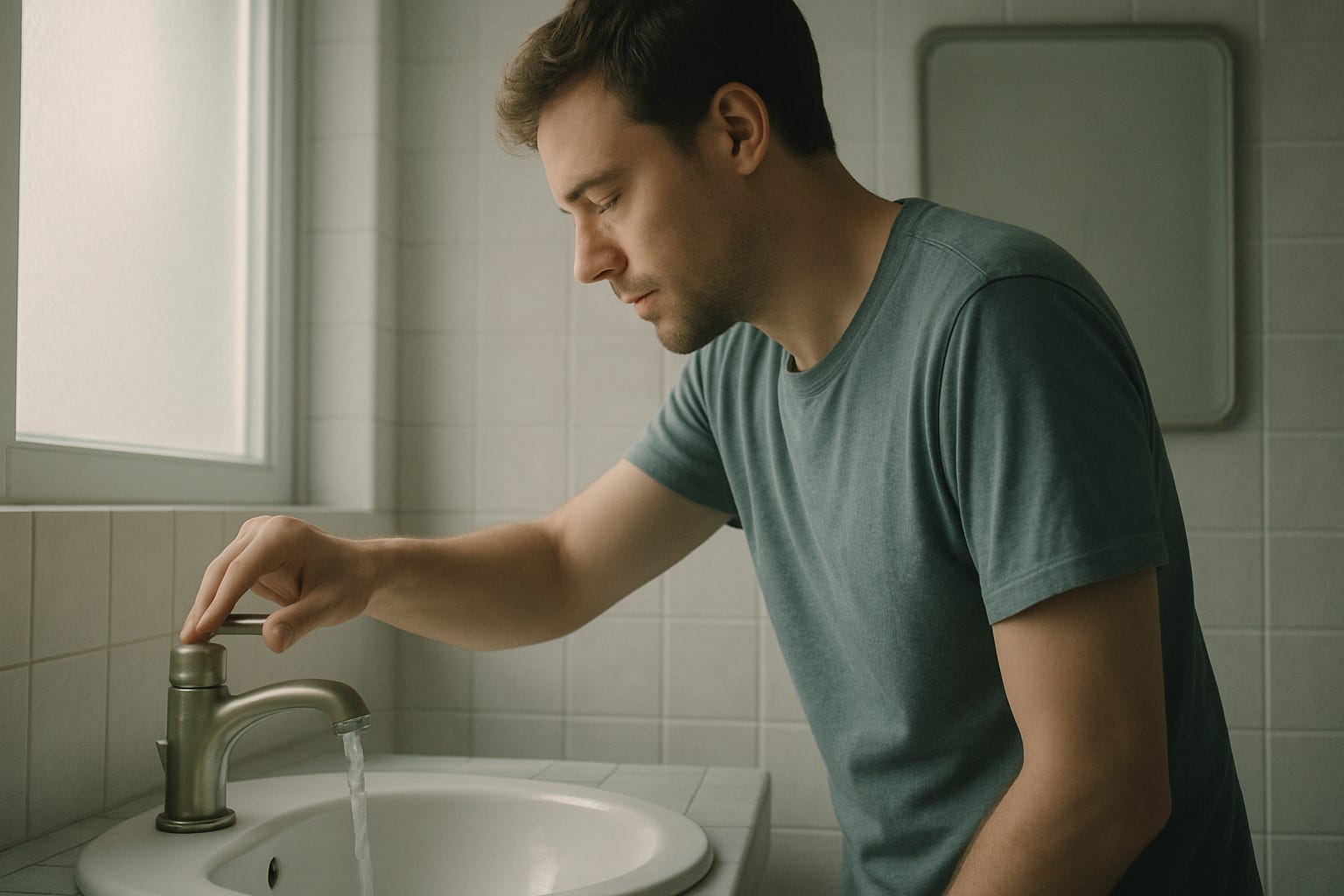
Most of us stumble into the bathroom on autopilot. Eyes half-open, brain buffering, we follow the same sequence we’ve done a thousand times before. Turn on the tap. Let it run. Brush, shave, shower, repeat. It feels harmless. It’s just water, right?
Wrong, actually. The average American uses 82 gallons of water per day at home, according to 2024-2025 data compiled from the EPA and USGS, and a shocking chunk of that gets wasted between 6 and 8 in the morning. Not through dramatic negligence, but through small, mindless habits that compound over months and years into genuinely staggering numbers.
The good news: almost every one of these habits is easy to change. You don’t need a bathroom renovation or a monk’s discipline. You need to know what you’re doing wrong first.
The tap you leave running while brushing your teeth
This one gets talked about constantly, and yet the EPA’s WaterSense program reports that turning off the tap while brushing saves 8 gallons of water per day. Per day. That’s roughly 2,900 gallons a year, for one person, from one habit. 💧
The reason it matters so much is sheer frequency. The American Dental Association recommends two minutes of brushing, twice a day. If your tap runs the whole time at a standard faucet flow of about 2 gallons per minute, you’re pouring 4 gallons straight down the drain every single brushing session. Colgate’s water conservation guide puts the annual total at over 2,400 gallons per person, and that’s for a household of one. 😬
Turn the tap off after wetting your toothbrush
Turn it back on only when you need to rinse
Teach kids this habit now: children who learn it early tend to keep it for life
Switching to a WaterSense-certified faucet reduces your baseline flow rate by 30% or more even when the tap is running
The fix takes zero effort once it’s a habit. It’s one of those infuriating cases where knowing is literally all you need.
Shaving carries the same problem. The EPA reports that leaving the tap running while you shave wastes 10 gallons per shave. If you shave five times a week, that’s over 2,600 gallons a year from one habit alone. Fill the sink basin instead. Rinse the razor in standing water. Revolutionary, I know. 🪒
The shower: it’s longer than you think
Here’s an uncomfortable truth: you almost certainly shower longer than you believe you do. The average American shower runs 8.2 minutes at a flow rate of about 2.1 gallons per minute, for a total of roughly 17 gallons per session, according to EPA data. But surveys consistently show people estimate their showers at five or six minutes. The gap between perception and reality is where thousands of gallons disappear. 🚿
Three specific behaviors inside the shower waste the most water:
Warming up the water before you step in. If you let the shower run until it’s “the right temperature,” that might be 30-90 seconds of water you never use. A simple fix is a bucket: catch that water and use it on houseplants or in the garden.
Leaving water running while you shampoo or condition. Turning off the shower while you lather and condition saves 2-5 gallons per session, per ShunWaste’s 2026 analysis. Europeans average 5-minute showers in part because their water heaters make that pause natural.
Keeping an old showerhead. Standard showerheads flow at 2.5 gallons per minute. WaterSense-certified low-flow models cap at 2.0 gpm, and good ones now use air infusion to maintain pressure. The EPA’s WaterSense program estimates the average family saves 2,700 gallons per year just by swapping the showerhead, plus 330 kilowatt-hours of electricity from reduced water heating demand.
A quality low-flow showerhead costs $20-50 and takes ten minutes to install. It’s probably the single highest-return eco upgrade per dollar you can make in your bathroom. If you want to keep tabs on what other straightforward home upgrades actually pay off, GreenInch’s guide to eco-friendly home upgrades that pay for themselves is worth a read before your next hardware store trip. 💡
Think about your own shower routine honestly for a moment. When did you last time it? What would you find if you did?
The leaks running silently in the background
This one doesn’t feel like a morning habit, but it absolutely is a morning problem, because your bathroom fixtures are actively leaking whether you’re in there or not. 😟
The EPA’s Fix a Leak Week campaign, which ran again in 2024, makes the scale of this painfully clear: household leaks waste nearly 900 billion gallons of water annually nationwide, equivalent to the annual water use of 11 million homes. The average household’s leaks waste around 10,000 gallons per year, adding up to 10% on the water bill. And 10% of homes have leaks draining 90 or more gallons every single day.
The two biggest morning-bathroom culprits:
A dripping faucet dripping once per second wastes more than 3,000 gallons per year, per the EPA. That’s enough water for over 180 showers.
A leaky toilet flapper can silently bleed up to 200 gallons per day, per Denver Water’s reporting on EPA data. Two hundred gallons. Per day. And you may not even hear it.
Diagnosing a toilet leak takes about ten minutes: drop a few drops of food coloring into the tank. If color appears in the bowl within ten minutes, the flapper is leaking. A replacement flapper costs under $10 at any hardware store. Worn toilet flappers should be replaced at least every five years regardless. This is maintenance that genuinely pays for itself almost immediately.
Check under bathroom sinks for moisture or drips
Listen for the toilet running longer than usual after a flush
Inspect the base of the toilet for water stains or warping
If you want a systematic way to track down every source of energy and water waste in your home, GreenInch’s 5-minute home energy audit guide walks you through exactly that, room by room. 🔍
Four more morning habits quietly draining the supply
Let’s run through the remaining offenders quickly, because each one adds meaningful gallons to your daily total. 💦
Running water to get it warm at the sink. You turn on the cold tap, wait for warm, and watch the cool water spiral uselessly away. The fix is to catch it in a pitcher or bottle for drinking or cooking. Alternately, a recirculating pump on your hot water system eliminates the wait entirely, though that’s a bigger investment.
Rinsing your face with the tap wide open. A standard bathroom faucet flows at 1.5-2.2 gallons per minute. Older faucets run even faster. You need about four seconds of water to rinse your face, not 45 seconds. Turn it on, rinse, turn it off. Adding a faucet aerator to older fixtures reduces flow by up to 30% without affecting perceived pressure, and they cost roughly $5-15.
Flushing things that don’t need flushing. A tissue, a cotton round, a bug. Each unnecessary flush wastes 1.28-1.6 gallons if you have an efficient toilet, and up to 6 gallons per flush with an older model. Older, pre-1994 toilets are among the worst water wasters in any household: replacing one with a WaterSense-labeled model saves a family nearly 13,000 gallons per year, per EPA estimates.
A full bath instead of a shower. A standard tub uses about 36 gallons per bath. Even a longish shower typically beats that. If baths are your thing, fill it only halfway, or save them for a genuine rest day rather than a daily routine.
Which of these feels most like your household right now? It’s probably more than one, and that’s okay.
Small changes, real numbers
Here’s the part that I find genuinely motivating: the math on these fixes is not trivial. ♻️
If a family of four makes these changes consistently:
Turning off the tap while brushing saves roughly 11,600 gallons per year across the whole household
Switching to a WaterSense showerhead saves an additional 2,700 gallons per person, or roughly 10,800 gallons for four people annually
Fixing a single dripping faucet and a slow toilet leak can recover 5,000-10,000 gallons per year
Installing WaterSense faucet aerators adds 500+ gallons per fixture in annual savings
The combined impact of all of the above, in a household that starts from average American habits, can reduce morning water use by 30-40% according to EPA modeling. That’s a meaningful reduction in both your water bill and the demand you place on local water systems that, in many parts of the US, are under real pressure. 🌍
The Department of Energy estimates that water heating alone accounts for 18% of the average utility bill, so any habit that reduces your hot water use also reduces your energy use. Low-flow showerheads and shorter showers aren’t just water conservation — they’re carbon reduction.
None of this requires sacrifice that actually hurts. A good low-flow showerhead with modern pressure technology feels essentially identical to a standard one. Turning off the tap while you brush takes one second of effort per session. WaterSense-certified fixtures are widely available at Home Depot, Lowe’s, and online, many in the $15-50 range for faucet aerators and entry-level showerheads. Some utilities even offer rebates.
If you want to go further than just the bathroom, GreenInch’s guide to daily habits that save water without thinking about it covers exactly what happens after you leave the bathroom in the morning. 🌱
So, what’s the one change on this list you could make today, before your next morning routine? Because if you’re reading this on your phone, the habit that cost you four gallons already this morning might be the easiest one to break.