

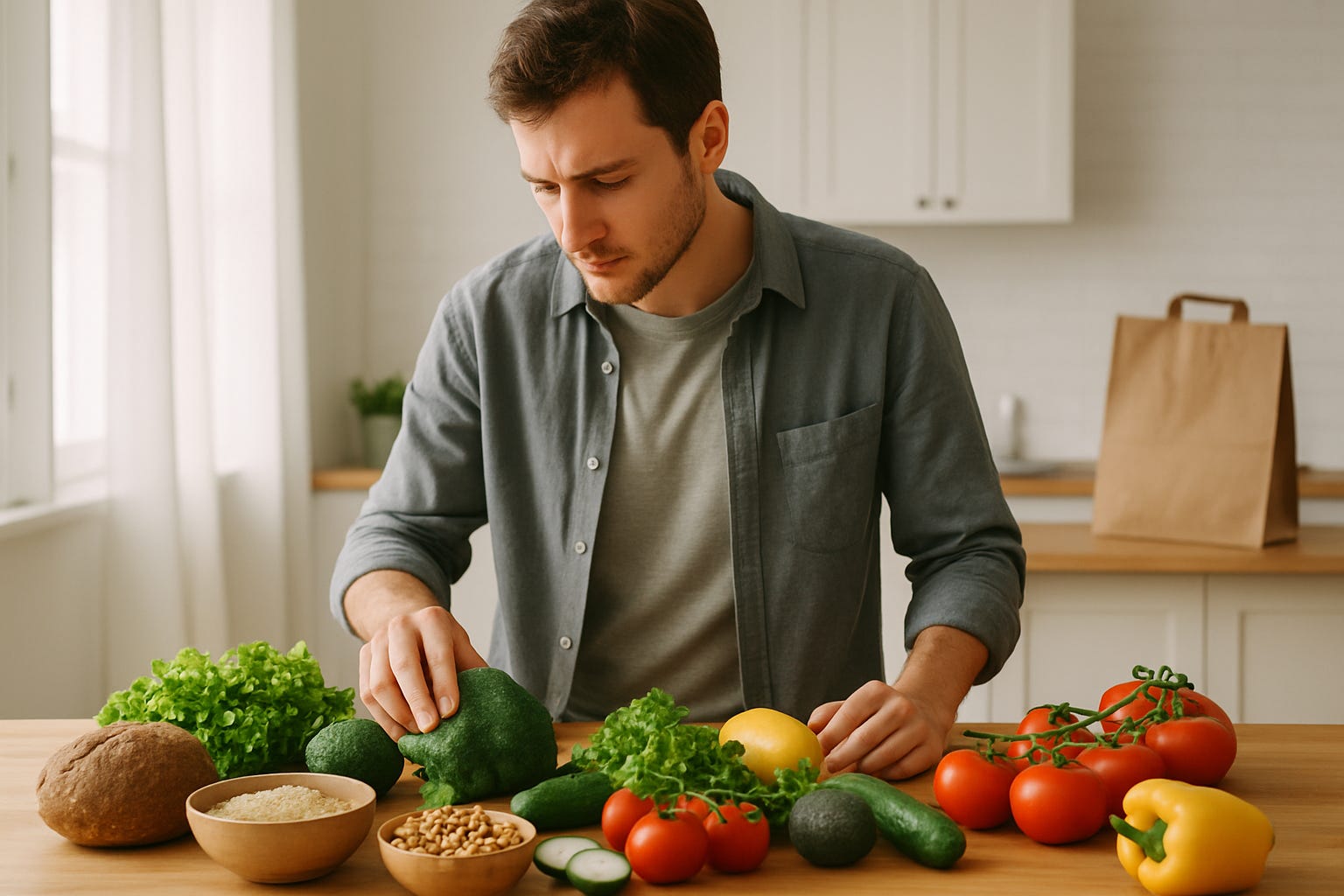
The pitch for fast food has always been the same: it’s fast, it’s cheap, and you don’t have to think about it. That last part, the not-thinking-about-it, is where things get interesting. Because the moment you actually do think about it — the beef, the packaging, the supply chain, the disposal — the real cost of a fast food meal starts looking a lot less convenient.
This isn’t going to be a lecture about giving up burgers forever. It’s a breakdown of what fast food genuinely costs compared to eco-friendly eating, across four dimensions nobody ever puts side by side: the dollar price, the packaging problem, the supply chain emissions, and the surprising twist in the carbon math. Some of what’s here might surprise you. One thing almost certainly will.
The dollar comparison is messier than you think
Start with the money, because that’s where most people start. The conventional wisdom is that fast food is cheap. In 2025, that’s only sort of true anymore. The average fast food combo meal in the U.S. now costs just over $11.50, according to data tracked by Mama’s on a Budget, and restaurant price inflation has consistently outpaced grocery inflation, running at roughly 3.6% annually versus groceries at around 1.6–2%. 💸
Meanwhile, research from Top Nutrition Coaching puts the average home-cooked meal at $4–$6 per person, compared to $15–$20 or more at a restaurant — a gap they calculate at about 285% more expensive to eat out than cook in. Annually, that difference adds up to over $13,000 for households that eat out consistently instead of cooking.
The nuance is real, though. A few factors push back on this:
Single servings are where home cooking loses efficiency — buying ingredients for one portion of pasta often leaves you with leftover supplies that go unused
Time has a cost too: one analysis put scratch cooking at $31.64 per meal once you factor in the opportunity cost of your time at average American wages
Batch cooking erases that gap entirely: the same analysis found that strategic home cooking — cooking in bulk, using leftovers — drops to $11.61 per meal including time costs, which beats delivery handily
The smartest framing isn’t “fast food vs. home cooking” as a binary. It’s whether you’re cooking efficiently at home. A lentil and vegetable stew that makes four portions costs almost nothing per serving and takes about as long as a drive-through run. Interestingly, GreenInch’s guide to sustainable food hacks points out that vegan diets run up to one-third cheaper than standard diets in high-income countries — which should probably get more airtime. 🌱
The packaging problem no one talks about at the counter
Here’s a number worth sitting with: nearly 36.6% of American adults eat fast food every single day, according to CDC data. Each of those visits generates a pile of single-use packaging — wrappers, bags, cups, lids, straws, napkin packets, condiment sachets — almost none of which gets recycled.
Less than 14% of plastic packaging is recycled in the United States. Single-use food and beverage packaging is one of the primary sources of the estimated 269,000 tons of plastic currently floating in the world’s oceans, per data cited by NRDC’s Peter Lehner. In 2018, McDonald’s alone reported using 153,000 metric tons of plastic packaging for cups, lids, and utensils. That’s one year, one company. 🗑️
The recycling situation inside fast food restaurants isn’t much better:
Less than 35% of fast food stores’ waste is diverted from landfills, with almost no plastic making it to recycling, according to data from California Against Waste
A 2012 study of Austin, Texas fast food waste found that up to 85% of what those restaurants throw out could have been recycled or composted — but wasn’t
Fast food packaging is one of the most frequently cited sources of urban litter in city characterization studies, with foamed polystyrene (the stuff of coffee cup lids) particularly persistent once it enters storm drains
Eco-friendly home cooking sidesteps nearly all of this. When you cook from whole ingredients, the packaging waste is a fraction of the equivalent meal from a fast food counter. A bag of dried lentils creates one piece of packaging that feeds six people. Six fast food visits create six complete sets of single-use everything. The math doesn’t need much elaboration. ♻️
The supply chain: where the real emissions live
There’s a twist in the fast food vs. home cooking carbon story that researchers at Johns Hopkins Bloomberg School of Public Health found genuinely counterintuitive: people who cook at home more frequently sometimes have a higher dietary carbon footprint than people who eat fast food, because home cooks tend to eat more meat. The research, published in the International Journal of Environmental Research and Public Health, found that cooking 5–7 dinners per week was associated with slightly higher greenhouse gas emissions per 2,000 calories than cooking fewer meals, precisely because home cooks buy and prepare more beef and poultry.
This is an important nuance — but it doesn’t vindicate fast food. What it actually shows is that what you eat matters far more than where you eat it. 🌍
Fast food chains are the world’s largest industrial beef buyers. McDonald’s openly describes beef as its “largest menu category and growing.” Cattle ranching is responsible for 80% of deforestation in the Amazon basin, per the World Wildlife Fund. Forest 500 data shows that several major chains — Subway, Domino’s, Inspire Brands — have no commitments to eliminate deforestation from their beef or soy supply chains. Even McDonald’s, which has the most developed commitments, only targets deforestation-free sourcing by 2030 for priority origins, and overall emissions at the company went up 7% between 2015 and the most recent reporting period.
The environmental logic of fast food’s beef dependency is genuinely difficult to resolve. Nature Climate Change noted in 2023 that even fast food chains adding “climate-healthy” menu options are at risk of those initiatives being “mainly greenwashing” as long as beef remains the core product. 🐄
Compare that to a home-cooked meal built around lentils, chickpeas, or oats. Oxford researcher Joseph Poore’s work, highlighted in GreenInch’s carbon footprint foods breakdown, shows you can cut your food carbon footprint by a quarter just by reducing red meat — not eliminating it, just reducing it. The emissions from a lentil dal are essentially rounding error compared to a beef burger. That gap is the supply chain math that fast food menus are built to obscure.
What eco-friendly eating actually looks like (and costs)
“Eco-friendly eating” sounds expensive. Farmers markets at 9am, $8 oat milk, artisan sourdough wrapped in paper. That’s a particular version of it, but it’s not the only one — and it’s arguably not the most effective one. 💡
The most impactful sustainable diet choices are actually among the cheapest options at the grocery store:
Lentils and dried beans: roughly $1–2 per pound, producing multiple servings with a tiny carbon and water footprint
Oats: one of the most water-efficient protein sources per gram, and among the cheapest pantry staples
Seasonal vegetables: consistently less expensive than out-of-season or processed equivalents, and lower in emissions because they don’t require energy-intensive cold storage or long-distance transport
Frozen produce: nutritionally comparable to fresh, dramatically cheaper, and with a lower food-waste footprint because it doesn’t spoil before you use it
What does not make you a particularly eco-friendly eater: spending $15 on a plant-based burger at a fast-casual restaurant that sources its ingredients from the same industrial supply chains. Eco-friendly eating is mostly about the ingredients, not the aesthetic of where you buy them.
Cooking at home also eliminates the packaging multiplier entirely. The GreenInch kitchen swaps guide goes into the specifics of making a home kitchen genuinely low-waste — reusable containers, cloth over disposable, glass over plastic — and most of those changes cost nothing once you stop buying the disposable version.
The Environmental Defense Fund puts it in terms that are hard to argue with: if every American replaced just one meat-based meal per week with a plant-based alternative, the CO2 reduction would be equivalent to removing more than 5 million cars from the road. One meal a week. Not a diet overhaul.
What would it take for you to replace one fast food run per week with a home-cooked meal? I’m curious whether it’s time, the shopping, or something else entirely — because the barrier is different for different people, and the solutions look pretty different too.