

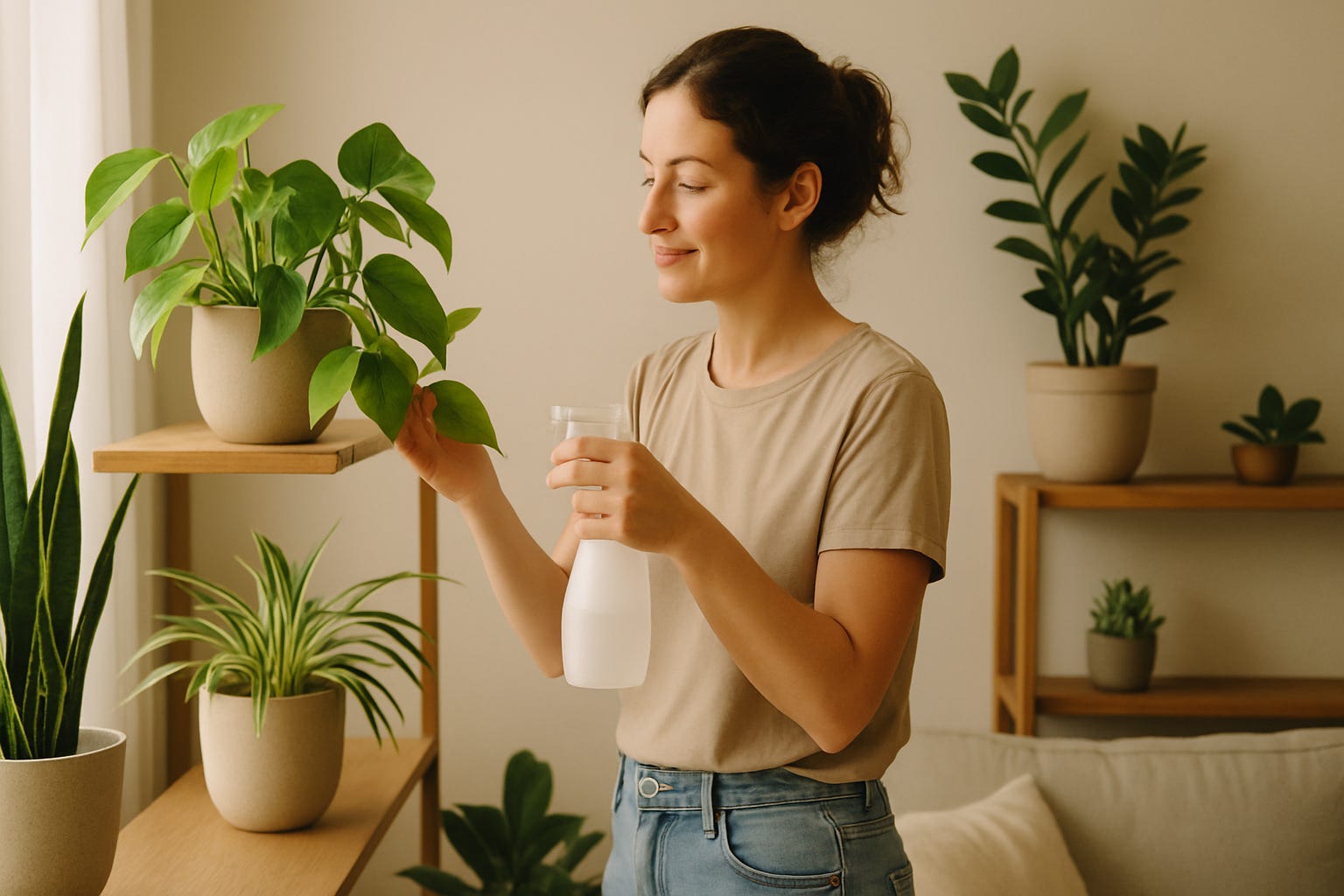
Let’s clear something up before we get to the plants. You’ve probably heard that a few houseplants can scrub your living room air clean, and that claim traces back to a 1989 NASA study that tested plants in sealed chambers designed for space stations, not your apartment. 🚀 A researcher at the University of Limerick recently put it plainly in a piece for ScienceAlert: the science was sound, but the leap from a sealed NASA chamber to a real living room was never justified. The American Lung Association has come out and said it even more bluntly, that houseplants do not meaningfully improve air quality in an actual home.
So why am I still writing this article? Because none of that means houseplants are pointless, it means the marketing oversold them. 🌿 They add humidity, a touch of oxygen, and a genuine mood boost that’s backed by real psychology research, not just Instagram aesthetics. And these six happen to be nearly unkillable, which matters more than any VOC-scrubbing fantasy if you’ve murdered a fern before. Here’s what to actually expect, and which six plants will survive you regardless. 🪴
Snake plant
The snake plant (Sansevieria, recently reclassified as Dracaena trifasciata for the botanically fussy among us) is the plant equivalent of a cockroach: it survives almost anything you throw at it, including weeks of forgetting it exists. Its stiff, upright leaves store water like a succulent, which is exactly why overwatering, not underwatering, is the only real way to kill one. 💧
It was one of the original stars of that 1989 NASA study, and while the practical air-cleaning claims don’t hold up in a real room, snake plants do something genuinely useful that most houseplants don’t: they release oxygen at night instead of absorbing it, making them one of the few plants people recommend for bedrooms.
Water only when the soil is completely dry, roughly every 2 to 3 weeks
Tolerates low light, bright light, and pretty much everything between
Rarely needs repotting. It actually prefers being slightly root-bound
Toxic to pets if chewed, so keep it out of reach of curious cats
Pothos
If snake plants are the cockroach of houseplants, pothos is the kudzu, in the best possible way. This trailing vine grows fast, roots easily in a glass of tap water, and forgives almost any care mistake you make. It’s the plant I hand to friends who swear they “kill everything.” 🌱
Pothos comes in enough varieties, golden, marble queen, neon, that you can decorate an entire room with the same easy-care plant and still get visual variety. It’s also one of the plants GreenInch has flagged before as a solid pick for vertical gardens in small apartments, since it thrives trailing off shelves or hanging planters without needing floor space.
Let soil dry out between waterings, it’s genuinely hard to underwater
Thrives in low to medium light, though variegated types want a bit more brightness
Propagates instantly in a jar of water, so one plant becomes five for free
Also toxic to pets, so hang it where paws can’t reach
ZZ plant
The ZZ plant (Zamioculcas zamiifolia) looks almost artificial with its glossy, waxy leaves, and that durability is not a coincidence. It evolved in drought-prone parts of eastern Africa and stores water in thick underground rhizomes, which means it can go a month without water and barely notice. ⚡
I’ll be honest, this is probably the single most forgiving plant on this list, and I say that as someone who has genuinely tried to kill one out of curiosity. It didn’t work.
Water every 3 to 4 weeks, less in winter when growth slows
Handles low light better than almost any other houseplant, including windowless offices
Grows slowly, so it won’t outpace your patience or your shelf space
Also toxic if ingested, standard houseplant caution applies here too
Spider plant
The spider plant (Chlorophytum comosum) earns its keep by doing something most low-maintenance plants don’t: it actively multiplies. Mature plants send out long shoots tipped with baby “spiderettes” that you can snip and root in water, giving you an endless supply of new plants for free. 🕷️
It was another headliner in the original NASA chamber tests, and while I won’t repeat the overstated air-purifying claims, spider plants are genuinely one of the easiest plants to grow from scratch, which makes them a great starter pick if you’re building confidence before moving to trickier species.
Prefers indirect light but tolerates a wide range of conditions
Water when the top inch of soil feels dry, roughly once a week
Non-toxic to cats and dogs, a rare exception on this list
Brown leaf tips usually mean tap water minerals, not a dying plant. Trim them and move on
Peace lily
The peace lily (Spathiphyllum) is the drama queen of this group, and I mean that as a compliment. It wilts dramatically and visibly the moment it needs water, then perks back up within hours of a good drink. That’s actually a feature, not a flaw, since it removes any guesswork about when to water. 🕊️
Unlike the others on this list, peace lilies also produce elegant white blooms indoors, which is a nice bonus if you want something that looks less like foliage and more like an actual flowering plant.
Water as soon as leaves start to droop, it recovers fast
Prefers medium to low indirect light, and actually dislikes direct sun
Blooms indoors under the right light conditions, unlike most low-maintenance options
Toxic to pets, and one of the more commonly reported houseplant poisonings, so placement matters
Philodendron
Heart-leaf philodendron rounds out this list as the plant that looks the most like a classic, old-school houseplant, because it is one. It’s been a staple in homes for decades, largely because it tolerates neglect, low light, and irregular watering without complaint. 🍃
If you’ve read GreenInch’s guide to zero-yard-space gardening, you’ve already seen trailing vines like this recommended for vertical setups, and philodendron works just as well there as pothos does, with slightly glossier, heart-shaped leaves as the main visual difference.
Water when the top couple inches of soil dry out
Thrives in medium indirect light but adapts to lower light reasonably well
Trailing habit makes it ideal for shelves, hanging baskets, or trellised climbing
Toxic to pets if ingested, same caution as most plants on this list
None of these six are going to replace an air purifier or a cracked window, and I’d rather tell you that straight than sell you on a myth. What they will do is survive your travel schedule, your forgetfulness, and your black thumb, while making your home genuinely nicer to be in. Which one matches your current level of plant commitment: the “waters once a month” energy of a ZZ plant, or the “constantly propagating new ones” chaos of a pothos?