

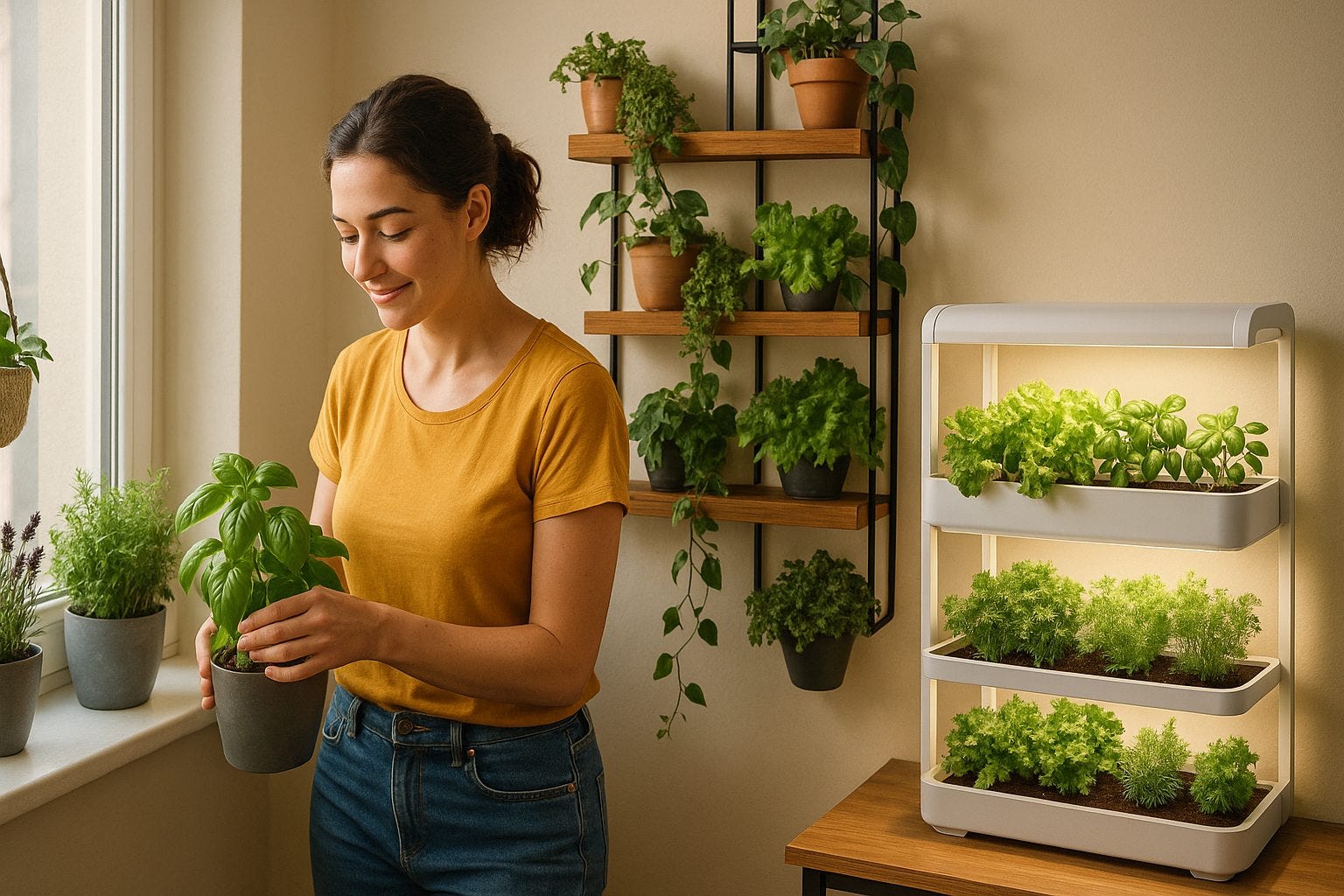
You don’t need a sprawling backyard or a patch of dirt to grow real plants. In fact, with a bit of creativity (and maybe some LED lights), you can build a garden in the tiniest apartment corner — even if your only “outside view” is a brick wall. If you’ve got zero yard space but still crave basil for cooking, leafy greens for salads, or just a touch of green calm in your home, you’re in for a treat. 🎯
Below are seven smart garden ideas that transform cramped apartments, kitchens, or balconies into lush, leafy havens. Some invite high-tech hydroponics, others thrive on humble pots and a sunlit windowsill. All cut the cord from traditional garden-size prerequisites.
1. Window- sill Container Gardens: Start Small, Think Big
Why wait for the soil gods? A windowsill container garden is often the easiest — and most under-appreciated — entry into urban gardening. Even if the only window you’ve got barely welcomes a pigeon, you can still coax herbs, greens, or small veggies to grow indoors. As one recent guide shows, indoor container gardening “gives you control over growing conditions all year long,” letting you bypass weather, pests, and outdoor-space woes.
Start with herbs like basil, mint, parsley, thyme, or cilantro. They don’t require deep soil or much fuss, especially under a sunny window or a small grow light.
Add a splash of color with a few easy houseplants — voilà: your window becomes a mini-garden, your kitchen table becomes fresher.
Benefits? Plenty. Fresh herbs on demand. A little greenery that cleans air, soothes the mind. And a green thumb that didn’t require any special license.
2. Vertical Gardening: Because Floor Space Is Overrated
If you can’t spread sideways, think upwards. Vertical gardening transforms walls, shelves, and door-adjacent corners into thriving green towers. It’s clever, efficient — and sometimes downright beautiful.
Shelves, wall-mounted planters, trellises — you can even rig up hanging baskets like chandeliers of greenery. Want more productivity? Modular vertical hydroponic towers let you grow herbs, leafy greens, or even strawberries in an upright, compact footprint.
Upside: you get more plants per square inch. Downside: you may need to water carefully (or automate) and make sure light reaches all levels. But for apartment dwellers without yard space — that’s manageable.
3. Indoor Hydroponics: Soil Is So Yesterday
Enter hydroponics — the science-fiction-looking gardening technique that makes soil optional. Instead, plants sit in nutrient-rich water solutions. Roots sip nutrients directly, growing faster and often healthier. It’s efficient and, with the right setup, remarkably low-mess.
Why hydroponics works especially well indoors and in small spaces:
You avoid heavy soil and messy dirt indoors.
Water use tends to be significantly lower than traditional soil gardening.
Plants often grow faster and more consistently under controlled light, nutrients, and water flow.
Systems range from simple Deep-Water Culture (DWC) to nutrient film / drip systems. You might need a little gear — containers, a water pump or air stone, nutrients, maybe grow lights — but once it’s set, many hydroponic gardens happily chug along with minimal daily effort.
If you’ve ever fantasized about leafy greens or cherry tomatoes in mid-winter, this is where soil meets sci-fi.
4. “Dish” Gardens & Terrariums: Low-Maintenance Nature Capsules
Maybe you don’t want a jungle — just a little bit of green serenity. Enter the humble dish garden or terrarium: small containers, shallow soil (or other media), a few plants (succulents, air-loving greens, small ferns), minimal maintenance. Simple. Elegant. Quiet.
Dish gardens date back centuries and have roots (pun intended) in traditions as ancient as the gardens of old Japan.
They don’t need deep soil. They don’t need frequent watering. A bright corner, occasional mist-spraying, and a little light — and you get a living sculpture that demands almost nothing.
Best for folks new to gardening, or those who want greenery without the fuss.
5. Balcony or Rooftop Container Gardens: Urban Outdoor Living
If you don’t have a yard but you do have a balcony (or rooftop, or tiny patio), container gardening is your friend. Pots, grow bags, planters — treat them like mobile, no-commitment garden beds. Plenty of urban gardeners turn small balconies into veggie-and-herb greenhouses.
Choose compact veggies or herbs (lettuce, cherry tomatoes, peppers, herbs), or even experiment with dwarf fruit trees (depending on climate and space). As long as you manage light, drainage, and occasional watering — you’re set.
Bonus: a balcony garden doesn’t just feed your kitchen — it adds a bit of privacy, a bit of calm, a bit of natural beauty right outside your window.
6. “Living Wall” or Hanging Garden: Green Art for Urban Dwellers
Why just have plants in pots when you can have them on your wall? Living walls (or hanging gardens) turn blank vertical spaces into lush tapestries of green. They’re functional — improving air quality, adding insulation, softening noise — and aesthetic, turning a boring wall into a living art piece.
Use modular wall-planters, hanging pockets, or vertical hydroponic “walls.” Plants like herbs, ivy, trailing vines, small greens, even some veggies — depending on light — can thrive here.
It’s a statement. It’s a lifestyle. And yes — it tells everyone visiting that you don’t just live indoors, you grow indoors.
7. Modular or Smart Indoor Garden Systems: Bring Tech to the Green Thumb
For the type of person who appreciates modern convenience (yes — I see you, portfolio-builder, serial entrepreneur, frequent traveller), modular or “smart” indoor garden systems are the way to go.
Recent trend: compact self-watering planters or hydroponic towers that include grow lights, timed irrigation, and sometimes even “smart” nutrient/lighting automation. They let you grow herbs, greens — sometimes even small fruits — with minimal effort and little risk of watering failures or neglect.
Whether you’re home five days a week or jetting across continents (as you travel), these systems can keep the green going. They’re especially ideal for people without time for traditional gardening drama.
Why It All Works — Even Without a Yard 🌿
Space efficiency: Vertical gardens, wall gardens, or container setups use minimal floor space while maximizing plant yield.
Environmental control: Indoor gardens let you manage light, water, soil/nutrients — and often dodge pests and unpredictable weather.
Versatility: From herbs to salad greens to small fruiting plants — many edible plants thrive indoors, especially under controlled conditions.
Mental & aesthetic benefits: A bit of green lifts mood, improves air quality, brings calm, and transforms stale indoor spaces into living, breathing corners of nature.
Also read: 5 Smart Garden Tools That Help You Grow Food Sustainably
Final Thoughts & Your Next Step
If you’ve got zero yard space — no excuse. Whether you’re living in a shoebox studio or a chic city apartment — you can absolutely grow something meaningful.
Start small. A windowsill herb pot. A balcony container. A vertical shelf of greens. Enjoy the ritual of watering. Watch life sprout under your care.
And if you want to go big — go vertical, go hydroponic, go smart. Because the best gardens don’t need acres. Just love. 🌱