

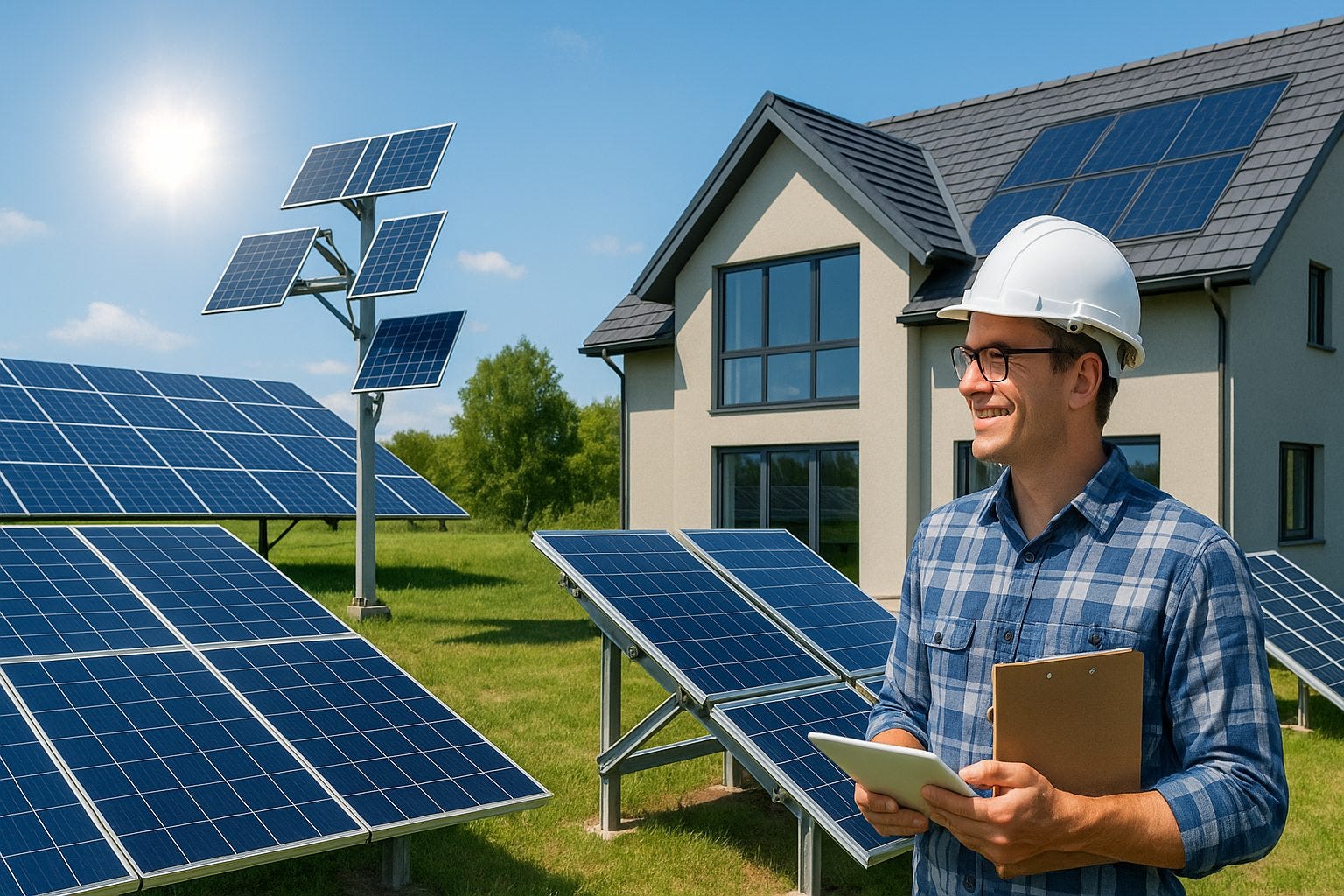
We’re in a moment where the sun is doing more than just rising—it’s powering. The energy we so casually flick on in our homes, the car we plug in, the devices we clutch at the airport lounge—all could be rooted in solar innovations that are just stepping out of the lab and into the real world. I think we’re inching toward a future where your rooftop, your window, maybe even your driveway is an active energy maker. Not just a passive asset.
In this article, I walk you through five solar-tech breakthroughs that might (and I do mean might) completely rewrite how you think about powering your life. From materials that soak up sunlight smarter to systems that store it longer and devices that blur the line between gadget and generator, we’re talking the kind of stuff that excites both the tech-nerd in us and the practical homeowner looking for real savings. Let’s dive in—and by the end I hope you’ll feel empowered, maybe even inspired to consider: When does your wall stop being just a wall, and start being a power source?
1. Tandem & Perovskite Solar Cells: Efficiency & Cost Breakthroughs
The good old silicon panel has had a strong run. But now, the next generation is sprinting ahead. Enter the world of perovskite solar cells and tandem arrangements (stacking layers to capture more sunlight). These techs aren’t sci-fi—they’re here, they’re real, and they’re changing the game.
Perovskite cells are cheaper to manufacture, lighter, and in lab tests they’re closing in on—or surpassing—traditional silicon’s efficiencies.
Tandem cells combine a perovskite layer over silicon, or two perovskites, to squeeze more watts per square metre. Lower cost + higher yield = big potential.
What this means for you: solar panels that cost less, produce more, and maybe fit into spaces where older kits couldn’t. If you’ve got a roof that angles weird, or you rent and want a lower-cost entry point, keep an eye on this. The trick: durability, scaling, and real-world costs still need work—but the momentum is clear.
2. Smart Inverters & Grid-Friendly Energy Management
So you’ve got sunlight. Great. But what happens when your house produces more than you use, or when the grid demands stability? That’s where the smart stuff kicks in. Smart inverters, IoT-enabled systems, and integrated storage are transforming homes and grids alike.
These systems do more than “convert DC to AC.” They monitor production, manage when to store energy, when to send it back to the grid, and even protect your system from bad weather or grid instability. For example: panels coupled with advanced inverters now talk to storage and loads, optimizing which devices get powered when.
Why it matters: if you’re considering solar, it’s not just the panels—but the system. A slick inverter + software layer can dramatically increase your return, reliability, and overall experience. Want to sell excess energy? Want to ride out a blackout? Smart management is your friend.
3. Storage & Energy Flexibility: Solar Doesn’t Just Shine When It’s Sunny
Solar power is intermittent by nature—sunshine doesn’t always align with when you need power. Thus, storage and flexibility are rising stars. In 2025 and beyond, the industry expects couples of “solar + storage”, plus flexible grid interactions, to dominate.
Beyond lithium-ion batteries, we’re also seeing flow batteries, thermal storage, and even blended systems that tie solar into micro-grids and community storage. The big leap: turning solar from a “nice to have” into a reliable energy source.
For you: if your utility rates are high, your grid unreliable, or you live somewhere with peak-demand surcharges, investing in a solar + storage package isn’t just a trend—it might be the smart financial move. Especially if you want energy independence. And yes—”off-grid chic” is increasingly viable.
4. Building-Integrated Photovoltaics (BIPV), Solar Roof Shingles & Beyond
Why stick ugly panels on your roof when the roof is the panel? Building-integrated photovoltaics (BIPV) are turning homes, windows and even shingles into power-generating surfaces. According to recent trends: “PV shingles, solar windows, solar asphalt” are coming into play.
Imagine your roof tiles quietly converting sun into electricity, or your south-facing window pane doing the same—no big racks, no satellite-dish aesthetic. For new builds this is especially cool; for retrofits, it means you could power your home nearly invisibly.
If you’re building or renovating, this is worth a chat: it merges architecture and energy. And for homeowners tired of standard panels messing up the view, this may be the next frontier.
5. Cutting-Edge Materials & Tracking Systems: Getting More Out of Each Ray
Solar tech is not just about panels anymore—it’s about materials, movement and metadata. Innovations like quantum dot solar cells, bifacial modules, and advanced solar trackers are squeezing more juice out of each photon.
For instance, bifacial modules capture light both on the front and back side of the panel—useful when you have reflective surfaces or a well-designed installation. Smart trackers orient panels during the day for maximum exposure. And next-gen materials (quantum dots, GaN substrates) are reducing losses and pushing efficiencies forward.
What you take away: solar installation is evolving from “put panels facing south” to “deploy a smart system optimized for site, reflectivity, movement.” If you’ve a less-than-ideal roof, or space constraints, these advances may make the difference between a mediocre ROI and a good one.
Also read: 5 Affordable Solar Tech Upgrades You Can Install This Weekend
Final Thoughts & Your Next Step
We’ve just glanced at five big innovations. But what matters most is you—how your home, your site, your budget align with these technologies. And the key takeaway: solar is no longer a niche hobby for the eco-idealists. It’s a serious, practical contender in home energy systems.
Here’s what you might consider:
✅ Check your roof (orientation, shading, age) and see whether panel + storage makes sense.
✅ Ask installers not just about panels, but about system intelligence (inverters, monitoring).
✅ If you’re building or replacing a roof, explore BIPV options.
✅ For tighter spaces or unusual installs, dig into bifacial modules or trackers.
And finally, Keep an eye on upcoming materials (perovskite, quantum dots) and ask vendors when those options hit retail.