

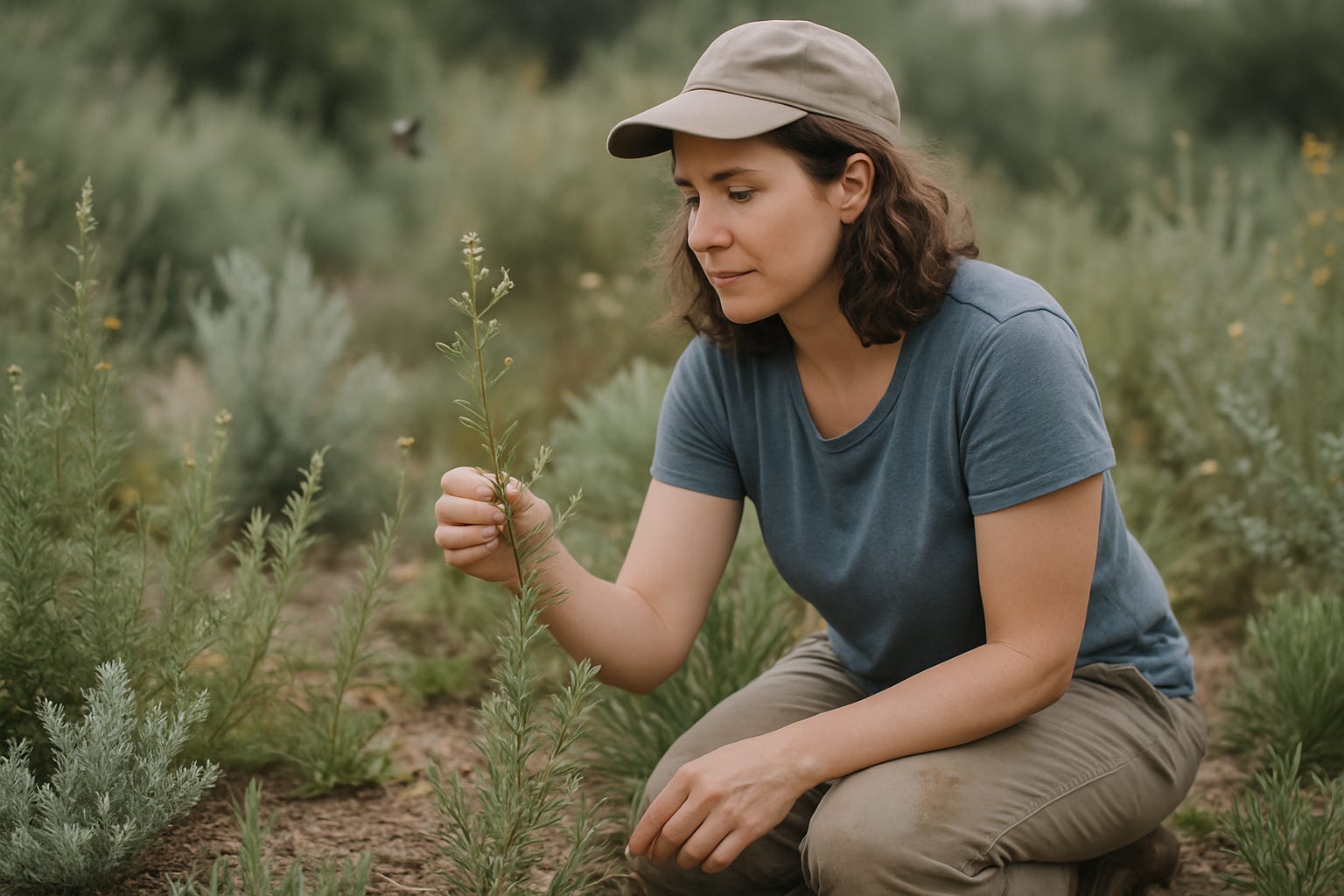
Most gardens are ecological voids. Not ugly, not neglected — just ecologically silent. A lawn of fescue, a row of hostas, a hydrangea from the garden center: they look fine, they require effort, and almost nothing in your local food web can use them. Hostas, in the words of University of Delaware entomologist Doug Tallamy, are “like a little plastic statue.” They’re there, they’re not hurting anything, but they’re not helping anything either.
Tallamy’s research at the University of Delaware has reshaped how ecologists and gardeners think about suburban planting. His team discovered that just 14% of native plant species support 90% of caterpillar species in the US, and that 96% of terrestrial birds depend on caterpillars and moth larvae to feed their young, according to the National Wildlife Federation’s overview of his keystone plant work. The math is uncomfortable: if you fill your yard with non-native ornamentals, you’re producing very little food for the animals that need it most.
The good news is that even a small number of native plants makes a visible difference quickly. The US National Park Service says it plainly: “Plant it and they will come.” You don’t need to rip everything out. You just need to start adding the right things.
Here are five native plants that punch well above their weight, chosen because they’re widely available, relatively easy to grow, and genuinely transformative for local wildlife.
1. Common milkweed (Asclepias syriaca) — the one plant monarchs can’t live without
There is no plant on this list with a more urgent case for planting than milkweed. 🦋
Monarch butterflies can only lay their eggs on milkweed. Their caterpillars eat nothing else. And right now, the western monarch population is in genuine crisis — the Xerces Society’s 2025 count recorded just 9,119 butterflies overwintering in California, a 96% drop from 2023 and the second-worst count since monitoring began in 1997. The US Fish and Wildlife Service proposed listing monarchs as a threatened species in December 2024. That proposal is still working through regulatory channels, but the trend is not ambiguous.
The biggest driver of decline is the disappearance of milkweed from agricultural land. Herbicide-resistant crops have eliminated it from millions of acres of corn and soybean fields across the Midwest. Your backyard patch won’t single-handedly reverse that, but it is part of the solution.
A few things worth knowing before you plant:
Buy native milkweed, not tropical milkweed (Asclepias curassavica). Tropical milkweed is sold everywhere and looks similar, but it doesn’t die back in fall. Because it stays green, monarchs linger on it instead of migrating south, which disrupts the migration and exposes them to a parasitic protozoan called OE. NWF naturalist David Mizejewski has been clear on this point for years.
Common milkweed spreads via rhizomes, so give it room. It’s perfectly suited to the back of a border, a meadow strip, or a rough edge of the property.
The flowers are genuinely beautiful — dusty pink clusters with a sweet fragrance that draws in native bees, too.
The seed pods left standing in winter feed birds, and the dried stems are prime real estate for overwintering native bees.
If you’re not sure which milkweed species is native to your region, the National Wildlife Federation’s native plant finder lets you search by zip code. 🌍
2. Purple coneflower (Echinacea purpurea) — the workhorse that never stops giving
If native plants had a most-valuable-player award, Echinacea would be nominated every year. 🌸
The flowers bloom mid-to-late summer in shades of pink and purple, and they attract bees, butterflies, and flower beetles from the moment they open. But what makes coneflower especially useful is what happens after the petals drop. The spiky seed heads persist all winter, and goldfinches — American goldfinches in particular — rely on them as a reliable food source when little else is available. Leave the seed heads standing. Do not deadhead them. This is one case where tidiness is actively harmful.
From an ecological standpoint, coneflower hosts:
Dozens of native bee species, including specialist bees that feed only on Echinacea pollen
Silvery checkerspot butterflies, which use coneflower as a larval host plant
Many migrating butterflies that refuel on the nectar during late-summer movements
Coneflower is also one of the more forgiving plants on this list. It prefers full sun and well-drained soil, but it tolerates clay, drought, and benign neglect better than most ornamentals. It self-seeds prolifically, so a single plant becomes a small colony within a few years without any effort on your part. The University of Minnesota Extension specifically recommends it as a starter plant for gardeners new to native species, partly because it looks great and partly because it basically takes care of itself.
One purchase. A few years. Then free plants everywhere. That’s the deal. 💪
Have you tried growing native plants before and found them harder or easier than expected? The perception that they’re difficult is one of the most stubborn myths in gardening, and I’d genuinely like to know if your experience matches or contradicts it.
3. Goldenrod (Solidago spp.) — stop blaming it for your allergies
Let’s clear something up first. Goldenrod does not cause hay fever. 🤧
The National Wildlife Federation has written about this myth directly: goldenrod blooms at the same time as ragweed, and ragweed is the actual culprit. Goldenrod produces heavy, sticky pollen designed to be carried by insects — it doesn’t float through the air and into your nose. Ragweed does. They just happen to flower at the same time in late summer, so goldenrod gets the blame while ragweed escapes unnoticed in the scrubby margins.
Once you get past the reputation, goldenrod is one of the most ecologically productive native plants you can add to a garden. Research documented by the NWF shows that goldenrod species in the US Mid-Atlantic alone provide food and shelter for 115 butterfly and moth species, and more than 11 native bee species feed exclusively on goldenrod pollen — they can’t survive without it. There are also bees that rely on goldenrod as a migratory fuel stop, much like monarchs do.
Some practical pointers:
With over 100 native goldenrod species across North America, at least one will suit your climate and soil type. Solidago canadensis (Canada goldenrod) is among the most widespread; Solidago speciosa (showy goldenrod) is more compact and better suited to garden beds.
It blooms in late summer and fall, filling the exact gap when most other flowers have finished. For pollinators building up food stores before winter, this timing is critical.
Songbirds feed on the seed heads through winter, just like with coneflower.
In large, informal plantings, goldenrod can spread aggressively. In a mixed border, choose clump-forming species and divide them every few years.
The yellow color is genuinely striking in September and October, at a moment when most gardens have gone brown. I think people who’ve avoided goldenrod for years are often surprised by how much they like it once they actually plant it. 🍂
4. Joe-Pye weed (Eutrochium purpureum) — the late-summer giant
Here’s a plant that earns the word spectacular without any hedging. 🌺
Joe-Pye weed grows to 5–7 feet tall, topped with massive domed clusters of dusty pink flowers that bloom from mid-July through September. That timing matters. By midsummer, most spring and early-summer flowers are done, and pollinators still need food. Joe-Pye weed fills that gap with remarkable generosity — a single mature plant can host dozens of butterflies simultaneously. Monarchs, swallowtails, fritillaries, and skippers are all regulars. Native bumblebees, sweat bees, and leaf-cutter bees crowd the flower heads, sometimes still feeding after dark.
According to PlantNative’s ecological profile, Joe-Pye weed supports over 40 species of butterflies and moths and hosts several specialist moth species as larvae. Its deep taproot system also stabilizes soil and creates structure for underground invertebrates.
A few honest notes on growing it:
It needs space. This is not a plant for small, formal beds. It wants a back border, a meadow edge, or a wet patch near a rain barrel or downspout. (If you’ve built the rain harvesting system we wrote about in GreenInch’s how to set up a rain harvesting system for under $50, Joe-Pye weed planted near the overflow is a genuinely clever combination.)
It prefers moist soil and full sun, though it tolerates partial shade in hot climates.
Taller varieties may need staking in exposed spots.
Leave the dried flower heads and stems standing all winter. Birds use the seeds, and hollow stems become nesting tubes for cavity-nesting native bees.
The visual payoff is real. Pair it with purple coneflower, goldenrod, and black-eyed Susan (Rudbeckia hirta) for a planting that blooms from June through October, covers pollinators from spring prep to winter prep, and looks like a deliberately designed prairie garden. Which it is.
5. New England aster (Symphyotrichum novae-angliae) — the season closer every garden needs
If goldenrod is fall’s nectar bar for insects, New England aster is the last call. 🍁
Asters bloom from late summer into October — in mild years, sometimes into November — producing deep purple, pink, or white daisy-like flowers that draw in native bees, monarch butterflies on their southward migration, and painted ladies. Audubon’s native plant guide notes that asters attract up to 112 species of butterflies and moths, which puts them in the same ecological tier as goldenrod. Together, the two plants form a late-season tag team that keeps pollinators fed well past the point when most garden flowers have quit.
Practically speaking:
New England aster prefers full sun and moist, well-drained soil, but it adapts to a fairly wide range of conditions.
It grows 3–6 feet tall, so give it a mid-border or back-border position.
Watch for powdery mildew in humid conditions — it’s the plant’s main weakness. Space plants for good air circulation and choose mildew-resistant cultivars like ‘Purple Dome’ or ‘Alma Pötschke’ if you’re in a humid climate.
Like goldenrod, it self-seeds and spreads. A light division every few years keeps it tidy.
Leave stems standing until spring; they shelter overwintering insects and provide birds with seeds and insect snacks through the cold months.
Planting goldenrod and aster together solves a problem that frustrates many well-intentioned wildlife gardeners: the late-summer gap where everything’s gone brown, pollinators are still active, and there’s nothing for them to eat. These two plants close that gap decisively, and they look genuinely beautiful doing it. 🌼
What I find most encouraging about all five plants on this list is how interconnected their benefits are. Milkweed feeds monarchs, which pollinate other flowers. Coneflower feeds bees, which feed caterpillars, which feed birds. Goldenrod and aster sustain migrating insects that redistribute pollen across landscapes. Joe-Pye weed creates the late-summer density that turns a garden into a habitat patch rather than just a pretty yard.
Entomologist Doug Tallamy’s research, covered in depth by Fine Gardening, makes the stakes clear: gardeners control roughly 86% of privately held land in the United States. Professional conservation areas are important, but private yards are where the real acreage is. Every patch of native planting you add connects to adjacent patches, creating what Tallamy calls a “homegrown national park.”
If you’re curious about what native plants are specifically best suited to your zip code, the NWF’s Native Plant Finder is one of the best free tools out there. Pat Sutton, a veteran wildlife gardener, also advises checking that nursery plants are neonicotinoid-free — systemic insecticides that many commercial suppliers apply can pass through the plant’s pollen and nectar, working against the very insects you’re trying to attract.
So here’s the question worth sitting with: if you replaced one non-native plant in your garden this year with one of these five, which would it be — and what’s honestly stopping you from doing it this weekend?