

Let’s be real: most of us love cooking, eating, and maybe even cleaning — but we don’t necessarily want to overhaul our lives or spend hours re-training our habits for the environment. What if I told you that you can make your kitchen greener with a few barely-there tweaks? Subtle, almost effortless moves that shave down waste, energy use, and environmental guilt — without turning you into a full-time eco-warrior. Yep. That’s the beauty of lazy-person tricks: low friction, high payoff.
Below are five easy, low-effort ideas to green-up your kitchen game. Do a couple now. Add more later if you’re feeling ambitious. The planet — and your future self — might just thank you.
1. Swap single-use trash for reusables (yes, even that clingfilm)
Plastic clingfilm, disposable wrap, paper towels — they’re all convenient. But let’s face it: convenient often means trash. Instead of reaching for clingfilm or zip-locks, reach for something that lasts.
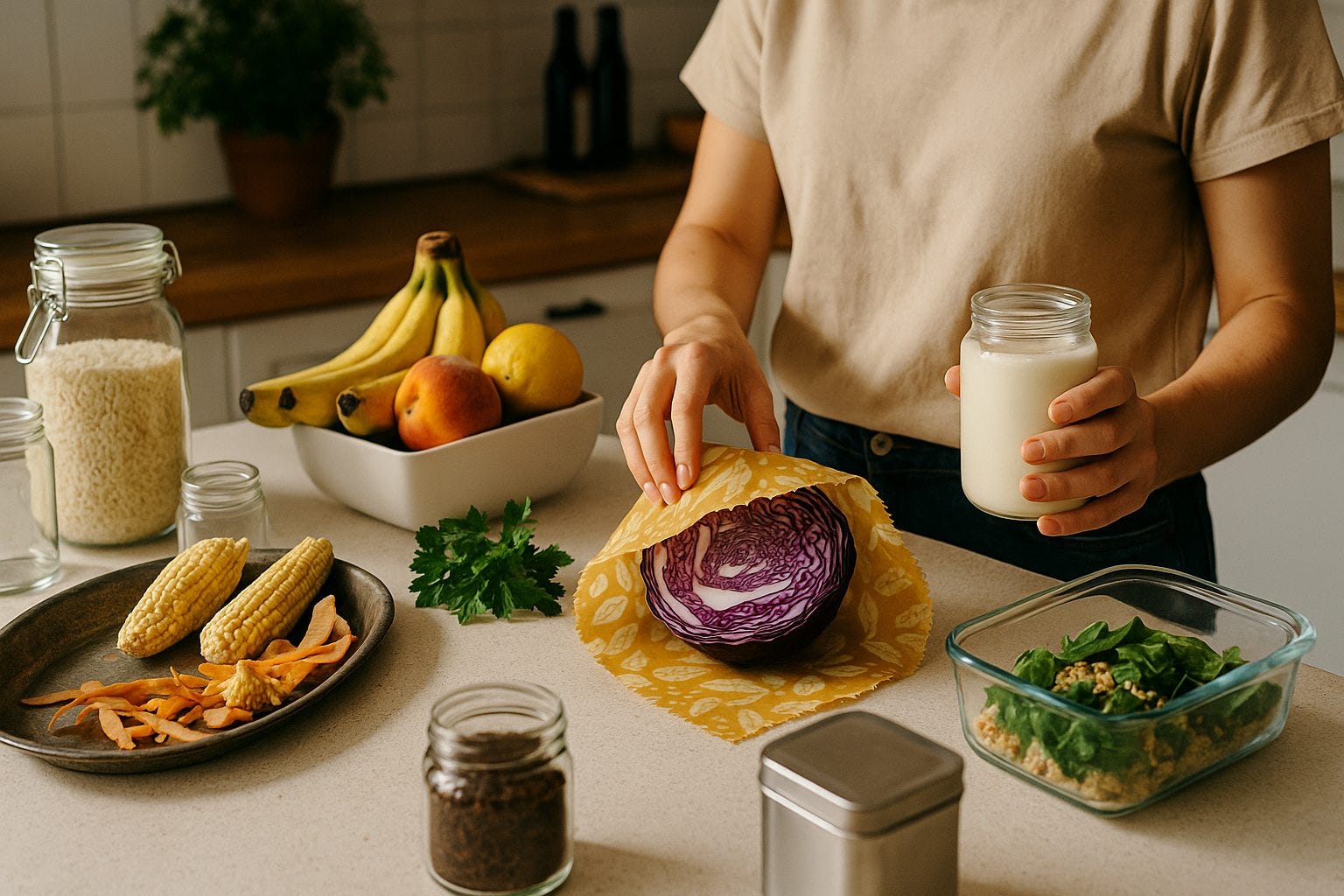
Use reusable glass jars, metal containers, or simply secondhand jars (yes — those jam jars hiding in the back of your cupboard) to store leftovers and dry goods. That simple step turns “waste tonight” into “lunch tomorrow.”
Consider swapping clingfilm for Beeswax wrap — a reusable, breath-permitting cloth wrap that keeps your food fresher longer without tossing a layer of plastic into the landfill.
Little changes like these mean less trash, less plastic, maybe even less guilt. And tbh — you barely notice the effort.
2. Embrace leftovers, composting — and treat your kitchen scraps like gold
Food waste is one of the sneakiest polluters. Tons of food get tossed simply because it wasn’t eaten in time. But with a tiny dose of planning and a pinch of creativity, your “kitchen garbage” can become a resource.
Plan meals based on what you already have. That means checking your fridge or pantry before shopping and making a rough list. This habit helps you avoid buying more than you can eat.
Store perishables smartly — freezing what you won’t eat soon, keeping fruits separate so they don’t spoil each other, washing things only when needed. Suddenly, bananas and spinach last longer than your willpower at midnight.
Compost food scraps — peels, cores, coffee grounds, eggshells — and return them to the earth (or your garden, balcony plants, or compost bin). Composting doesn’t require much space, and it transforms waste into nutrient-rich soil.
In short: treat leftovers as opportunities, not garbage. Waste less. Feed the earth.
3. Ditch toxic cleaning and embrace natural, refillable products
You clean your kitchen. Naturally. But did you ever think about what’s in that spray or cleanser? Conventional cleaning products often come in single-use plastic bottles and contain chemicals that aren’t great for you — or the planet.
Switch to biodegradable or refillable cleaning products. Simple solutions like vinegar + water or lemon + baking soda work surprisingly well and don’t come packaged in landfill-bound plastic bottles.
If you prefer store-bought, look for eco-conscious brands that minimize packaging waste and avoid harsh chemicals. A little mindfulness in cleaning goes a long way.
You clean anyway. This way, you clean with a conscience.
4. Let energy-smart cooking habits do the heavy lifting
Your kitchen is like a small energy factory: ovens, fridges, stoves — they all sip electricity (or gas) even when you’re not fully paying attention. The good news? A few lazy shifts in how you use them can make a big difference.
Choose energy-efficient appliances (or at least use existing ones smarter): LED lighting, well-insulated refrigerator/freezer, and more efficient dishwashers and cookers make a difference.
Cook smarter: Use smaller pots on burners instead of oversized pans. Cover pots when boiling water. Steam or slow-cook instead of firing up big ovens. Even batch cooking helps — one oven run yields lunch and dinner.
Less energy, less carbon footprint — with minimal extra thought. Kitchen eco-hacks at their finest.
5. Buy — or reuse — quality items worth keeping
Here’s the thing: buying cheap disposable things — low-cost cookware, flimsy plastic containers, single-use sponges — often means ending up with more waste. Instead, invest (or reuse) once, and make it last.
Opt for long-lasting cookware or storage containers instead of cheap disposable versions. These tend to be more durable and, over time, generate less waste.
Reuse what you already have. It doesn’t have to be fancy. That dusty mason jar? It’s a storage vessel. The old (but still good) pot in the back of the cabinet? Still cooks meals. The world doesn’t need new plastic every few months.
Think of it as “buy once, use forever” — and skip the throwaway mindset.
Also read: 7 Things in Your Kitchen That Are Wrecking the Environment (and What to Use Instead)
Why lazy-person green tricks matter (even if you’re only doing a few)
We live in a world of big environmental challenges. But here’s the kicker: small shifts add up. When enough of us do just a few things better — reuse jars instead of discarding them, compost food scraps, cook more mindfully — those tiny droplets become a rising tide.
Green doesn’t have to be all or nothing. And frankly, if going a little greener means I have to think less — count me in.
Because sustainability isn’t about perfection. It’s about progress.