

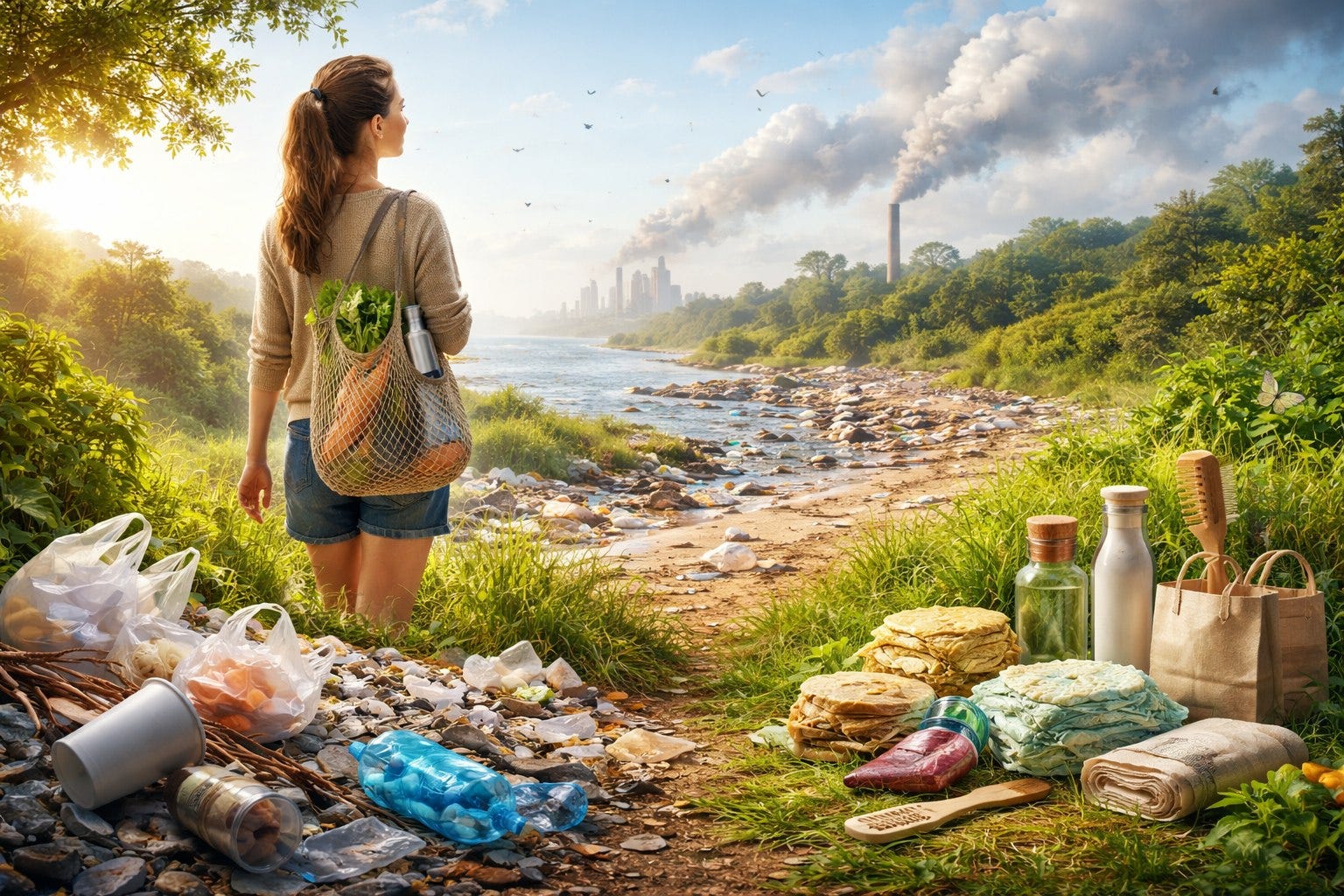
Hey reader 👋 — you might think your everyday habits are harmless. After all, you’re just brushing your teeth, brewing tea, and throwing stuff in the trash, right? But buckle up: many of the products you use routinely are wreaking quiet havoc on the planet. This isn’t doom-scrolling content; it’s eye-opening insight with practical antidotes 🌍. Below, we spotlight five everyday offenders — and show how to replace them with planet-kind alternatives.
1. Plastic Bags & Single-Use Plastics: The Relentless Invaders 🛍️
Plastic bags and single-use plastics are probably the OG villains of modern environmental woes — and for good reason. They litter landscapes, clog waterways, and contribute to pollution that stretches from city streets to the deepest ocean trenches. Plastic doesn’t biodegrade — it just breaks into ever-smaller fragments that persist for decades, trapping toxins and entering food chains. The UN warns plastic waste in oceans could outnumber fish by 2050 if trends continue.
Think about it: those flimsy grocery bags and clamshell containers might last centuries in a landfill while releasing greenhouse gases and chemical additives into soil and water. Every year, billions of pieces of single-use plastic contribute to massive environmental disruption.
What to use instead:
✨ Reusable canvas or fabric bags — tough, washable, and way cuter than they used to be.
✨ Beeswax wraps in place of plastic food wrap — biodegradable and breathable.
✨ Glass containers for leftovers and meal prep — microwave-friendly and endlessly reusable.
These swaps not only cut waste — they mainstream sustainability into your everyday life.
2. Conventional Laundry & Dish Detergents: Murky Waters Ahead 🧼
Ever stopped to think where all those suds go after you rinse your dishes or laundry? A lot of traditional detergents contain phosphates and harsh surfactants that flow straight into lakes and rivers. These compounds fuel algal blooms that deplete oxygen in water — suffocating fish and disrupting entire aquatic ecosystems.
It’s not just messy — it’s ecological emergency fuel.
What to use instead:
🌿 Plant-based, biodegradable detergents — these rinse out cleaner and don’t feed toxic algae. Look for products labeled “phosphate-free.”
💧 Powdered detergents in cardboard packaging — less plastic, more planet love.
This swap doesn’t require sacrificing cleanliness — just a bit of label literacy.
3. Tea Bags (Yes, Really): Tiny Culpits, Big Pollution 🍵
If you’re a tea lover, this one hits close to home. Many tea bags — including some paper ones — contain plastic sealing or mesh fibers that aren’t biodegradable. Every steeping can release microplastics into wastewater. In fact, a single tea bag can release billions of tiny particles that evade wastewater filters and end up in rivers and oceans.
It’s a tiny cup with big consequences.
What to use instead:
🍃 Loose-leaf tea with a reusable infuser — jazz it up, reuse forever.
🥄 Metal tea balls or glass infusers — dishwasher safe and zero waste.
☕ Paper filters or traditional teapots — simple and planet-friendly.
One small switch, huge ripple effect.
4. Toothpaste & Oral Care Plastic Waste: Brush Carefully 🪥
Your oral care routine may seem spotless — but dental products contribute to environmental microplastic pollution. While many countries have banned microbeads, toothpaste can still contain tiny plastic fragments. Additionally, floss and toothbrush bristles made of nylon or Teflon shed microscopic fibers that wash into sewage systems and eventually into oceans.
The mouthwash of environmental impact? Not pretty.
What to use instead:
🦷 Toothpaste in tubes or tablets with biodegradable formulas
🌿 Bamboo toothbrushes with compostable handles
🌱 Biodegradable or silk dental floss
These swaps keep your smile bright and the planet intact.
5. Disposable Wet Wipes & Cleaning Tools: Innocent but Insidious 🧻
Sure, they’re convenient — but wipes (whether baby, makeup, or cleaning) often contain microplastic fibers that don’t break down. Every year, billions of pounds of wipes flow into landfills and water systems, harming wildlife and contributing to a global microplastic cloud.
And even scrubbing tools like melamine foam “magic” sponges can shed trillions of microplastics during everyday use — a fact researchers highlight as a surprising source of pollution.
What to use instead:
🧽 Reusable cotton or microfiber cloths — washable and durable
🪣 Natural fiber brushes — wood, sisal, hemp
🌀 Compostable cleaning wipes — for when convenience is essential
Small daily swaps add up faster than you think.
Also read: 7 Things in Your Kitchen That Are Wrecking the Environment (and What to Use Instead)
What All This Really Means 🌱
These products are sneaky — silent polluters hiding in plain sight — because we don’t usually see their environmental impact. But once you adapt your habits and embrace sustainable alternatives, you’re not just reducing waste — you’re participating in a broader circular economy that values reuse, regeneration, and longevity.
🌍 And it matters.
If millions of us make these swaps, we shrink landfill loads, lower harmful emissions, and help protect ecosystems. It’s not about perfection — it’s about collective progress.