

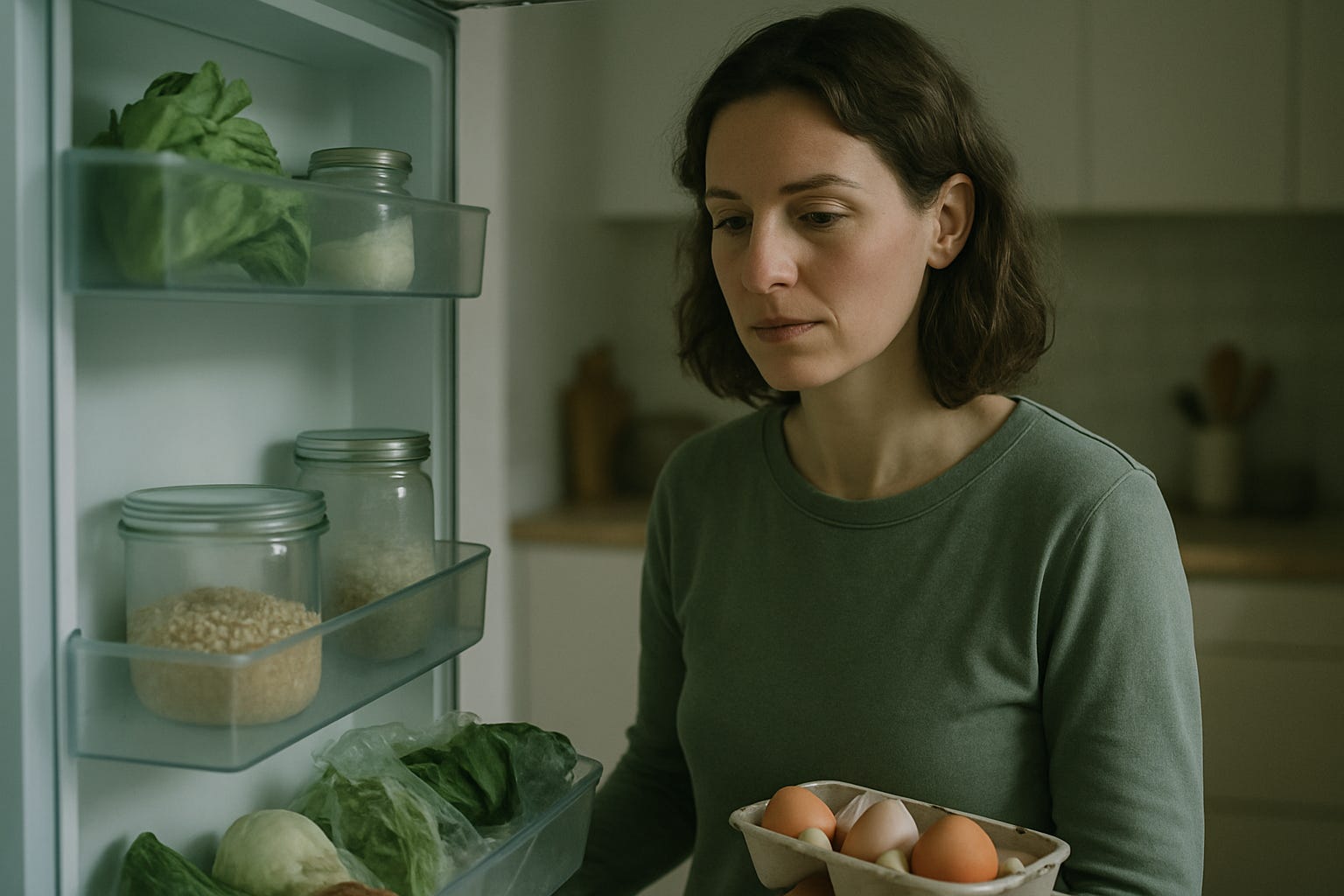
Open your fridge right now. Actually do it. Past the condiment graveyard, behind the suspicious leftover container you’ve been meaning to deal with, there’s almost certainly a perfectly good dinner — maybe two — waiting to be noticed. A half-used can of chickpeas. Three wilting scallions. An egg or four. Some rice from Tuesday. These aren’t scraps. They’re the raw materials of a meal plan, and the most sustainable grocery shopping you can do this week is to not grocery shop at all.
The average American household of four throws away more than $3,000 worth of food every year, according to ReFED’s Sara Burnett via Yale Climate Connections. That’s not a typo. That’s a car payment. A vacation. A meaningful chunk of someone’s annual grocery budget, rotting in a landfill, producing methane, which is about 80 times more potent than CO2 over a 20-year window. The EPA’s 2025 report on the cost of food waste puts the per-capita loss at $728 per person annually, and that figure uses only retail prices — meaning restaurant leftovers aren’t even counted.
This isn’t a guilt trip. It’s a practical observation: fridge-first cooking is one of the highest-impact, lowest-effort sustainable habits you can build, and it costs you nothing. Here’s how to actually do it, with a real meal plan you can run this week. 🌱
Step one: the fridge audit (be honest with yourself)
Before cooking anything, you need to know what you’re working with. This is the part most people skip, which is exactly why the spinach dies every single time. Pull everything out. Check the crisper drawer — both drawers, the second one you forgot you had. Look at the door shelves. Peek in the freezer.
What you’re sorting into:
Use today or tomorrow: wilting greens, open dairy, cooked grains, anything that’s been in there more than four days
Use later this week: firm produce, raw proteins, whole grains that are fine for a few more days
Pantry anchors: pasta, canned beans, canned tomatoes, eggs, frozen veg — these can fill gaps anywhere in the plan
Put the “use first” items at eye level in the fridge. This sounds annoyingly simple, but it works. According to zero-waste cooking resources, about two-thirds of household food waste happens because food isn’t used before it goes bad — not because people don’t care, but because it disappears behind the yogurt and is quietly forgotten. Visible food gets eaten. 🥦
Once you can see what you have, you’re not planning around a blank slate anymore. You’re solving a puzzle. That shift in framing is the whole game.
The four hero recipes that eat almost anything
This is where fridge-first cooking becomes genuinely practical rather than aspirational. Four recipes, each one infinitely flexible, all of them designed to absorb whatever random combination of ingredients your fridge currently holds. These aren’t compromise meals. They’re legitimately good. ♻️
The frittata. Eggs, whatever vegetables need using, any cheese scraps, herbs if you have them. That’s it. A frittata is arguably the most useful recipe ever invented — it works for breakfast, lunch, or dinner; it takes 20 minutes; and it handles wilting greens, wrinkled peppers, leftover cooked potatoes, and sad mushrooms without complaint. The technique is consistent regardless of what goes in: sauté your vegetables in an oven-safe pan, pour over beaten eggs seasoned well, let it partially set on the stovetop, then finish under the grill for three minutes. Serve with bread or a simple salad.
Fried rice. Day-old rice (importantly: not fresh rice, which is too wet), any protein you have, whatever vegetables are looking tired, a couple of eggs, soy sauce, sesame oil if you have it, garlic. The combination sounds like it shouldn’t work and consistently does. The key is high heat and not stirring too much — you want some crispiness, not a stir-fry stew.
A big pot of soup or a brothy stew. Half a bag of lentils plus canned tomatoes plus an onion plus whatever root vegetables are going soft equals a meal that feeds four and tastes like you planned it. Soup is uniquely forgiving: it will absorb almost any vegetable, it improves with time, and it gives you tomorrow’s lunch automatically.
Grain bowls. Leftover quinoa, farro, rice, or barley as a base; roasted vegetables on top (almost anything becomes good when roasted at high heat with olive oil and salt); a protein if you have one; a quick sauce made from whatever’s in the fridge door. Tahini, leftover salsa, yogurt with lemon and garlic — any of these will pull a grain bowl together.
Keep these four in mind and you can clear a fridge with almost any combination of ingredients. 🌍
Building the actual week
Here’s a rough structure for a zero-waste week that starts from a fridge audit rather than a blank shopping list. Adjust based on what your fridge audit actually turned up.
Monday: frittata using whatever needs to go first — greens, cheese, any cooked vegetables from the weekend. Serve with bread or toast.
Tuesday: fried rice using leftover rice, frozen vegetables if fresh ones are running low, eggs, soy sauce. Done in 15 minutes.
Wednesday: soup or stew using lentils, canned chickpeas, or dried beans, plus any softening root vegetables. Make a big batch — Thursday’s lunch is already handled.
Thursday: grain bowls using whatever cooked grain you have or quickly cook a new one; top with roasted vegetables and any remaining protein.
Friday: “eat everything” night. This is the meal that matters most for waste reduction. Look at what didn’t get used earlier in the week and build something from it, however improvised. A quesadilla. A pasta with odds and ends. Stuffed peppers using leftover rice and beans. Trust your instincts.
You’ll probably still need a couple of pantry items — olive oil, stock, pasta, canned tomatoes — but you won’t be buying fresh ingredients for the sake of a recipe someone else wrote. Your fridge dictates the plan, not the other way around. 💡
What’s in your fridge right now that you’ve been avoiding dealing with? Identifying it is honestly the hardest step — everything after that is just cooking.
What to do with scraps (and what you’re probably throwing away unnecessarily)
This section exists because most of us toss things reflexively that are completely edible and useful. A partial list of things you don’t need to throw away:
Vegetable scraps and peelings: carrot tops, broccoli stems, onion skins, celery leaves, herb stems — all of these go into a freezer bag. When the bag is full, simmer the contents in water for 45 minutes. You have stock. Free stock. Good stock.
Stale bread: cube it and roast at 180°C with olive oil and salt for croutons, or blitz it for breadcrumbs. Do this before the bread is moldy, not after.
Limp greens: a quick soak in ice water revives most greens for salads. For anything past that stage, wilt them into soup, eggs, or pasta instead.
Overripe fruit: bananas especially — freeze them immediately for smoothies or banana bread. Berries on the edge of turning go into yogurt, oatmeal, or a quick compote with sugar.
Dairy near its use-by date: milk, cream, and yogurt all fold into cooking in ways that completely disguise their age. Milk makes béchamel. Cream goes into a quick pasta sauce. Yogurt becomes a marinade or a dressing.
The CNN piece on kitchen food waste reduction quotes chef Michele Casadei Massari of Lucciola in Manhattan recommending an “opportunity box” in the fridge — a container for trimmed bits, herb stems, and random scraps ready to become something useful. It’s the same idea as the “eat first” zone, just for scraps rather than ingredients. Once you have a system for this, you stop throwing things away on autopilot. 🥕
The shopping list you actually need
After a proper fridge-first week, you’ll have a much cleaner picture of what you actually run through versus what you buy optimistically. The GreenInch 30-day personal climate reset calls this one of the most effective behavior changes available at the household level — not because any single meal saves the planet, but because the habit compounds.
When you do write a shopping list, think in bridge ingredients rather than full recipes. These are the flexible additions that work across multiple meals:
A bag of dried lentils or canned beans (goes into soups, grain bowls, frittatas)
A bunch of whatever hardy green is cheapest (kale, chard, cabbage — these last longer than spinach and work in everything)
A block of firm tofu or a carton of eggs (protein for any meal format)
One acid ingredient — a lemon, a lime, or a bottle of vinegar — because a splash of acid makes almost anything taste intentional
Buy less than you think you need. Seriously. The zero-waste meal planning research from Hennepin County consistently found that households waste most when they buy more than their weekly schedule can realistically absorb. Planning four dinners instead of seven leaves room for a leftover night, a spontaneous takeout, and a “whatever’s in the fridge” meal without anything going to waste.
Cooking this way won’t always feel elegant. Some nights you’ll end up with an improvised soup you can’t quite name. But the spinach won’t die this week, the chickpeas will actually get eaten, and you’ll save somewhere between $50 and $80 you would otherwise have spent replacing food you technically already had. That’s $2,500 to $4,000 a year — and your household’s food-related carbon footprint will start to shrink without you having to think about it consciously.
What’s the one ingredient currently in your fridge that always seems to end up in the bin? That’s your starting point for next week’s meal plan.