

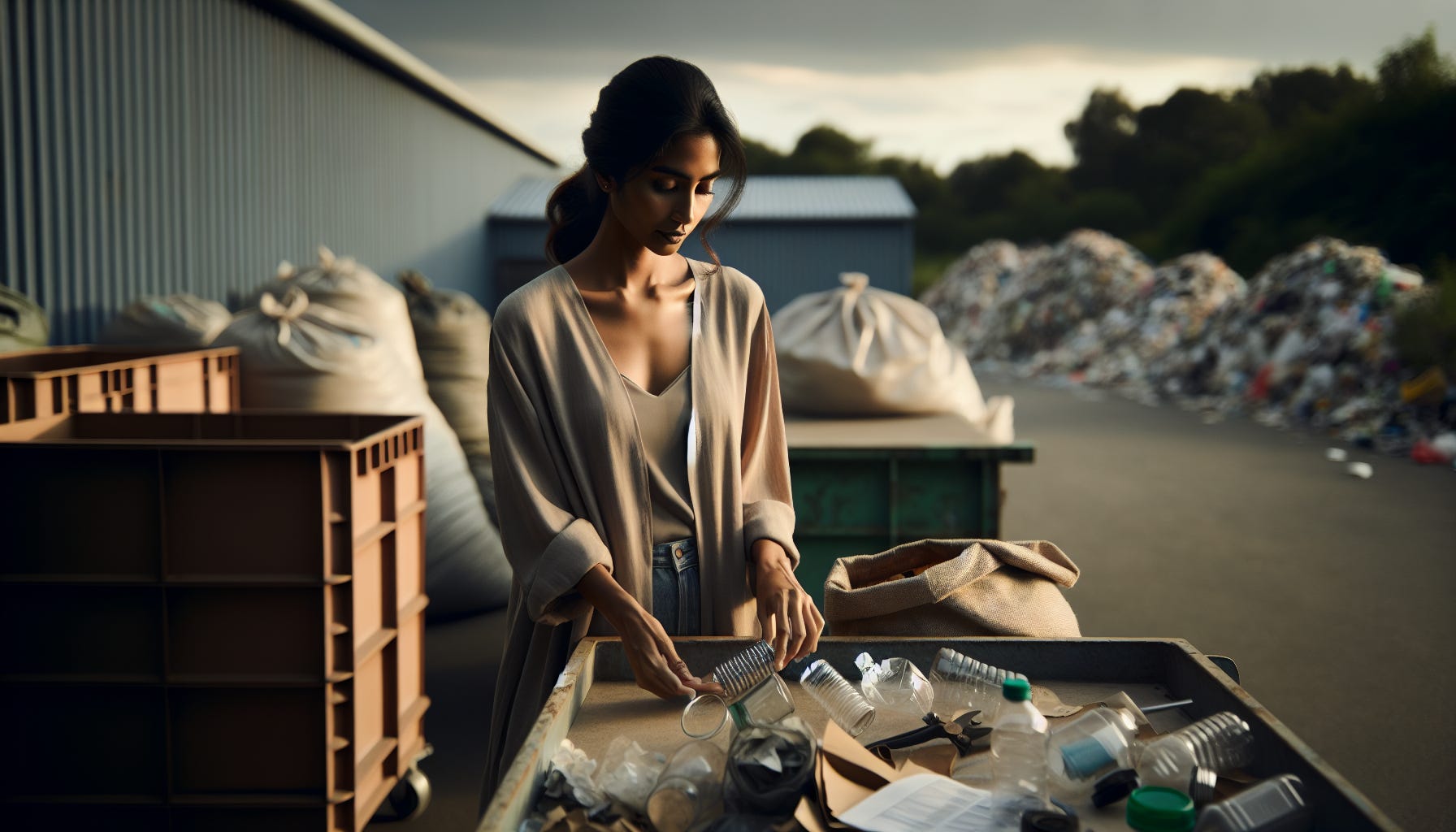
You drag the blue bin to the curb, feel a small flush of civic virtue, and head back inside. Job done. The recycling is handled. Someone will take care of it.
Except, here’s the thing: roughly one in four items in the average recycling bin shouldn’t be there at all. That’s not a fringe statistic — according to the Recycling Partnership, approximately 25% of items placed in recycling bins are not actually recyclable, and these contaminated materials often end up in landfills due to sorting challenges and inconsistent recycling standards. So if you’ve been tossing greasy pizza boxes in with your glass jars and feeling smug about it, this article might sting a little.
The good news: once you understand what actually happens to your recycling, you can make choices that genuinely matter. And some of it is wild — conveyor belts, infrared lasers, geopolitics, and the ghost of a Chinese policy decision that broke the recycling system of an entire hemisphere.
The journey your bin takes: inside a materials recovery facility
After the truck picks up your recycling, it heads to a materials recovery facility — or MRF, which everyone in the industry pronounces “murf,” because of course they do. 🔄
Waste enters a MRF when it is dumped onto the tipping floor by the collection trucks. The materials are then scooped up and placed onto conveyor belts, which transport them to the pre-sorting area, where human workers remove items that are not recyclable. Potential hazards like lithium batteries, propane tanks, and aerosol cans are pulled out here — they can cause fires. And that’s before the machines even get involved.
The actual sorting process is genuinely impressive:
Rotating disk screens separate flat, 2D materials (paper, cardboard) from 3D ones (bottles, jars, cans)
Magnets pull out ferrous metals like steel cans
Eddy currents fling out aluminum — the physics of it is almost beautiful
Infrared optical sensors identify different plastic polymer types, then a jet of air shoots each plastic into the appropriate bin
Glass falls through and shatters into what the industry calls cullet, which gets melted down into new glass
Once sorted, clean materials get compressed into bales — big, dense blocks that look like hay bales made of crushed bottles — and sold to manufacturers who turn them into new products. That’s the version of recycling we all picture. It does happen. The problem is everything that can go wrong before you get there. 🏭
Have you ever watched a recycling facility video and been surprised by how fast the conveyor belts move? I think most of us would be — these machines are scanning and sorting thousands of items a minute, not hand-inspecting your lunch container.
The contamination problem: how one pizza box can doom an entire truckload
Here’s where it gets uncomfortable. When a batch of recyclable goods containing trash makes its way to a recycling facility, it can potentially contaminate the whole batch of otherwise good recyclable material. If a batch is deemed contaminated, waste managers won’t buy it — recycling is an industry, after all — which means all of that otherwise recyclable material goes to the landfill.
This is the domino effect that most people don’t know about. Your one greasy pizza box doesn’t just fail to get recycled — it can take dozens of genuinely recyclable items down with it. 🍕
Contamination costs an estimated $3.5 to $4 billion annually in the U.S. alone. At the facility level, it drives at least $300 million in added costs due to increased labor, slower processing, and frequent equipment repairs.
The most common contamination offenders, in case you’re wondering whether you’re one of them:
Plastic bags and film — these wrap around sorting machinery and can shut down an entire facility
Greasy food containers (yes, even if the container itself is technically recyclable)
“Wet” recyclables — anything with liquid still inside
Plastic bags stuffed inside other recycling (a sneaky one)
Small items under about five inches — they fall through the sorting screens and contaminate other streams
According to David Gregory, Solid Waste Division Manager for Orange County, items like plastic bags and greasy pizza boxes can disrupt the sorting process, leading to entire facilities being shut down. These long-term delays result in declining recycling rates across the board.
Wishful recycling: the well-meaning habit that makes things worse
There’s a term for putting something in the recycling bin just because you hope it’s recyclable: wish-cycling, or aspirational recycling. It sounds cute. It is not. ♻️
Wish-cycling is the act of putting an item in the recycling bin that is not intended to be collected by the recycling program, and it can cause real problems. Common examples include plastic bags, garden hoses, electrical wires and cords, batteries, diapers, and chip bags.
The psychological pull toward wish-cycling makes complete sense. You’ve read about the ocean plastic crisis. You know recycling is good. You have a chip bag in your hand, you spot a recycling bin, and you think: surely someone will sort this out. Someone won’t. The machine isn’t looking for chip bags. It’ll contaminate the batch or gum up the rollers.
Every time a batch of recycling is contaminated with non-recyclables, it risks being sent to the landfill altogether. That means not only did the original container that was wish-cycled not get recycled, it also caused way more recycling to be landfilled instead.
What’s even more worth pausing on is this: wish-cycling makes recycling look better than it is. When recycling bins are full of non-recyclable items, participation statistics inflate while actual diversion rates fall. The optics improve; the outcomes don’t.
The rule that recycling educators keep coming back to is genuinely useful: “When in doubt, throw it out.” That sounds counterintuitive for eco-conscious households, but it’s the right call. A clean batch of actual recyclables does far more good than a contaminated bin of optimistic guesses. 🌱
Do you know what your local council actually accepts? A surprising number of people don’t — and the rules genuinely vary from one municipality to the next.
The China bombshell that cracked the global recycling system
Even if you’ve been doing everything right — rinsing containers, checking labels, resisting the urge to wishcycle — there’s a bigger structural problem that affects what happens to your recycling. It starts with a geopolitical decision made in Beijing in 2017.
For decades, the U.S., UK, Europe, and Australia shipped the bulk of their collected recyclables to China. China’s “National Sword” policy, enacted in January 2018, banned the import of most plastics and other materials headed for its recycling processors, which had handled nearly half of the world’s recyclable waste for the previous quarter century.
By January 2018, China had banned 24 categories of solid waste and stopped importing plastic waste with a contamination level above 0.05 percent — significantly lower than the 10 percent it had previously allowed. That threshold is almost impossibly strict. Western recycling programs were nowhere near meeting it.
The fallout was immediate:
China’s plastics imports plummeted by 99 percent in one year following National Sword
The UK burned more than half a million more tonnes of waste in 2018 than it did in 2017, and recycling firms in Australia and the United States curtailed or halted their programs entirely
The U.S. then shifted to shipping recyclables to Thailand, Malaysia, and Vietnam — countries that were soon overwhelmed and began imposing their own restrictions
The collect-sort-export model that had sustained Western recycling for a generation simply stopped working. What many households had been told was getting “recycled” had, for years, been getting sorted by someone else on the other side of the planet. When that arrangement ended, the gap became visible. 🌍
The uncomfortable truth is that the recycling system was never as robust as the marketing suggested. It was always dependent on commodity markets, export relationships, and consumer behavior — all three of which can and do break down.
What you can actually do: a practical guide that doesn’t involve guilt
None of this is meant to make recycling feel hopeless. It’s meant to help you recycle better, because clean, correctly sorted recyclables genuinely do get processed and turned into new things. Aluminum, for instance, is recycled at astonishingly high rates and saves 95% of the energy required to produce virgin aluminum from bauxite ore. That’s not nothing. 💡
Here’s what actually works:
Rinse everything. You don’t need to run the dishwasher — a quick rinse and shake-dry is enough. The goal is removing residue, not sterilizing the container
Flatten cardboard boxes before putting them in the bin (unflattened boxes jam the screening machinery)
Leave plastic bags out of the bin entirely — most grocery chains have dedicated plastic bag drop-off bins where these can go separately
Check the resin number on plastics. Most curbside programs only want plastics labeled #1 (PET) and #2 (HDPE) — the bottles and jugs. Numbers 3 through 7 are usually landfill-bound regardless of what you do at home
Look up your local rules. Earth911’s recycling locator lets you search by material and postcode to find out what’s accepted near you
Never bag your recycling. Loose is better. Sorting machines can’t open bags, and bagged recyclables go straight to landfill
Beyond the bin, the more impactful changes are purchasing choices: buying products in aluminum or glass rather than mixed-material plastic packaging, choosing items with clear recycling markings, and — most powerfully — reducing and reusing before reaching for the recycling option at all. The famous waste hierarchy puts reduce first, reuse second, and recycle third, for good reason. 🔬
The U.S. Environmental Protection Agency’s recycling resources are genuinely useful if you want to go deeper on what’s accepted in your area, and Wikipedia’s overview of materials recovery facilities gives an excellent technical breakdown of how sorting actually works.
Here’s the question worth sitting with: if you could only make one change to your recycling habits after reading this — rinsing containers more carefully, cutting out plastic bags, looking up your local accepted list — which would have the biggest impact in your household? Often the answer is simpler than we expect. The hardest part isn’t knowing what to do. It’s breaking the habit of reaching for the bin as a guilt-relieving reflex rather than as the specific, considered action it’s meant to be.