

I am not a person who meal-preps on Sundays. 🙋 I own exactly one reusable produce bag, and it lives in a drawer. So when I say a greener kitchen does not need a lifestyle overhaul, I mean it.
Here is the scale of the problem. The 2024 UNEP Food Waste Index, summarized by BioCycle, says households cause 60 percent of the world’s wasted food, and that food loss and waste adds up to 8 to 10 percent of global greenhouse gas emissions. Your kitchen is where the biggest lever sits. 🌍
The habits below take about eight minutes a day. I left two spare for snack breaks. 🍪
Three minutes: scan the fridge before you shop
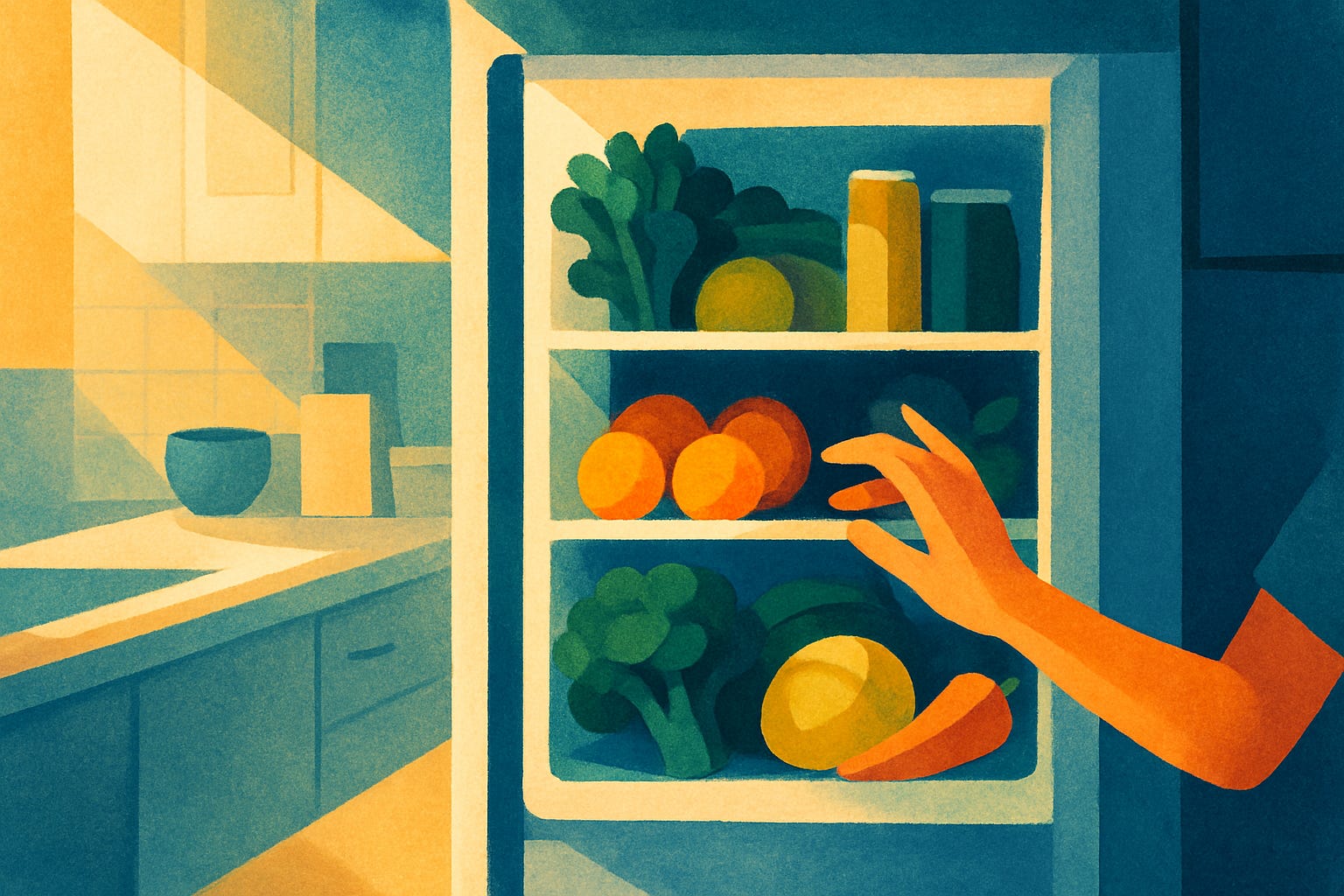
This is the single best habit I found. The EPA tells people to look through the fridge, freezer, and pantry first so they do not buy what they already own. 🛒 Add a list built around the meals you will actually eat at home, and half the battle is over.
The other half is the freezer. If you will not eat something in the next few days, freeze it. 🧊 It is the closest thing to a pause button that your kitchen has.
Check what is about to turn before you write the list
Move older food to the front of the shelf (the “first in, first out” trick)
Freeze bread, cooked rice, and ripe bananas before they go bad
Plan one leftover night and one takeout night, because pretending otherwise leads to waste 🍝
Quick question: what is the one food that always dies in the back of your fridge? Mine is celery, and I have stopped buying it.
One minute: stop treating the date as a deadline
Most date labels tell you about quality, not safety. 📅 The USDA says “best if used by” is not a purchase or safety date. Yet a Johns Hopkins study, covered by FoodNavigator-USA, found that 84 percent of people throw out food near the date at least sometimes, and 37 percent do it always or usually.
That is a lot of perfectly good yogurt in the bin. 😬 Your nose and eyes are better judges, with a few real exceptions.
Eat most cooked leftovers within three to four days, or freeze them, as the USDA advice quoted by NEEF puts it
Trim mold from hard cheese and firm produce only
Throw out moldy bread, soft cheese, and cooked leftovers 🧀
Do not gamble with raw meat or infant formula, where “use by” really does mean use by
Zero extra minutes: cook with the lid on
This one costs nothing, because you are already cooking. 🍳
When you cover a pot, heat stays inside and food cooks faster, which means less energy. Entergy’s energy tips add that a 6-inch pan on an 8-inch burner can waste 40 percent of the energy, and that opening the oven door can drop the temperature by as much as 25°F. A Kentucky Living guide says cooking without a lid can triple energy use. ⚡
Wales’ climate action site also recommends batch cooking so you heat the oven once and eat twice. 🥘
Match the pan to the burner
Use the microwave for small portions and reheating
Peek through the oven window instead of opening the door
Thaw food in the fridge overnight, not under hot water ❄️
Two minutes: load the dishwasher and skip the rinse
I think this is the most surprising item on the list. Hand washing feels frugal, but the numbers say otherwise. 🧼
According to ENERGY STAR, a new certified dishwasher uses less than half the energy of washing by hand. It also says rinsing dishes before you load them adds to the water and energy you use. So scraping the plate is enough. 🍽️ Run it full, and you save time as well.
Be fair to yourself, though. If your dishwasher is ancient or half empty, the savings shrink. And pots with baked-on food still need a soak.
Scrape plates into the compost or trash, then load them
Wait for a full load
Use the eco cycle when you are not in a hurry
Air dry with the door cracked open 💨
Two minutes: deal with scraps and the recycling bin
Prevention comes first, but some scraps are unavoidable (peels, bones, coffee grounds). The EPA’s ranking puts composting ahead of the trash for what is left. 🌱 Check whether your city has a green bin, because many accept coffee grounds, eggshells, and tea bags.
Meat scraps smell, so one Australian council suggests freezing them until collection day. Veggie ends can go into a freezer bag for stock. 🥕
Then look at the recycling bin. Our guide to the recycling mistakes most people make covers what belongs in it, and it takes about two minutes to fix.
Keep a small lidded bin on the counter for scraps
Freeze vegetable ends for stock ♻️
Learn your city’s compost rules
Empty the bin before it gets smelly
So here is your next step. Tonight, spend three minutes with the fridge and write down one thing you will use up this week. Which habit will you start with?