

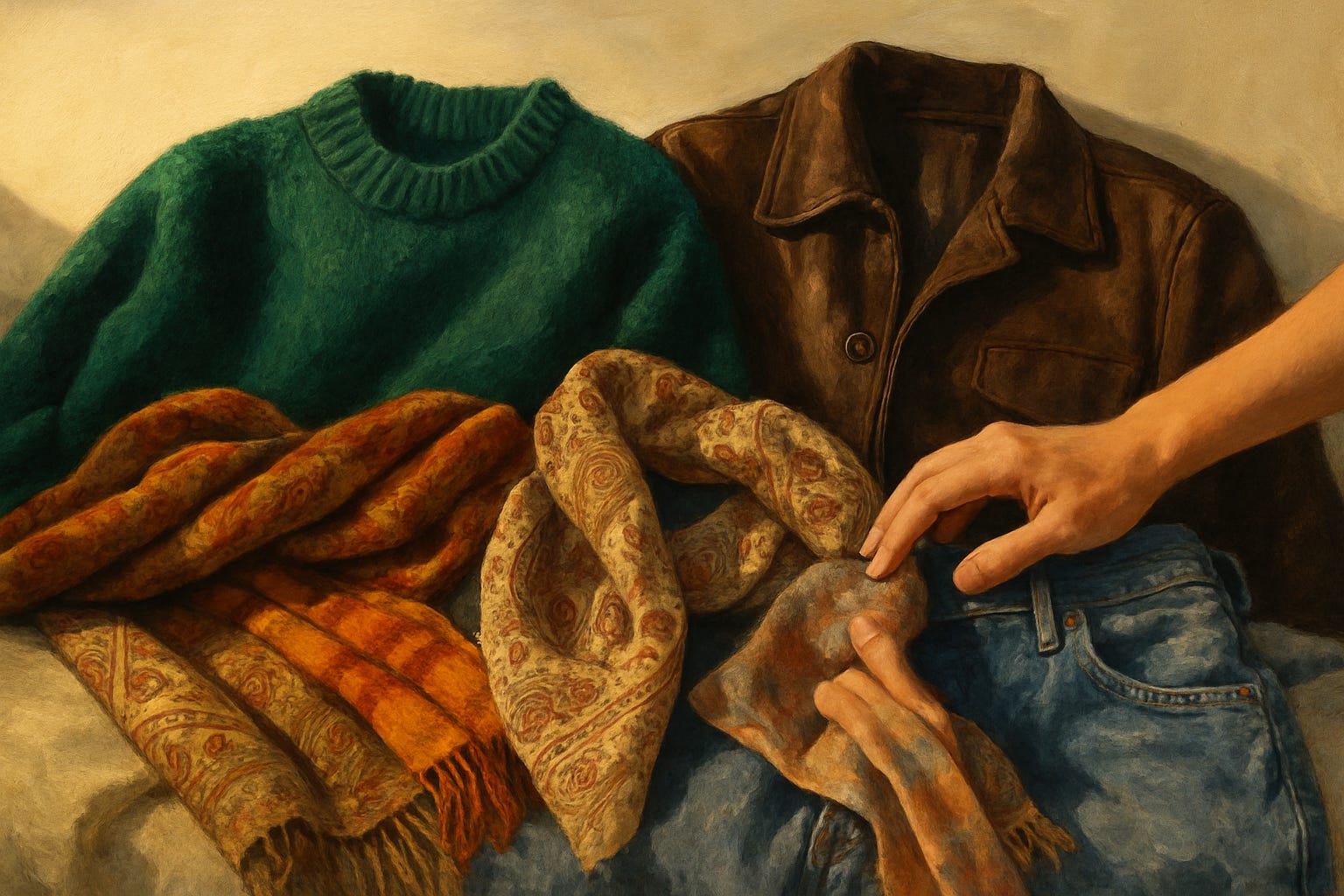
Walk into a thrift store for the first time and the racks just keep going. Shirts smashed against sweaters smashed against something that might be a bathrobe. A woman three feet away is holding a corduroy blazer up to the light like she’s found a diamond. You have no idea what she’s looking at, or why it matters to her.
Here’s the good news: the gap between overwhelmed beginner and confident thrifter closes fast. It’s mostly a handful of habits, a little patience, and knowing what you’re actually hunting for before you walk in. This guide covers why so many people are shopping secondhand right now, how to move through a store without drowning, what separates a real find from a wasted ten dollars, and how to turn thrifting into a habit instead of a one-off errand.
Why thrifting is having a moment
Thrifting used to be a niche hobby. Now it’s mainstream math. 📈 According to ThredUp’s 14th annual Resale Report, the global secondhand apparel market hit $393 billion in 2026, roughly 10% of total apparel spend worldwide, and it’s growing nearly four times faster than traditional retail. Gen Z and millennials are driving most of that growth, and nearly half of shoppers now say they discover their next secondhand find through social media instead of a search bar.
Part of the appeal is financial. Part of it is environmental: clothing production leans hard on water, energy, and raw materials, and sustainable fashion exists as a movement largely because the industry’s usual approach to constant newness has real costs attached. But I’d argue the biggest driver is simpler than either of those: thrifting has gotten less confusing. Apps sort by size and brand now. Stores restock constantly. And once you know what a genuine deal looks like versus a marketing trick (we’ve got a full guide to spotting greenwashing if you want the details), the whole category opens up. 🌍
A few numbers worth sitting with:
58% of U.S. shoppers bought secondhand apparel in the most recent tracked year
The U.S. secondhand market is on pace to hit $74 billion by 2029
Online resale alone is growing at roughly 13% a year
Nearly 50% of shoppers now find their next piece through social feeds, not search
None of that guarantees every trip pays off. It just means the odds are better than they used to be, if you know how to shop. 🧭
How to walk in without drowning
The biggest beginner mistake is walking in with no plan and leaving three hours later holding four things you don’t actually like. 🕐 Thrift stores reward focus, not wandering.
Before you go, decide what you’re actually hunting for. A winter coat. Jeans in a specific size. A stack of glassware for the kitchen. MasterClass suggests treating each trip like a mission instead of a browse, and it works. Most stores also skip dressing rooms or cap you at two items, so dress accordingly: leggings under a skirt, a fitted tank under layers, something you can try clothes over without a changing room.
A few habits that make the first few trips less chaotic:
Check the store’s specialty first. Some lean clothing, some lean furniture and housewares, some do a bit of everything
Scan by color and texture, not by garment type. Your eye trains fast to spot quality fabric on a packed rack
Shop off-season. Coats in July, sandals in January. Less competition, better prices 🏷️
Set a rough budget before you touch a rack, and hold to it
Give yourself a time limit. Twenty focused minutes beats two hours of drifting
Here’s a question worth asking before every trip: are you shopping for something specific, or just looking for a reason to browse? Both are fine. Just know which one you’re doing, because it changes how fast you should move through the store. 🛍️
What separates a real find from ten wasted dollars
Not everything on a thrift rack is worth carrying to the register. Some of it is there because someone already figured out it wasn’t worth keeping. 🔍 Learning to tell the difference is the actual skill of thrifting, more than any bargain-hunting trick.
Start with the tag. A papery, flimsy tag usually signals recent, lower-quality production, no matter how nice the brand name looks. Older pieces and true vintage tend to have heavier tags and denser stitching, and that difference is usually visible before you even check the price. Flip the garment inside out. Check the seams. Tug gently at a button. None of this takes more than fifteen seconds once you’ve done it a dozen times, according to tips compiled by What Is She Wearing and echoed across most experienced resellers’ routines.
A quick checklist for anything you’re about to buy:
Stitching: tight and even, no loose threads pulling apart at the seams
Fabric: natural fibers like cotton, wool, and linen tend to outlast synthetic blends
Structure: hold it up. Does it hang the way it’s supposed to, or sag?
Damage: stains, missing buttons, broken zippers. Some are fixable, some aren’t worth the effort
Smell: musty or heavily perfumed items often mean storage issues you can’t wash out
For furniture and housewares the checklist shifts slightly, but the instinct stays the same: inspect for cracks, wobble, or missing parts before anything else. 🪑 If a repair is realistic and cheap, a flawed piece can still be a win. If it’s not, walk away, no matter how good the price looks.
Turning thrifting into a habit, not a one-off errand
Thrifting rewards frequency more than any other strategy. 🔄 Inventory turns over constantly: what wasn’t there Tuesday might be sitting on the rack Thursday morning after a restock. Short, regular trips consistently beat the occasional four-hour marathon.
If you’re not near a great physical selection, or you’d rather shop from the couch, online resale is growing fast enough to be a real option. The U.S. online resale market alone is projected to nearly double by 2029, according to Retail Dive’s coverage of the latest ThredUp data, and apps built specifically for secondhand shopping now make filtering by size, brand, and condition genuinely easy. 💻
Thrifting also isn’t just clothing. Once the habit sticks, it opens up:
Books, records, and games for a fraction of retail price
Kitchenware and glassware, often better made than new equivalents
Furniture and home decor, especially useful for a first apartment
Fabric and materials for repair or DIY projects
That last one matters more than people give it credit for. A stained shirt or a chipped mug doesn’t have to end up as trash. If you want ideas for turning thrift-store rejects into something you’d actually display, our upcycling guide has a full list to work from. And if you’re trying to build a wardrobe that leans secondhand without feeling like a costume, these sustainable fashion tips are a solid next stop. 🧶
So: what’s the first thing you’re going to hunt for on your next trip? Pick one specific item, set a budget, and go see what’s actually on the racks. The best finds tend to go to people who show up looking for something, not the ones waiting for something to find them.