

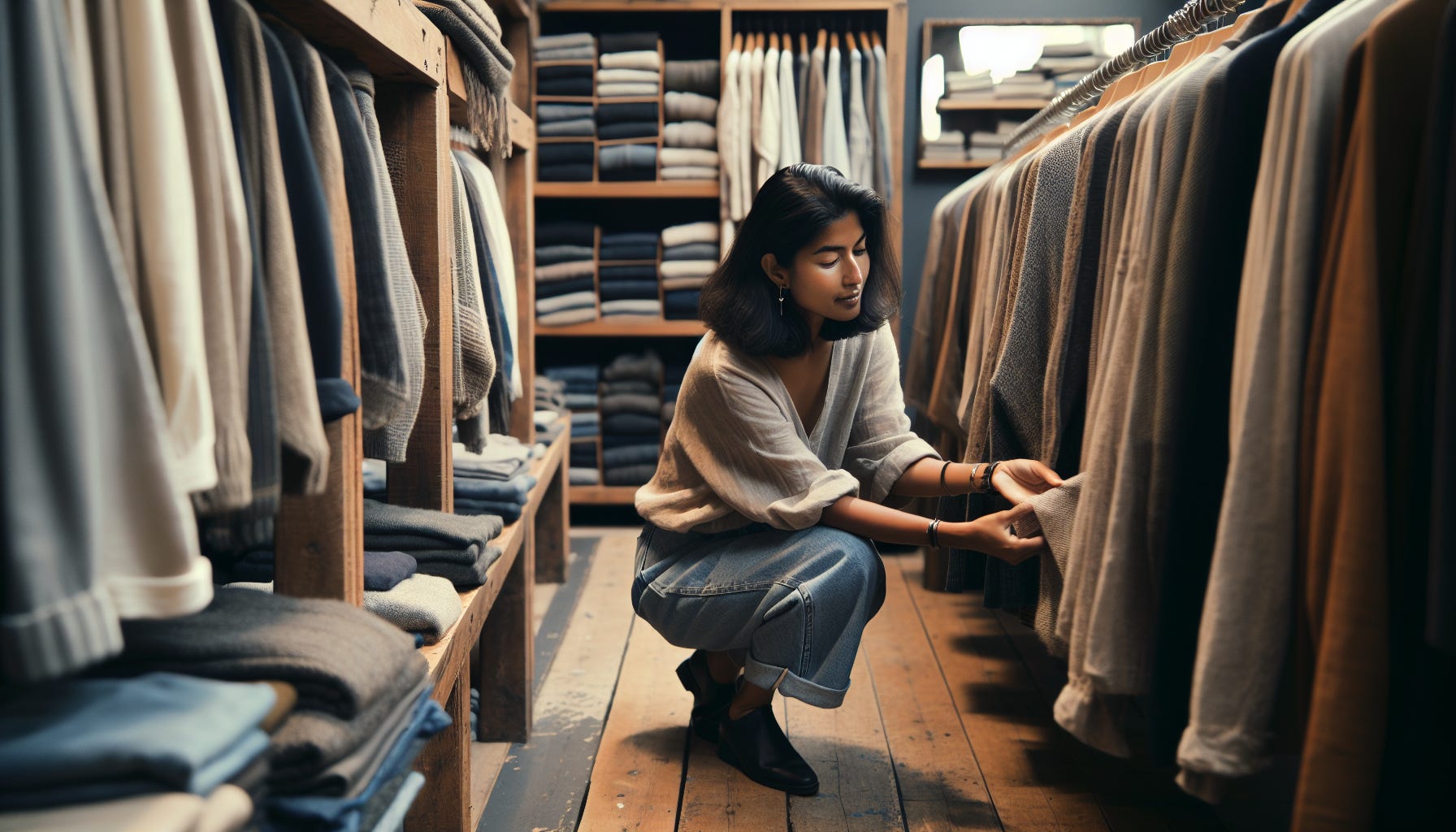
Walk into a thrift store for the first time and you’ll feel one of two things: the giddy thrill of a treasure hunt, or the mild panic of someone who just wandered into a warehouse full of other people’s stuff. Racks stretch in every direction. Categories blur together. Someone near the coat section is holding up a floral blazer with the intensity of a jeweler appraising a diamond. What do they know that you don’t?
Quite a lot, it turns out. But the gap between the beginner who leaves empty-handed and the seasoned thrifter who walks out with cashmere for eight dollars is smaller than you think. It’s mostly mindset, a handful of practical habits, and knowing where to look. ♻️
The numbers make a strong case for learning those habits fast. According to ThredUp’s 2025 Resale Report, the U.S. secondhand apparel market grew 14% in 2024, its strongest annual growth since 2021, outpacing the broader retail clothing market by five times. Globally, the secondhand fashion market is on track to hit $367 billion by 2029. Nearly half of younger shoppers now look secondhand first when they need something new to wear. This isn’t a niche hobby anymore — it’s where smart, sustainable consumers are heading. Welcome to the movement. Let’s make sure you don’t waste your Saturday wandering in circles.
Why thrifting is worth your time (and the planet’s)
Before we get into tactics, it helps to feel the “why” in your bones, because the why is what keeps you patient when the pickings look slim. 🌍
The fashion industry produces roughly 92 million tons of textile waste every year, according to research published by CENTRIA University of Applied Sciences. The average American throws away about 68 pounds of clothing annually — most of it still perfectly wearable. Every piece you buy secondhand is one that doesn’t contribute to that pile. It’s a real, tangible act of waste reduction, not just a bumper sticker philosophy.
But sustainability isn’t the only argument. The financial case is equally compelling:
A cashmere sweater that costs $180 new might sit on a thrift rack for $6
Kids’ clothing — barely worn because kids grow so fast — turns up at absurd discounts
Vintage pieces with real craftsmanship, from an era before planned obsolescence, often cost less than a fast-fashion knockoff
Designer and branded items (think Ralph Lauren, L.L. Bean, Patagonia) show up regularly, priced like nobody recognized them
I think the reason people don’t thrift more often is simply that they’ve never had a good first experience. One confused afternoon in an overwhelming store puts a lot of people off. That’s the problem this guide is here to fix. And if you want more context on how your everyday shopping choices shape the planet, the Greeninch piece on eco-friendly shopping lays it out clearly.
What does your biggest barrier to thrift shopping actually look like — is it time, not knowing what to look for, or something else entirely? Drop a comment and tell us.
The mindset shift that changes everything
Here’s the single biggest mistake beginners make: they walk in looking for a specific thing. 👀
Going to a thrift store hunting for “a navy blue blazer in size 10” is a recipe for disappointment. Inventory is unpredictable by design — donations arrive randomly, and what was there last Tuesday is gone by Thursday. The golden rule of thrifting is to go open-minded and let the store surprise you.
That said, “open-minded” doesn’t mean “planless.” Here’s how to build the right kind of intention before you go:
Think in categories, not specifics: “I need a work layer” rather than “I need a grey cardigan”
Know your measurements — thrift stores rarely have fitting rooms available, and sizing across eras is wildly inconsistent
Have a general sense of your wardrobe gaps before you walk in, so you can recognize a solution when you see it
Bring a tape measure — it costs nothing to own one and saves endless guesswork
The mindset shift that separates casual thrifters from serious ones is learning to see potential rather than current state. That wooden lamp with the ugly shade? The shade is replaceable. That slightly-too-big wool coat? A tailor can fix that for $30, and the coat probably cost $200 new. According to experienced thrifters at The Everygirl, a simple alteration can still be far cheaper than buying a piece new, even after you factor in the tailor’s fee.
Consistency also matters more than most people realize. Thrifting rewards the regular visitor. Inventory turns over constantly — the store that looked bare one week may be stacked the next. Show up often enough and you’ll start to develop an instinct for what a “good day” looks like within the first five minutes of scanning the racks.
How to read an item like a pro
The physical inspection is where real skill lives. Once you get good at this, you can move through a store quickly and accurately. 🔬
Fabric content is your most important data point. Check the care tag inside every garment before you consider buying. Natural fibers — cotton, linen, wool, silk — tend to age well, feel better, and represent genuine value at thrift prices. As The Good Trade notes, natural fabrics like vintage cotton tees tend to soften beautifully over time, while synthetic blends can pill or fade in unflattering ways. A $4 100% wool sweater is a better buy than a $2 polyester one, almost without exception.
Beyond fabric, here’s what to check on every single item:
Seams and stitching: look for fraying, loose threads, or repairs that have started coming undone
Zippers and buttons: test every zipper — replacement zippers are annoying, and button replacements only work if the button holes are still intact
Underarm and collar areas: these show wear first; light fading is often fine, but actual fabric breakdown is a dealbreaker
Stains: hold the item up to the light and look at it from an angle — stains that are invisible face-on show up clearly this way
Also look beyond the expected sections. The children’s section often has items in adult small sizes. The men’s section frequently has oversized pieces that work perfectly as unisex staples. The lingerie section sometimes hides silk slips that double as gorgeous dresses. Don’t limit your search to the aisle that seems most obvious.
Items are sold as-is at virtually every thrift store — no returns, no exchanges. That makes careful inspection before purchase non-negotiable.
Timing, location, and the art of the regular visit
Not all thrift stores are equal, and not all visits are equally fruitful. ♻️
Location matters enormously. A store in a wealthy neighborhood with high turnover tends to receive better-quality donations. Stores near universities get flooded with nearly-new items at the end of each academic year. Estate sale shops carry entire household contents from a single source, which often means items in genuinely excellent condition. Doing a little research before you commit to a regular store saves time and raises your hit rate.
Timing within the week also makes a difference:
Many stores process new donations and put them out mid-week, so Tuesday-Thursday visits often surface the freshest inventory
Saturdays tend to be the most picked-over, since everyone else had the same idea
Some stores use color-coded tag systems that rotate weekly — once you learn the sequence (blue tags 50% off this week, yellow next week), you can time your purchases strategically
Thrift stores aren’t the only option, either. The secondhand ecosystem has expanded considerably:
Online resale platforms like Depop, Poshmark, and ThredUp let you search by size and category with filters
Facebook Marketplace and local buy-nothing groups surface free or nearly-free items from neighbors
Vintage markets and estate sales often have better-curated inventory and more context about each item’s history
Charity shops in some areas specifically benefit local causes, so your purchase does double duty 🌱
For those who prefer to shop online without contributing to environmental waste — which thrift shopping inherently supports — the Greeninch guide on shopping online without wrecking the environment offers useful complementary strategies.
Making it stick: how to thrift intentionally, not compulsively
Here’s the thing nobody tells you: thrifting can slide into overconsumption just as easily as any other kind of shopping. A jacket for $4 still takes up closet space. A “deal” on something you’ll never wear is still a waste. The low prices make it genuinely easy to buy more than you need, and the environmental logic can feel like a guilt-free pass when it really isn’t. 🌿
The antidote is intentional thrifting:
Set a budget before you go and bring cash — it creates a natural ceiling and removes the “just one more” temptation that cards enable
Ask yourself the “cost per wear” question: if you’re not going to wear it at least ten times, reconsider
Keep a running list of actual wardrobe gaps on your phone, so you can check against it in the moment rather than shopping on impulse
Before buying anything, picture exactly where it goes in your home and how you’ll use it within the next 30 days
The writer Vivienne Westwood put it well: “Buy less, choose well, make it last.” That applies to thrifting every bit as much as to any other kind of shopping — maybe more so, because the low prices make it psychologically easier to ignore the “choose well” part.
The fact that a record 58% of consumers bought secondhand in 2024, according to ThredUp’s data, means the culture has genuinely shifted. But the most sustainable version of thrift shopping is still the most thoughtful one. Buy things you love, check them carefully, wear them often. That’s the whole game.
So — what’s the first category you’re going to explore on your next thrift run, and what’s the one wardrobe gap you’ve been meaning to fill for months?