

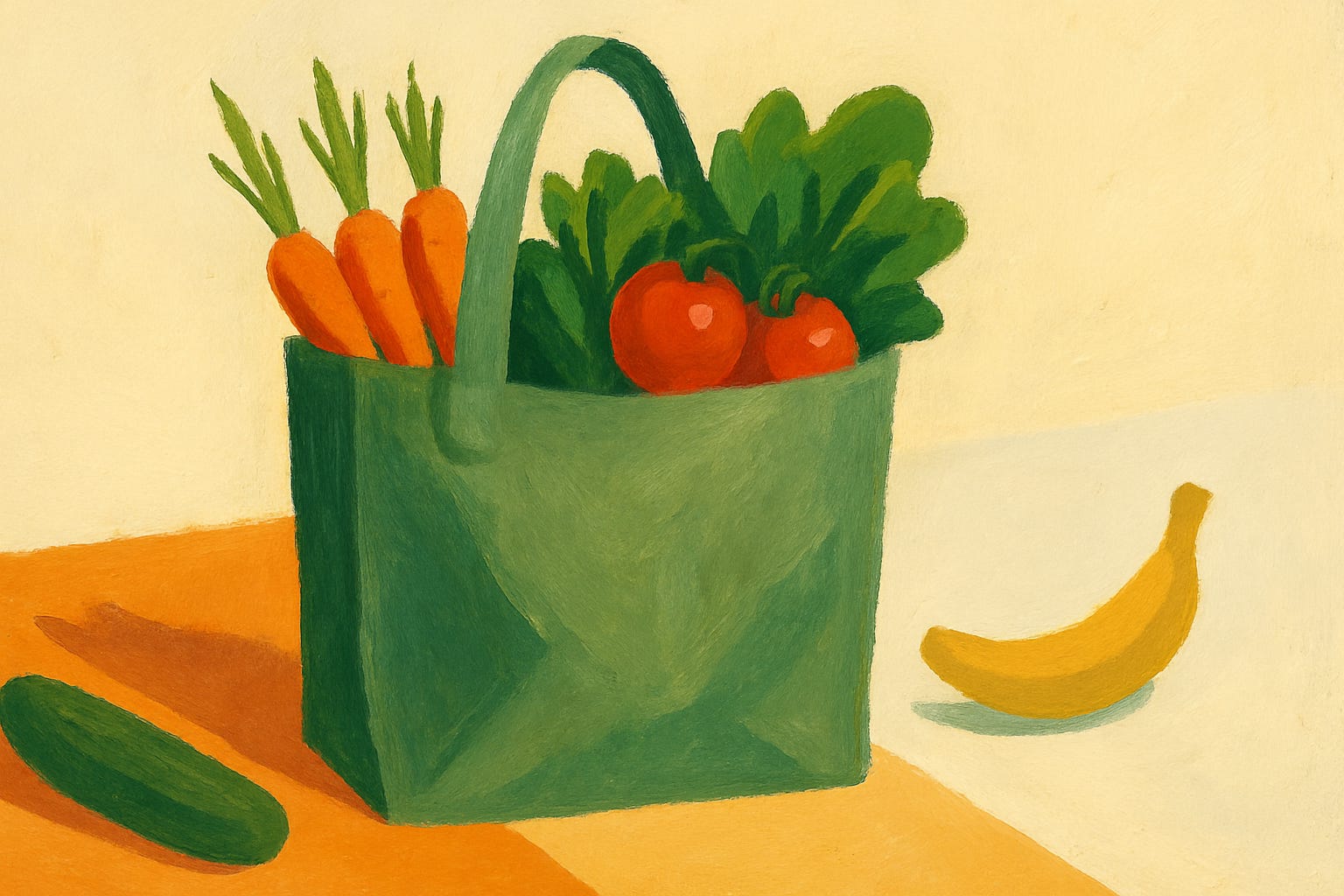
Walk into any supermarket and count the plastic. Cucumbers in sleeves. Bananas in bags. Pasta in a window box with a plastic window. 😅 It is hard to miss once you start looking, and a little overwhelming if you are new to this.
Here is the scale of it. In the UK’s Big Plastic Count, more than 68,000 people tallied their plastic waste for one week. Their results suggest UK households throw away roughly 82 billion pieces of plastic packaging a year, and 82 percent of household plastic waste comes from food and drink. 🛒 Only about 16 percent gets recycled.
So this guide is small steps, in order, for people who have never done this before. Pick one. Try it. Come back for the next.
Why your grocery cart is the right place to start
Food is where most of your household plastic comes from, which makes the grocery run the biggest lever you have. 💡 Plastic pollution is a huge, messy topic, but your cart is one corner of it you actually control.
There is a personal reason too. A 2026 report from Earth Action and rePurpose Global, summarized on rePurpose’s blog, estimates that packaging adds roughly 130 mg of microplastics per person per year to our food. That number is an estimate, and the same report says it does not claim specific health effects. Researchers still don’t know exactly what microplastics do inside the body. 🔬 I think that uncertainty is reason enough to cut back where it is easy.
Here is what you gain from a plastic-light shop:
Less packaging heading to a landfill or an incinerator 🌍
Less food waste, because bulk buying lets you take only what you need
Fewer impulse buys, since you plan the trip ahead
A clearer picture of what you actually eat each week
Question for you: which single item do you buy every week that comes wrapped in the most plastic? Hold that thought. We will come back to it.
Step one: do a one-week plastic audit
Before you buy a single reusable bag, spend one week keeping your plastic packaging instead of binning it. 📝 Pile it on a shelf or in a box. At the end of the week, sort it into piles.
You will probably spot patterns fast. Maybe it is snack bags. Maybe it is the produce aisle. Maybe it is yogurt tubs. The pile tells you where to aim, and that beats any generic checklist.
Then build a small kit, not a big one:
Two or three sturdy cloth shopping bags that live by the front door or in the car 🚗
A few mesh or cotton produce bags for loose fruit, veg, and bread
Two or three glass jars or tins for bulk goods, nuts, or deli counters
One tote that folds small for surprise stops on the way home
Many reusable produce bags have a tare weight printed on a tag, which tells the cashier how much the empty bag weighs. Ask staff at checkout how they handle containers. Policies differ from store to store, and some bulk sections do not allow your own jars at all. 🫙
Step two: shop the edges, buy loose, and go bulk
Here is a simple trick. Shop the perimeter of the store. Fresh produce, bread, and the deli counter usually sit around the edges, while the middle aisles are where multi-layer plastic packaging piles up. 🥦 You will still step into the center for a few things, but you will meet fewer plastic-or-nothing choices.
In the produce section, a few habits do most of the work:
Pick loose apples, onions, and mushrooms over pre-bagged or shrink-wrapped ones
Put loose items straight into your own mesh bags
Skip the thin plastic roll bags entirely 🍎
Choose whole vegetables over pre-cut trays
Bulk bins come next if your store has them. Oats, rice, lentils, nuts, and pasta are the easy starters. Some natural food stores also sell oils, vinegar, and maple syrup by refill. 🌾 Use cotton bags for fine stuff like flour or sugar, since mesh lets it leak through. Write the bin number on a tag, label your jars, and move bulk food into airtight containers at home.
Be picky about freshness. For coffee beans, look for an airtight gravity bin rather than an open barrel.
Step three: handle the stores with no bulk aisle
Not every town has a refill shop. Mine might not either, depending on the week. 🤷 That is fine. A low-plastic shop is a ladder of choices, and you just pick the best rung available.
A rough order of preference when everything comes packaged:
Glass jars and bottles for sauces, spreads, and condiments
Cardboard boxes for pasta, cereal, and rice
Cans for beans and tomatoes
Paper bags for mushrooms and potatoes
Plastic only when nothing else exists 🙂
Split your list by shop if you have the energy. The bakery, the greengrocer, and the butcher often wrap in paper, or let you bring a container. Farmers’ markets can help too, though many vendors still bag everything in plastic, so bring your own. Meat and cheese are the hardest items, and I will not pretend otherwise. Some deli counters fill your container if you ask politely.
The Plastic Free July campaign has swap ideas for the rest of your home, from shampoo bars to refillable cleaning products. 🧼
Step four: ease off the perfectionism
Plastic has its uses. A berry punnet protects soft fruit on the long trip from farm to shelf, and wasted food has its own footprint. ⚖️ Going fully plastic-free costs time, and it often means cooking more from scratch. Most first-timers burn out by trying everything in week one.
Better plan: pick two swaps this week and keep them for a month. Maybe cloth produce bags and a jar of rolled oats. Next month, add one more. Small habits last longer than big resolutions. 🌱
When you slip and come home with a plastic-wrapped cucumber, shrug and move on. It is a habit you are building, not an exam you can fail.
So here is my challenge, and it ties back to that item from earlier: this week, try to swap out that one heavily wrapped product you named. Is there a loose, jarred, or boxed version in your usual store? And if you find one, tell a friend about it, because swaps spread faster when someone else points them out. 💚