

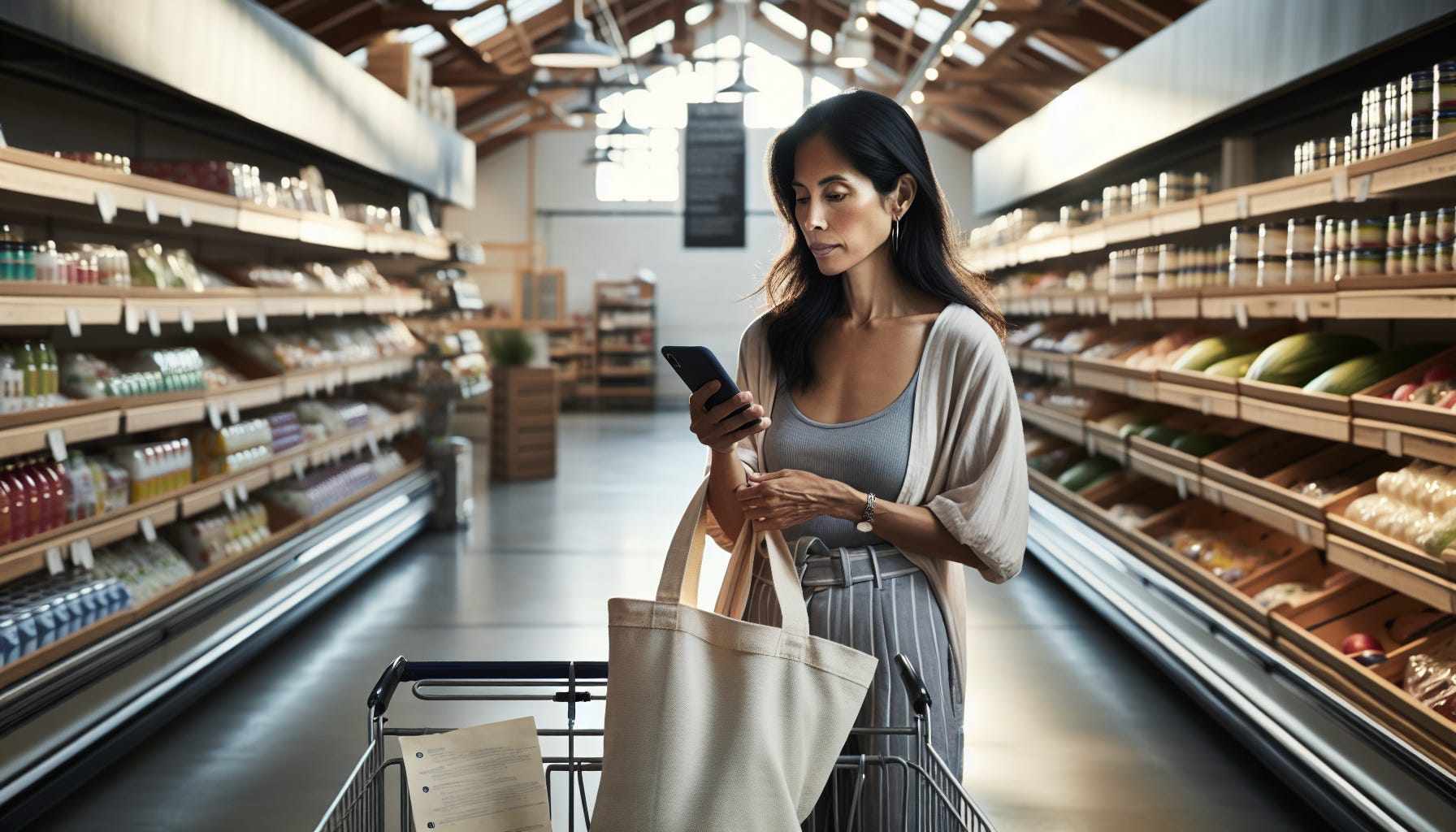
Look, I get it. You’re standing in the cereal aisle scrolling through your phone, trying to figure out which of the 47 different oat milk brands 🥛 is actually good for the planet. You want to do right by Mother Earth, but you’ve got kids who need feeding, work deadlines looming, and approximately zero time to decode every label like some kind of sustainability detective 🕵️.
Here’s the thing: you don’t need a PhD in environmental science to cut your grocery footprint dramatically.
The average grocery store emits 1,900 tons of carbon dioxide from the electricity and natural gas needed for operations, which equates to emissions from 360 cars.
And while you can’t single-handedly fix the grocery industry, you absolutely can make choices that matter—without turning shopping into a three-hour ordeal.
I’ve spent way too much time researching this stuff (so you don’t have to), and I’ve boiled it down to five ridiculously effective strategies that take less time than your average TikTok binge. Ready to become a stealth sustainability warrior? 🌱
Plan like a ninja, shop like a pro
Before you even grab your reusable bags ♻️, spend five minutes doing what every sustainability guru wishes you’d do: actually plan your meals.
According to Feeding America, 108 billion pounds of food are wasted each year in the United States alone. To eliminate food waste, create a meal plan so you buy only what you need.
Here’s your foolproof system:
Check your fridge and pantry first (seriously, that half-empty jar of tahini is judging you)
Plan three to four meals for the week—don’t go overboard
Write your list by store section to avoid the dreaded zigzag of shame through the aisles
Stick to seasonal produce (more on this below)
Set a loose budget and track it mentally as you shop
According to the USDA, approximately 30% to 40% of all food produced in the United States goes to waste. That’s billions of pounds of food – and billions of dollars’ worth of food – lost each year. One of the best ways to be an eco-conscious grocery shopper is to avoid food waste.
Pro tip that nobody talks about: buy “ugly” produce 🥕. Those slightly wonky apples and misshapen carrots are often discounted and taste exactly the same. Your wallet and the planet both win.
Want to know what really works? Make friends with your seasonal calendar. That gorgeous winter salad you’re craving in January? It probably traveled more miles than your last vacation.
Decode the packaging game in seconds
Most plastic pollution originates from single-use packaging and consumer goods, with food and beverage industries contributing dominantly through items like bottles, sachets, and wrappers.
But here’s what the sustainability blogs won’t tell you: you don’t need to memorize the entire recycling taxonomy to make better choices.
Your lightning-fast packaging hierarchy:
Loose produce > paper/cardboard > glass > plastic
Bigger containers beat smaller ones (less packaging per ounce)
Look for the magic words: “recyclable,” “compostable,” or “made from recycled materials”
When in doubt, choose brands that actually tell you what their packaging is made from
According to the US Environmental Protection Agency (EPA), food and food packaging materials make up almost half of all municipal solid waste.
Translation: this stuff matters more than you think.
The sneaky truth?
Despite its convenience, plastic packaging remains a sustainability challenge - with only 13.6% of plastic containers and packaging being recycled in 2018. So that fancy kombucha in the plastic bottle? Maybe grab the glass one instead 🍾.
Here’s a game-changer: bring your own containers to the deli counter and bulk bins. Most stores are cool with it (just ask them to weigh the container first), and you’ll skip a shocking amount of plastic.
Master the art of seasonal eating (without becoming a farmer)
High food miles typically mean higher amounts of carbon dioxide emissions. By focusing on local and seasonal products, consumers can drastically reduce these miles, directly contributing to a decrease in transport-related emissions.
But let’s be real: you’re not about to memorize the harvest calendar for every fruit and vegetable. Here’s the lazy person’s guide to seasonal eating:
Summer: berries, stone fruits, tomatoes, zucchini (aka zucchini avalanche season 🥒)
Fall: apples, pears, squash, root vegetables, cruciferous greens
Winter: citrus, stored apples, hardy greens, root vegetables
Spring: asparagus, peas, early greens, strawberries
Seasonality is important since out-of-season product frequently needs to be shipped from other countries. Food miles are also impacted by the mode of transportation, whether it be by land, sea, or air, with airfreight often having a higher carbon footprint.
The shocking reality?
Transportation associated with fruits and vegetables added up to around 36 percent of the total food-miles emissions (or over 1 billion tons of carbon dioxide equivalent). The higher emissions for fruits and vegetables is largely due to carbon-intensive refrigeration to keep produce looking as ripe and plump as possible.
Your quick hack: shop the perimeter of the store first 🛒. That’s where the fresh, seasonal stuff lives. The middle aisles are where packaging goes to party.
Go plant-forward (but don’t stress about perfect)
Here’s where the research gets interesting.
They estimated that if the average household substituted their calories from red meat and dairy with chicken, fish, or eggs just one day per week, they would save 0.3 tCO2eq. If they replaced it with plant-based alternatives, they would save 0.46 tCO2eq. In other words, going “red meat and dairy-free” (not totally meat-free) one day per week would achieve the same as having a diet with zero food miles.
You don’t need to go full vegan to make a difference. Just shift the balance a little:
Make plants the star of your plate, not the side dish
Try “Meatless Monday” or whatever day works for you
When you do buy meat, choose higher-quality, less-processed options
Beans, lentils, and nuts are your protein-packed friends 🥜
By cutting back on meat consumption just one day a week, you can reduce your personal impact by 15 percent.
That’s pretty incredible bang for your buck.
The fascinating part? Even small swaps count. Swap that beef burger for a chicken sandwich once a week. Choose almond butter over regular butter sometimes. Buy the plant-based milk that tastes good to you (because if you don’t drink it, you’ve just wasted everything).
Shop smarter with bulk buying and strategic timing
Here’s how buying groceries in bulk reduces your environmental impact: You use less emissions driving to and from the grocery store. The delivery truck uses fewer emissions because it needs to make fewer trips.
But bulk buying isn’t just about those giant Costco containers (though those can work too). It’s about being strategic:
Buy shelf-stable staples in larger quantities: rice, pasta, canned goods, frozen vegetables
Shop less frequently but more intentionally
Consider grocery delivery for heavy items—planning multiple deliveries to homes in the same neighborhood is more efficient than individual family trips to the grocery store. In fact, grocery delivery cuts carbon emissions in half!
Time your trips to avoid peak hours (less idling in traffic = lower emissions)
The surprising winner? Frozen vegetables. They’re often more nutritious than “fresh” produce that’s traveled thousands of miles, they last longer (reducing food waste), and they come in more sustainable packaging.
Your weekly shopping rhythm should look something like this: one big shop for pantry staples and meal basics, plus maybe one quick top-up for fresh items mid-week. That’s it.
The 20-minute reality check
Here’s what this actually looks like in practice. Sunday afternoon (or whenever works): five minutes planning meals and checking your pantry. Twenty minutes at the store with your list, focusing on seasonal produce, mindful packaging choices, and a plant-forward approach. Maybe another five minutes putting everything away strategically so nothing gets forgotten in the back of the fridge.
The best part?
Many sustainable practices, like buying in bulk or avoiding single-use items, save money in the long run.
You’re not just helping the planet—you’re probably going to spend less money too 💰.
Does it require some effort? Sure. But probably less than you spend comparing prices on your current grocery runs. And definitely less time than you’ll spend feeling guilty about that bag of spinach slowly liquefying in your crisper drawer.
The most important thing? Start somewhere. Pick one or two of these strategies and make them habit before adding more.
Remember that you don’t have to do all or even half of them on the first try. Small acts add up and using even one new shopping method contributes to global efforts to protect the environment.
What’s one change you’re going to try on your next grocery run? 🌱