

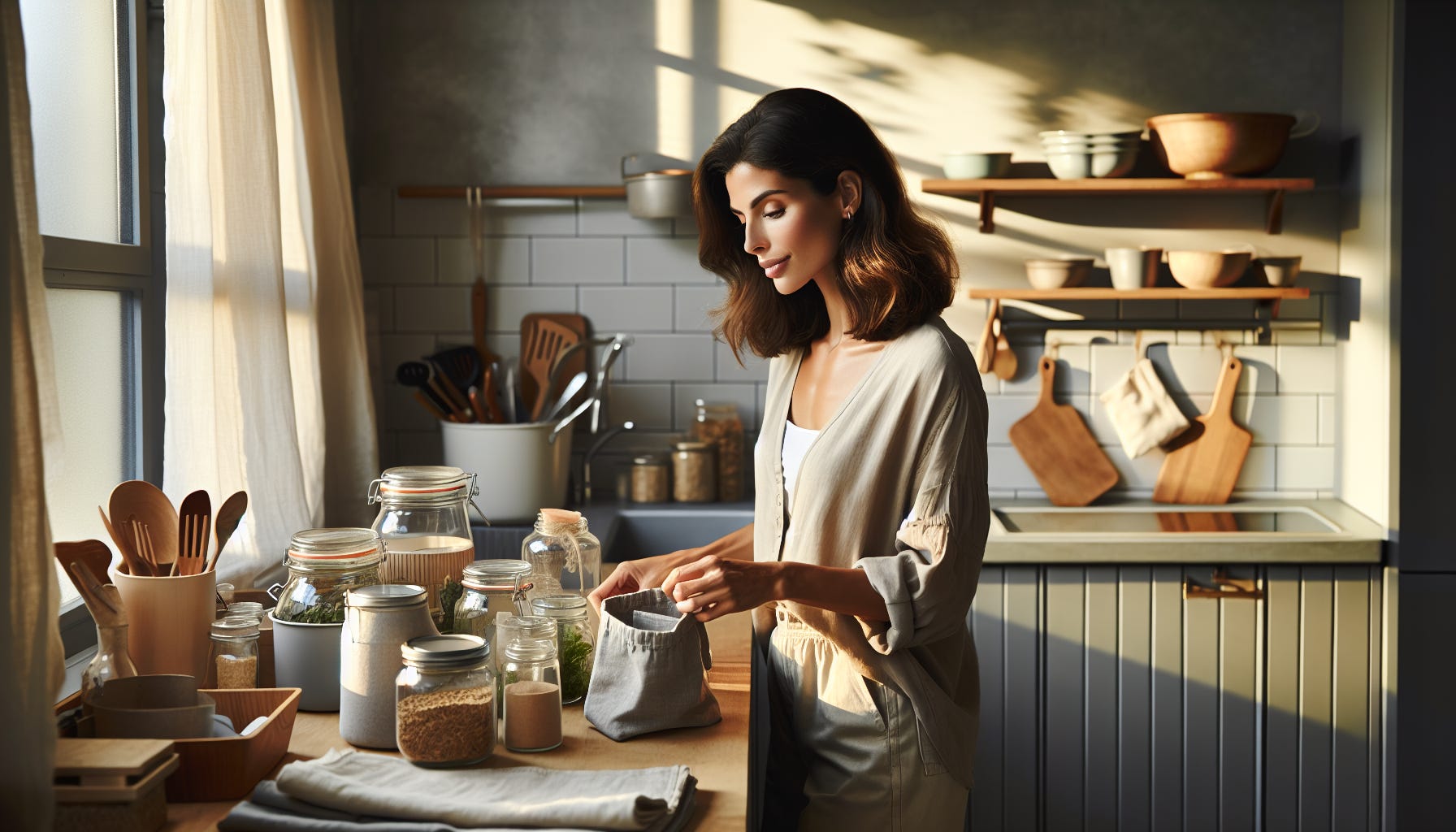
Here’s a number worth sitting with: according to data from Our World in Data, high-income households generate roughly twice the plastic waste of those in middle-income countries. And in the UK alone, Greenpeace estimates households throw out 66 pieces of plastic packaging per week. Sixty-six. That’s practically a bag of trash just in wrappers and bottles, every seven days.
The reflexive response is to go shopping — grab some beeswax wraps, a bamboo toothbrush, a set of stainless tumblers. And sure, those things are great, eventually. But this article isn’t about buying your way to sustainability. It’s about using what’s already in your drawers, cupboards, and recycling bin to make an immediate dent. Because here’s the thing: most household plastic use isn’t really a product problem. It’s a habit problem. And habits are free to change.
The Plastic Pollution Coalition puts it well: every swap you make reduces your daily exposure. You don’t need a zero-waste kit to get started. You need fifteen minutes and a good look around your kitchen.
Audit your kitchen first — that’s where most of it lives
Before you change anything, you need to see the situation clearly. Most families are shocked when they actually look. Spend five minutes pulling out every plastic item you used in the last 24 hours and piling it on the counter. Cling film over last night’s leftovers. The bag that came with the bread. The produce bag that held three apples. The disposable coffee pod. The squeeze bottle of dish soap. The plastic fork that snuck home from lunch.
That pile is your baseline. It’s also your target.
The kitchen is responsible for the lion’s share of household plastic, and most of it falls into a few predictable categories:
Food storage — cling film, zip-lock bags, and plastic tubs you bought once and kept refilling
Produce packaging — the bags and trays that come with fruit, veg, and meat
Drink packaging — bottles, cartons, and juice boxes that get used once
Cleaning products — squirt bottles, sponges, and single-use wipes 🧹
Once you’ve named the problem, you can do something about it. And the fixes for all four of these categories involve zero purchases. What you need instead is resourcefulness — and probably a few glass jars you’ve been meaning to use.
Have you ever actually counted how many single-use plastic items you touch in a single morning? Try it tomorrow and see if it changes how you move through your day. 🧠
Raid your own cupboards for alternatives you already own
Here’s where it gets fun. Most households already own the tools to replace their biggest plastic offenders. They’re just not being used that way.
Glass jars are the workhorses of low-plastic living. That pasta sauce jar you rinsed and left on the shelf? It’s a leftover container, a bulk dry-goods storage unit, a drinking glass, a leftover soup pot, and a zero-plastic alternative to every cling-filmed bowl in your fridge. Rinse, reuse, repeat. The NRDC recommends in its June 2025 consumer guide to choose glass and stainless-steel food containers over plastic precisely because plastic containers leach microplastics — even BPA-free ones.
A few immediate swaps you can make with things you almost certainly already own:
Plate over bowl — when storing leftovers, put a dinner plate on top of the bowl instead of reaching for cling film
Tea towels over produce — wrap bread, cheese, or cut vegetables in a clean cotton kitchen towel; it works just as well
Old t-shirt strips as produce bags — cut a thin cotton t-shirt into strips and knot the ends; it handles onions and apples without complaint 🌱
A mug at the tap — if you drink a lot of bottled water at home, switching to a glass or mug from the cupboard costs literally nothing
Baking trays lined with parchment — if you’ve been using cling film to wrap raw meat, a tray in the fridge with parchment underneath does the same job without the plastic
This is not about deprivation. It’s about noticing how many plastic habits formed not because plastic was better, but because it was marketed harder.
Rethink your bathroom — the room everyone forgets ♻️
The kitchen gets all the attention, but the bathroom is quietly generating its own plastic avalanche. Shampoo bottles, conditioner, shower gel, body lotion, face wash, toothpaste tubes — the average bathroom cycle through dozens of these a year. And most of them aren’t recyclable, even when you think they are.
The NRDC’s 2025 guidance also flags something genuinely alarming: a single tampon can release billions of micro- and nanoplastics into the body. Similarly, plastic tea bags — yes, many conventional tea bags are sealed with polypropylene — release microplastics directly into hot water, according to research cited by the World Economic Forum’s 2025 analysis of microplastics. We’re not just surrounded by plastic; we’re ingesting it.
But again: no purchase required to start improving.
Swap tea bags for loose-leaf using a metal strainer you probably already own 🍵
Dilute your soap and shampoo — most are highly concentrated, and adding water extends the life of each bottle by weeks
Use a bar of soap from the back of the cupboard instead of the liquid soap pump (bars have no plastic bottle; they last longer per use too)
Repurpose an old cloth as a makeup remover pad instead of reaching for the cotton rounds in a plastic bag
Switch to a safety razor — if you have one collecting dust, now’s the time; a single steel safety razor replaces years’ worth of disposable plastic cartridges
University of Florida/IFAS research from early 2025 also notes that many cleaning products contain microplastic ingredients in the form of synthetic compounds, and that microplastics accumulate in household dust — which children and pets, close to the floor, inhale more of than adults. Vacuuming frequently with a HEPA filter helps, but reducing the source is smarter. If you have baking soda and white vinegar in the cupboard (and most people do), you have the makings of a genuinely effective bathroom cleaner.
Change how you shop — before you even leave the house 🛒
A huge chunk of household plastic arrives in your home not because you chose it, but because it came attached to something else. The fix here isn’t a reusable bag — it’s a smarter shopping list.
Groceries are the biggest opportunity. Buying loose vegetables rather than bagged ones is obvious, but the deeper move is buying the larger format of anything you use regularly. One large tub of yogurt generates one piece of plastic. Four small single-serve tubs generate four. Same product, four times the waste, often at a higher cost per gram. The math is embarrassing.
A few shopping-list changes that cost nothing and start immediately:
Write out what you’ll actually cook before shopping, so you’re not buying pre-wrapped convenience items out of uncertainty
Choose glass-bottled products over plastic when the price difference is small — pasta sauce, olive oil, and juice are often available in both
Buy the biggest format of staples like oats, flour, rice, and pasta that your storage allows ♻️
Ask the deli counter to wrap your meat and cheese in paper rather than plastic — most butchers and deli staff are happy to do this if you bring your own container or ask
The Plastic-Free July movement reports that participants reduce their household waste by an average of 3.8% over the course of the month. That’s modest, but it’s from a single month of awareness. With consistent habit changes, the reductions compound fast.
What’s one product you buy regularly that you could switch to a glass or paper version this week? Drop it in the comments — I’d love to see what people are swapping.
Make the invisible plastic visible 🔬
There’s a category of plastic reduction that doesn’t involve packaging at all, and it may be the most important one. It’s microplastics — the particles that shred off synthetic textiles, float out of plastic-bottled hot beverages, and settle into household dust from synthetic rugs and upholstery.
Research published in Frontiers in Public Health in May 2025 suggests microplastics may induce inflammatory responses, oxidative stress, and immune disruption. The science is still developing — it would be wrong to overstate certainty here — but a 2025 mouse study showed microplastics physically moving through brain tissue and blocking blood vessels. Dr. Tracey Woodruff at the University of California San Francisco, who recently co-authored a review for the journal Cancer Cytopathology, is among those flagging the need for urgency.
The uncomfortable part: you can’t see microplastics, and you’re almost certainly breathing them. Estimates cited by the World Economic Forum suggest the average person inhales 68,000 microplastic particles every day.
What helps — without buying anything:
Wash synthetic clothes less often and on shorter, colder cycles — every wash cycle sheds thousands of synthetic fibers
Air-dry laundry instead of using a tumble dryer, which increases fiber shedding
Open windows while vacuuming to avoid recirculating microplastic-laden dust back into the air
Don’t microwave food in plastic containers — heat accelerates leaching; a ceramic bowl or plate works fine 🌍
Let hot drinks cool slightly before adding to any plastic vessel, or just use the ceramic mug that’s already in your cupboard
The Greeninch piece on detoxing your cleaning routine explores some of these ideas further if you want to go deeper, and our earlier piece on 7 things in your kitchen wrecking the environment covers the appliance and cookware side of the equation.
None of this requires a trip to a zero-waste shop. It requires paying attention to the habits that, over a lifetime, add up to a staggering amount of plastic that didn’t need to exist.
The challenge — if you want one — is this: pick the single room in your house generating the most plastic, and spend 20 minutes this weekend making two changes. Just two. Then, genuinely, count how many pieces of plastic you throw away next week compared to this one. Because once you start seeing it, you can’t really stop. Is that a problem you’re ready to have?