

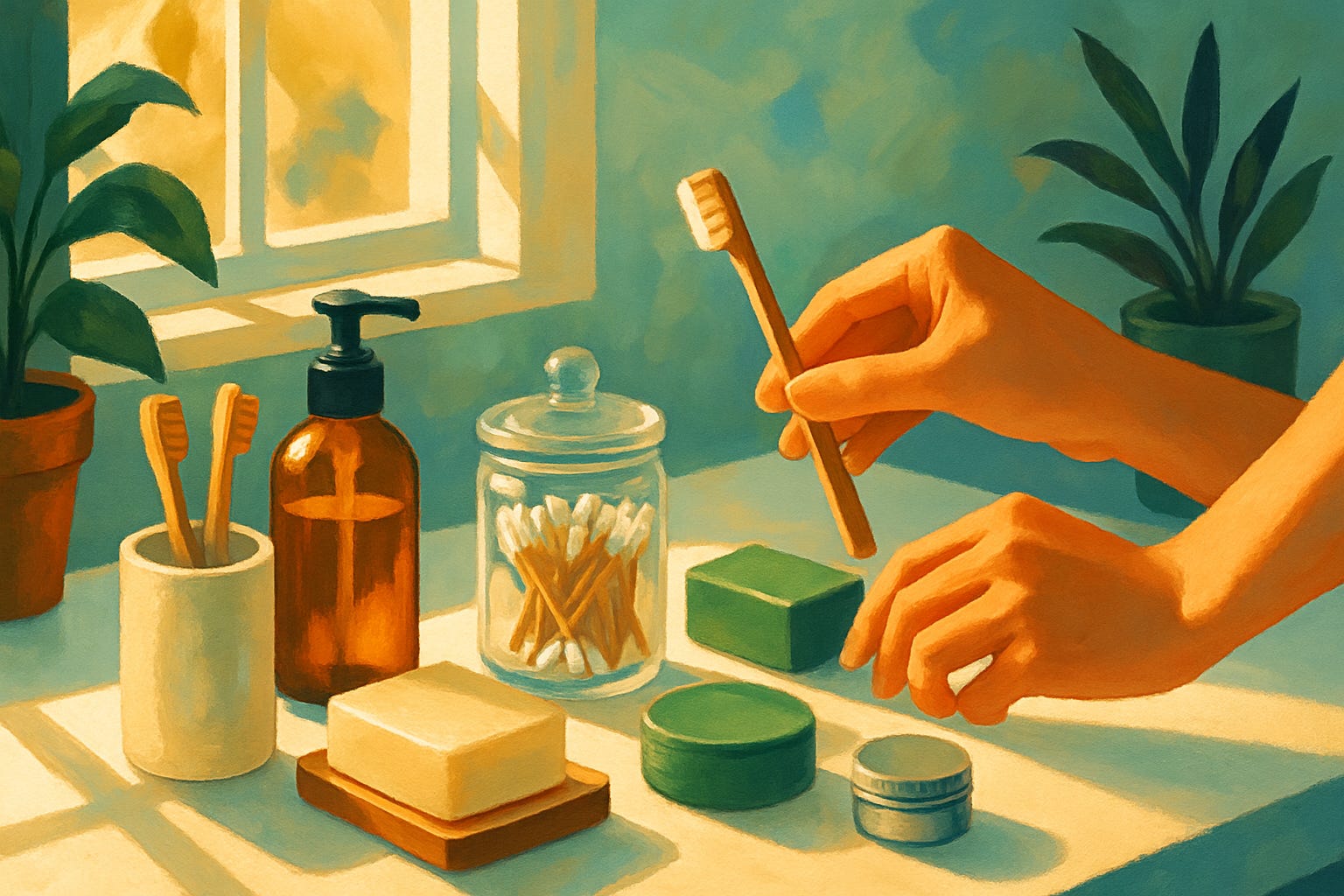
Open your bathroom cabinet and count the plastic. Bottles, tubes, tubs, caps, a razor head, a toothbrush that is now fraying. 🚿 It adds up fast. The beauty industry produces roughly 120 billion units of plastic packaging a year worldwide, according to Numlock’s interview with a shampoo-bar expert, and in the US alone about 552 million plastic shampoo bottles are sold annually.
Here is my honest take on “one weekend.” You can’t swap out an entire bathroom in 48 hours without spending a lot and creating a pile of waste. What you can do is set up the plan, buy the few things that matter, and make the easy switches. The rest happens as your current products run out. 🌱
So here is the weekend, in order.
Saturday morning: audit, declutter, and use what you have
Before you buy anything, look at what you already own. The Victoria University of Wellington guide to bathroom waste gives the same first rule most low-waste guides give: use up the products you already have before buying plastic-free replacements. Tossing a half-full bottle of shampoo to make room for a bar is just creating waste faster. 🧴
Spend an hour on this:
Pull everything out of the cabinet and drawers, and put it on a towel
Sort it into keep, use up first, donate unopened, and expired
Write down the three items you run out of most often, since those are your first swaps
Clean and store empty glass jars, because you will reuse them 🫙
Set a small recycling bin in the bathroom, because a lot of bathroom packaging, like cardboard tubes and boxes, is recyclable and ends up in the trash only because the bin is in the kitchen
Many guides also recommend changing one thing at a time and living with it for a few weeks before the next. The Issaquah Highlands guide suggests exactly that pace. I agree. People who swap everything in one day tend to hate half of it by Wednesday. 😅
Quick question for you: which bathroom product do you finish most often? Keep it in mind for the next section.
Saturday afternoon: the easy swaps
These are the swaps with almost no learning curve. They also hit the biggest sources of plastic.
Bar soap for body wash. This is the simplest change in the room. 🧼 Look for soap with no wrapper, or one in plain cardboard.
Shampoo and conditioner bars. Removing the water from shampoo leaves a small, concentrated bar. Depending on the brand, one bar can equal two or even three bottles of liquid, per the Numlock interview above. Hair types vary a lot, so I think a small sampler set is a smarter first purchase than a full-size bar. Co-washing and curly hair may need a conditioner bar, and not everyone loves the first bar they try. 💇
Toilet paper and tissues. Many brands now sell paper-wrapped rolls made from recycled or bamboo fiber. It is a cheap swap and one of the first ones Sustainable Jungle’s bathroom guide recommends.
Quick shopping list for this afternoon:
Soap bar (unwrapped or cardboard-only)
One shampoo bar and a small sampler of conditioner bars
Paper-wrapped toilet paper 🧻
A washcloth or loofah for suds, which also makes body wash last longer if you are still using it up
A soap dish with drainage, because a bar sitting in water turns to mush
Sunday morning: the swaps that need a second look
Some changes deserve a bit more thought, and I would not rush them.
Toothbrush
A bamboo toothbrush is the classic starter swap. 🪥 It is better than a plastic handle, but not perfect. According to CHOICE’s guide to eco-friendly toothbrushes, the nylon bristles are too small to be captured in the recycling stream, so you still make some plastic waste. Pull the bristles off with pliers before composting the handle, and replace the brush every three to four months like any other.
Toothpaste tablets
These swap the tube for a glass jar or a compostable pouch. 🦷 Here is the catch: many tablets contain no fluoride. The dental publication Dentistry has a balanced look at toothpaste tabs that flags this exact confusion. Check the label, and ask your dentist before you drop fluoride. Some brands do add it.
Razor and deodorant
A safety razor costs more up front, but the steel blades are recyclable, while disposable razors with plastic casings are not. Deodorant in cardboard tubes or tins is easier to find than it used to be. Give it a couple of weeks, because your skin may need time to adjust.
Do you shave, or skip it? Either way, tell me in the comments which swap feels scariest. I bet it is the deodorant. 😄
Sunday evening: set it up so it lasts
A good setup beats good intentions. Habits stick when the bathroom makes them easy. 🔁
Keep one shopping note on your phone listing what you are almost out of
Put new products on the shelf only after the old ones are gone
Find a refill shop nearby for shampoo, lotion, and cleaning products, if one exists
Save any empty jars for DIY cleaner, cotton swabs, or travel use
Check for a take-back program for items you can’t avoid, such as the mail-in oral care recycling that CHOICE mentions for toothbrushes and tubes ♻️
In a few weeks you will probably have a bar of soap, a shampoo bar, a bamboo brush, and maybe tablets, and most of your daily plastic will be gone. A bathroom with a few good swaps is a real win, even if it is not “zero.” 🌍
So here is my question: what is the first product in your cabinet that runs out, and what are you going to replace it with?