

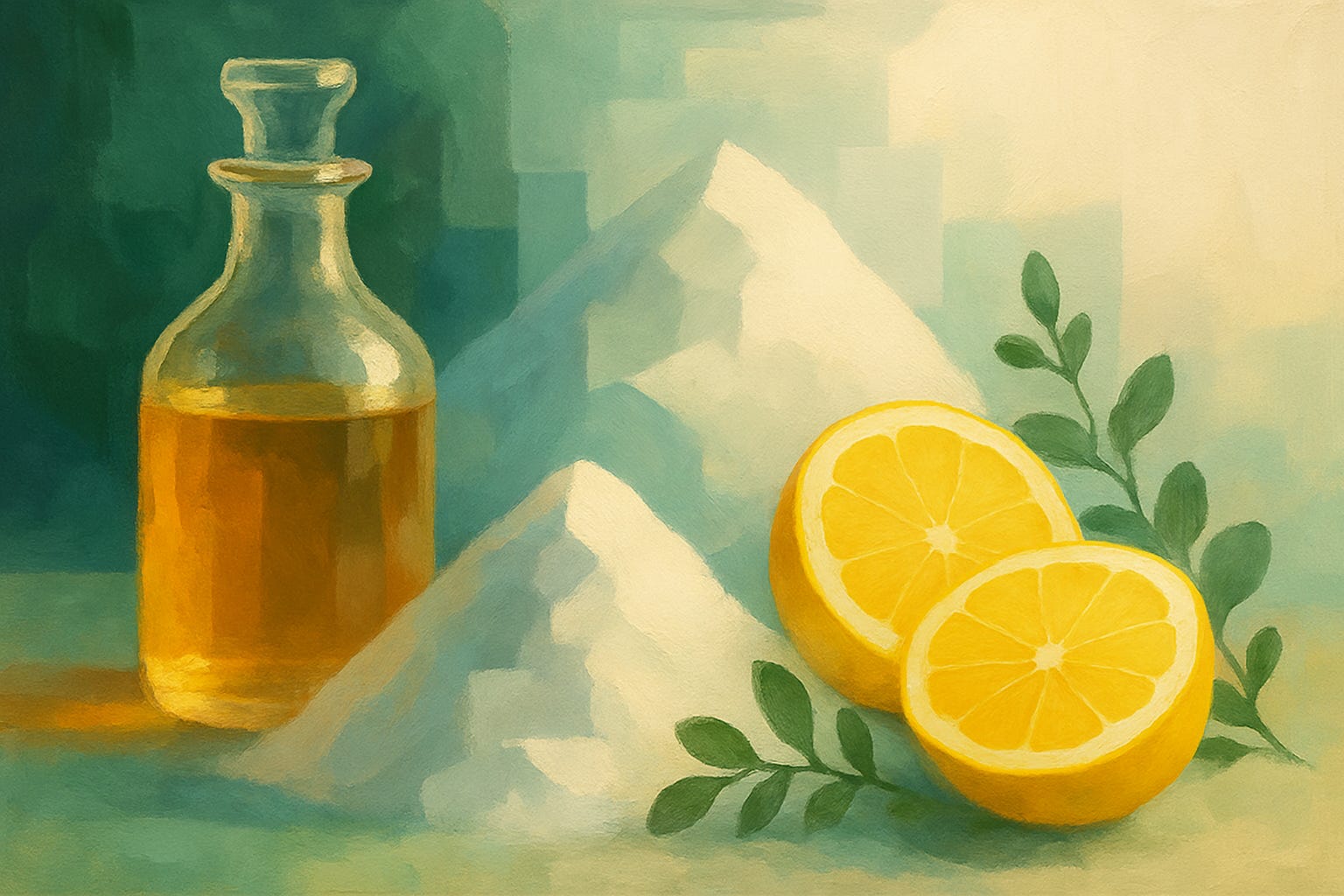
Let me be upfront about “tested.” I did not scrub my bathroom in a lab coat. Every recipe here comes from published guidance by sources I trust, and I cross-checked them against each other and against poison center warnings. So think of it as recipes with a paper trail, not a personal test kitchen. 🔍
Most DIY cleaning advice online has one big flaw. It treats “natural” as a synonym for “safe” and “effective.” It is neither. The same Alabama Department of Public Health page that recommends vinegar, baking soda and castile soap also reminds you that these should never be mixed with other cleaning agents. 🧪
So here is what holds up, what doesn’t, and what you should keep far apart. Which one in your cupboard worries you most? Keep it in mind as you read. 🤔
What works and what only looks like it works
Start with the viral duo. Baking soda is a base. Vinegar is an acid. Mix them and they fizz, which looks impressive, but they neutralize each other and leave you mostly with water and a little sodium acetate. The folks at Tasting Table make the same point: the foam does not clean better than using each one separately. 🫧
Vinegar has a bigger problem, and it is the word “disinfect.” Healthline notes that the EPA has not registered vinegar as a disinfectant, which requires killing 99.9% of germs. Studies that show real germ-killing often use 10% acidity, while a typical grocery bottle is only 5 to 6%. 🦠 That makes vinegar a decent cleaner and a weak disinfectant.
Here is the honest scorecard:
Baking soda: mild scrubber and odor absorber, great as a paste 🧽
Castile soap: strong degreaser, but it is a base, so keep it away from vinegar and lemon juice
White vinegar: good on glass, soap scum and mineral spots
Citric acid: a solid vinegar substitute for limescale with less smell
Hydrogen peroxide: fine alone, dangerous mixed with vinegar ⚠️
Four recipes that earn their spot
These come from Bob Vila’s castile soap guide, the Snohomish County DIY handout, and a lime-scale mix from Marley’s Monsters. Mix small batches and label every bottle. 🏷️
All-purpose spray: 2 cups water and 2 tablespoons liquid castile soap in a spray bottle, plus a few drops of essential oil if you like the scent 🌿
Soft scrub: 1 cup baking soda and 1/4 cup castile soap, stirred into a thick paste. Use it on tubs, sinks and stovetops, then rinse
Glass cleaner: 1/2 cup rubbing alcohol, 1/3 cup vinegar, and water to fill a 16 oz bottle ✨
Limescale spray: 1 teaspoon citric acid in 1 cup warm water. Mix it fresh and use it within a few days
I like the first two best. They are cheap, they cut grease, and the paste clings to vertical surfaces. Castile soap in hard water can leave a film, so if you see one, add a little baking soda or switch to distilled water. 💧
Where DIY goes wrong
The scary part is the chemistry. The Missouri Poison Center warns that vinegar plus hydrogen peroxide forms peracetic acid, which is corrosive to eyes, skin and lungs. Bleach plus vinegar makes chlorine gas. Bleach plus ammonia makes chloramine. Do not do any of it, even “just to be extra clean.” 😬 Many people reach for vinegar after bleach on a bathroom that already smells strong. Don’t.
The second mistake is damage. Vinegar etches marble, limestone and granite, dulls sealers, can eat grout, and strips the seasoning on cast iron. Home experts say stone countertops need soap and water instead. 🪨
Quick rules to keep:
Never mix two cleaners in one bottle unless a trusted recipe says so
Keep everything in labeled bottles, away from kids and pets 🚫
Skip vinegar on stone, unsealed grout, cast iron and screens
Open a window when you scrub
Call Poison Help at 1-800-222-1222 if you breathe something nasty 📞
When to buy something instead
A homemade spray cleans. It does not reliably kill the germs you worry about, such as flu or norovirus. For those, the CDC points to EPA-registered disinfectants, diluted bleach or alcohol solutions. 🧴 Raw chicken juice on a counter or a sick family member is that moment.
You can still keep it low-tox. Wash the surface first with soap and water, then disinfect only where you need to. Hydrogen peroxide used on its own, with no vinegar anywhere near it, is a common pick. Dry steam cleaners also kill germs without a chemical bottle. ♻️
Use the table-free rule I like: clean with DIY, disinfect with the label. 🌍 Make the soap spray and the paste this weekend, then ask yourself one question: what is the one cleaner under your sink that you would happily replace with a jar of baking soda?