

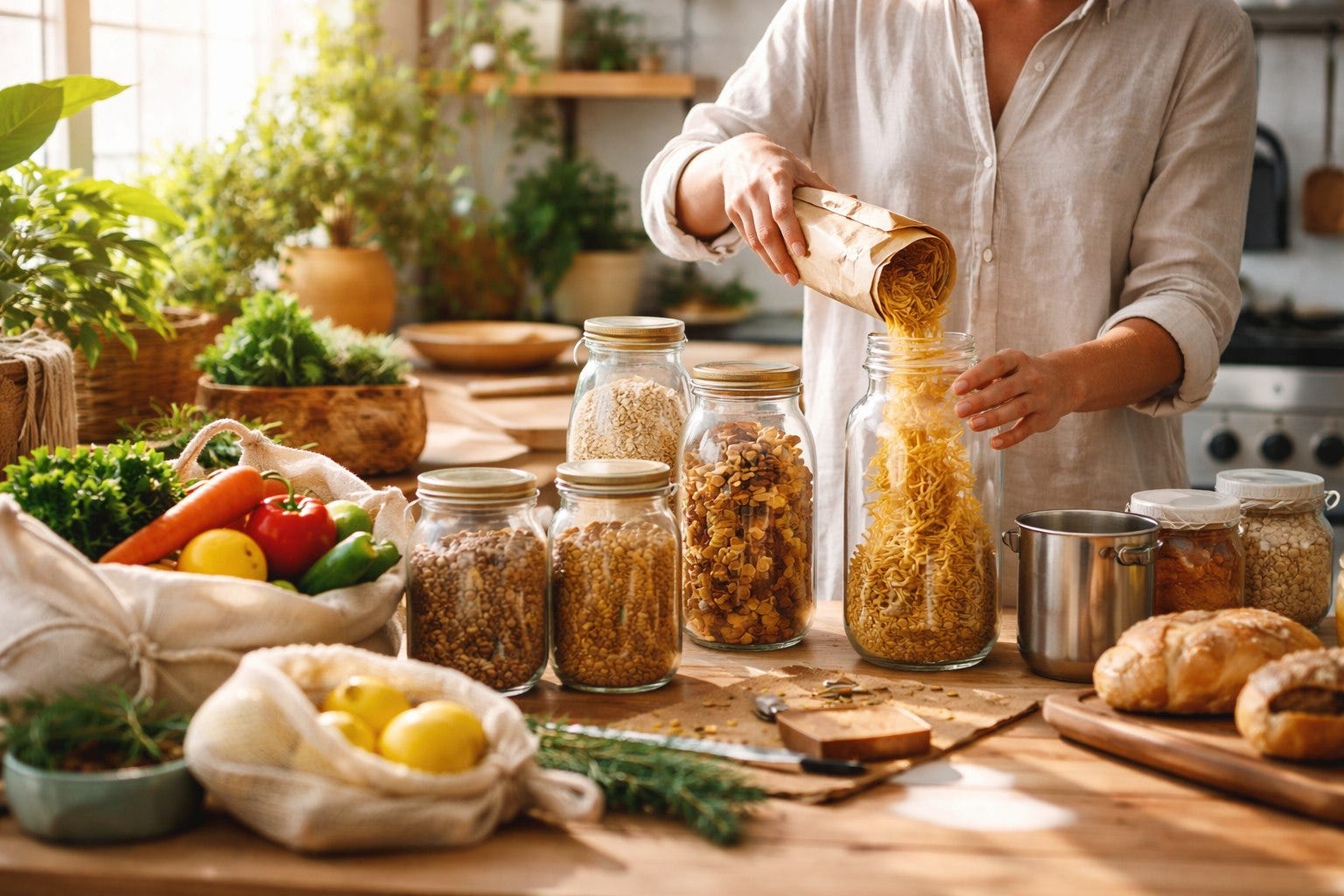
Imagine opening your pantry — no plastic wrap whispering “single-use,” no snack packs stacked like tiny eco-villains, just a calm sea of glass jars and the satisfying clink of reusable containers. Dreamy, right? I think that’s exactly what a kitchen revolution feels like: one where we slash packaging waste like a chef filleting fish — with precision, flair, and maybe a tiny bit of dramatic flair.
Here’s the raw truth: kitchens are among the biggest culprits of household packaging waste — thanks to snack wrappers, plastic bags, cling film, and condiment bottles we barely think about. But with intentional habits, you can realistically cut that waste by 70% — probably more if you go all-in. Let’s walk through the 9 habits that make this possible (without turning your life into an eco-purist boot camp). ♻️
🥫 1. Ditch Single-Use Packaging at the Store
The biggest packaging waste often starts before your groceries ever hit your cart. Instead of grabbing pre-wrapped everything, shop smart:
Hit up bulk bins and bring your own reusable containers for grains, nuts, spices, and oils. This alone can shave massive packaging off your weekly haul.
Choose produce that’s loose instead of shrink-wrapped in plastic or styrofoam.
Bring sturdy cloth or mesh bags — and actually use them. 😉
These simple swaps reduce packaging before it ever becomes waste — which, according to sustainability advocates, is the most effective point to intervene in the waste stream.
Action Tip: Always keep a stash of clean jars or bags in your car or bike basket so you’re never caught unprepared.
Also read: How to Easily Avoid Single-Use Plastic
🛍️ 2. Refuse and Reduce at the Register
Let’s get real: saying “No, thanks” to packaging feels awkward at first — like declining the offered plastic bag when the cashier’s already holding it. But that moment is a chance to build new habits.
Say no to disposable produce bags.
Request no plastic utensils or straws if you’re buying takeaway.
If the store offers paper over plastic, choose paper (it often has a much higher recycling rate).
It’s not perfection — it’s progress. Tossing out packaging after the fact is reactive; refusing packaging at the source is proactive and impactful.
🍯 3. Embrace Reusables and Refill Stations
Here’s where the fun begins. The kitchen of the future looks a bit like a cozy apothecary — rows of refillable bottles, jars, and canisters.
Refill shop stations (for detergents, oils, vinegars, and spices) are popping up in more cities.
Glass jars, stainless steel tins, beeswax food wraps — these are your new best friends.
Swap cling film and sandwich bags for silicone lids and washable beeswax wraps.
Making these swaps can feel luxurious and purposeful — like you’re curating your pantry like a gallery. ✨
🍅 4. Cook From Scratch (Seriously, It Helps)
Ordering pre-made meals and snacks might be easy, but convenience comes at a packaging cost. Cooking at home:
Cuts down on plastic containers and takeaway trays.
Lets you control portions — meaning less food and packaging waste.
Encourages creative reuse of leftovers.
Think of this as packaging waste reduction with delicious side benefits.
🥬 5. Store Smarter, Not Harder
Your kitchen leftovers shouldn’t be wrapped like holiday gifts.
Swap plastic wrap for glass containers or jars.
Use vacuum seals or silicone covers for open bowls.
Repurpose old jam jars — they’re perfect for salads, soups, dry goods, and even DIY spice mixes.
Glass is endlessly reusable and doesn’t leach chemicals, unlike many plastics — plus, it looks way better on your shelf. 🍷
🧺 6. Compost What Does Come Through
Even in the best kitchens, some waste is unavoidable. Food scraps and biodegradable packaging should not go into the trash.
Start a compost bin (indoors with a worm bin or outdoors if you’ve got the space).
Many municipalities now offer curbside composting programs — check if yours does.
Composting shrinks your waste footprint drastically and gives back to your garden or community in return 🌱.
Related: 9 Composting Hacks for People Who Hate the Smell of Compost
🔁 7. Reuse and Reimagine Delivery Packaging
We’re all guilty of that one-click order habit — and those boxes, padded mailers, and bubble wrap don’t just disappear.
Reuse sturdy boxes for storage or moving.
Offer clean packaging to neighbors or local sellers who can use it.
Turn cardboard into biodegradable garden mulch or kids’ play projects.
Closed-loop thinking means packaging doesn’t die — it gets another job. Believe it or not, that’s exactly the mindset shift that cuts landfill waste.
🍽️ 8. Mindful Meal Planning
Packaging waste skyrockets when impulse buys and forgotten leftovers take over. Meal planning:
Helps you shop with intention.
Reduces impulse purchases (and the packaging that comes with them).
Minimizes food spoilage — which means less waste overall.
Even a simple weekly dinner list can make you a waste-cutting ninja.
🧠 9. Educate and Habit-Stack
What separates good intentions from real impact is consistency. Treat zero-waste as a habit stack — attach it to things you already do:
While sipping coffee, check your refill station list.
After grocery shopping, unpack with the intention to reuse everything possible.
Teach friends or family — because social reinforcement works.
Small, repeated actions beat occasional perfection every time.
Also read: 5 Eco-Friendly Kitchen Gadgets That Actually Save You Money
📣 Your Turn
Are you ready to cut packaging waste like a pro chef trims fat? 💪
Start with one habit this week. Then another next week. Watch how quickly your kitchen transforms — from cluttered and wasteful to intentional and impactful.