

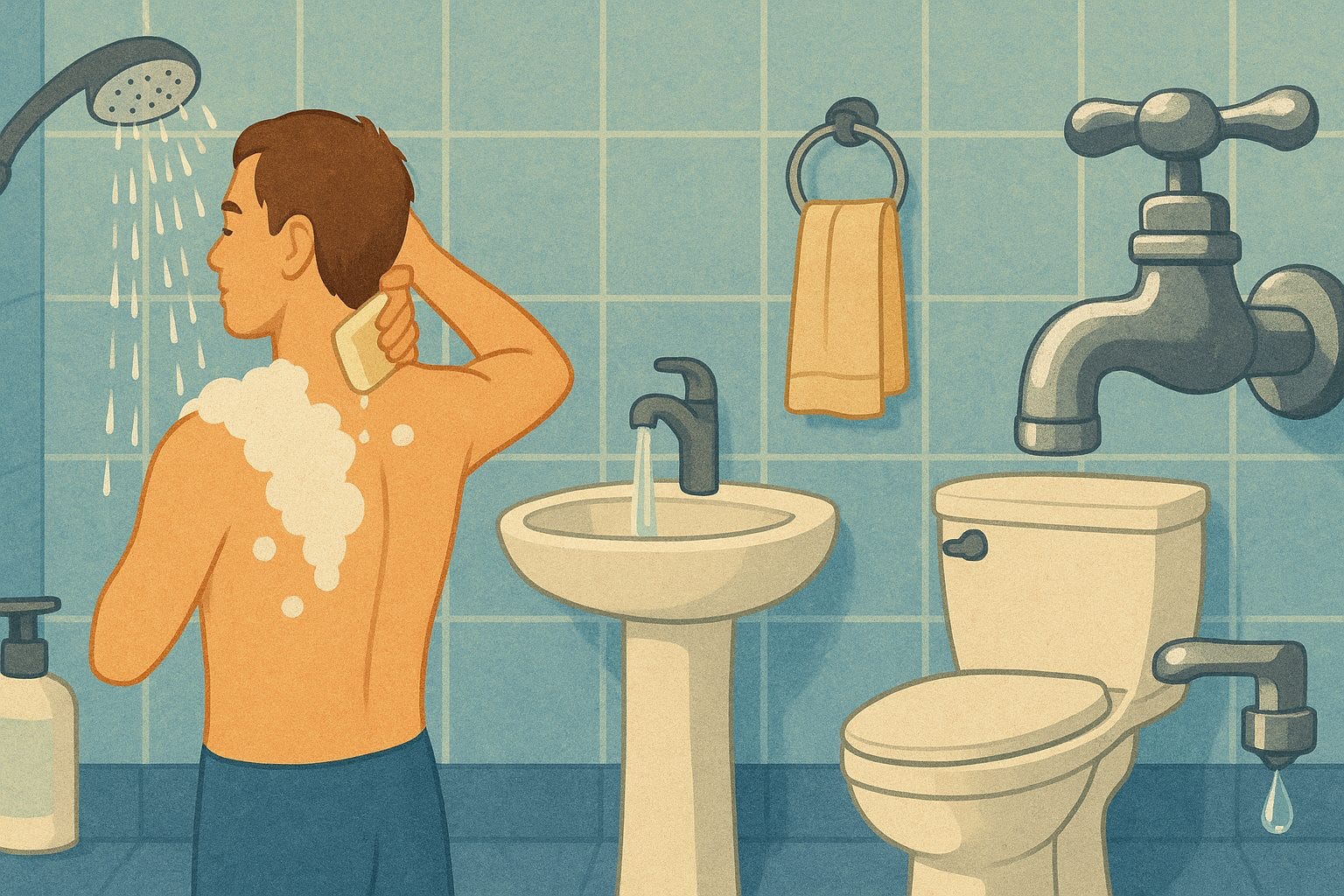
You don’t need a full home overhaul or a “green” mansion to make a dent in your water bill — sometimes, it’s the small swaps in the bathroom that slash consumption and slash costs. Imagine cutting your water use in half just by changing a few fixtures and habits. Sounds good, right? In this article, I walk you through seven simple, often-overlooked bathroom upgrades and routines that deliver big savings. By the end, you’ll see you don’t have to sacrifice comfort — just get smarter about the flow.
1. Switch to a Low-Flow Showerhead
Showering is one of the biggest water users in a home. The average “normal” showerhead pours out water at a rate of 2.5–3.5 gallons per minute (gpm). A more efficient, low-flow showerhead — especially one certified by US EPA’s WaterSense program — reduces flow to around 2.0 gpm (or roughly 6–9 litres per minute) without noticeably lowering pressure.
That swap alone makes a huge difference. A household replacing a standard showerhead with a WaterSense–rated one could save roughly 2,700 gallons of water a year — and also reduce energy used to heat that water.
Short story: same shower, half the splash. 🚿
2. Upgrade to a Water-Efficient Faucet or Aerator
Faucets might feel harmless — but over time, they add up. A dripping faucet can waste hundreds to thousands of gallons per year. Replacing dated taps with low-flow faucets or installing simple aerators (which mix air into the water stream to reduce flow without killing pressure) makes a noticeable difference.
In many bathrooms, faucet water usage accounts for a significant chunk of indoor water consumption. By going efficient, you might cut that share by 20–30% or more — and often, these fixtures pay for themselves in under a year thanks to water (and hot-water heating) savings.
3. Install a Dual-Flush or Low-Flow Toilet
Toilets are water drainers — literally. An older, inefficient toilet can flush anywhere from 3.5 to 7 gallons per flush. Modern water-efficient toilets, particularly those with dual-flush capacity, use about 1.28 gallons per flush (gpf) for liquid waste, and modestly more for solids — a marked drop.
Switching from an older toilet to a WaterSense-certified model can reduce toilet water use by 20 to 60 percent. For a typical household, that can amount to thousands of gallons saved yearly — and often hundreds of dollars saved, depending on local rates.
4. Shorter Showers — Or Try the Classic “Navy Shower”
Even with efficient fixtures, duration still matters. A shower running 10 minutes at a standard flow can easily use over 100 litres of water. Trim that to 5 minutes — or less if you multitask — and your savings jump.
If you want to get militant about it: adopt the old-school Navy shower method. That means: get wet, shut off the water, lather up, then rinse quickly. It’s not spa-level luxurious. But it’s effective — and efficient.
5. Turn Off the Tap — Especially While Brushing, Shaving, or Lathering
It seems almost too obvious. Yet many of us leave the tap running while brushing teeth, shaving, or washing hands — wasting more water than we realize. A few minutes of running water can add up to gallons-per-day lost.
Flip the habit: wet the brush or razor, turn off the tap while brushing or shaving, then rinse. Simple. Effective. Water-wise.
6. Fix Leaks — Every Drip Matters
A dripping faucet or toilet cistern might seem trivial — until weeks or months of accumulated drops translate into hundreds (or thousands) of wasted gallons. According to water-conservation agencies, many households lose significant volumes each year to undetected leaks.
Make it a habit to check faucets, showerheads, and toilet seals at least once every few months. A quick fix — often just replacing a washer or tightening a connection — can pay off big time.
7. Rethink Baths — Or Use a Half-Bath (or Bowl) Instead
Yes — long baths feel dreamy. But depending on fill level, a full bath can easily gulp 150–200 litres (or more) of water.
If you love soaking, consider reducing the depth. Or alternate: shower some days, soak others. If you’re washing kids or pets, use a basin or bowl — you can control exactly how much water you use.
Why These Small Swaps Add Up — Quickly
Showering, faucets, and toilets are among the biggest water consumers in a home. Even small reductions per use add up across days, weeks, months.
Efficient fixtures often pay for themselves within a year or two through reduced water (and heating) costs.
Beyond bills: you ease the load on local water supplies, reduce energy used to heat water, and shrink your environmental footprint. 🌱
Also read: 7 Clever Water-Saving Tips You’ll Notice on Your Next Utility Bill
A Few Extra Tips (Because I’m That Kind of Editor)
Check if local utilities or municipalities offer rebates or discounts for installing water-efficient fixtures — many do.
Combine water-saving with energy saving: less hot water = lower heating bills.
Encourage family/household discipline: post a little “turn-off reminder” next to the mirror or sink — habits matter more than hardware.
Track your usage post-upgrade. If your water meter shows a drop — that’s your ego getting a little flex.
If you apply even half of these swaps, you’ll likely cut your bathroom water use by 40–60%. Do it. Your wallet, community, and planet will thank you.