

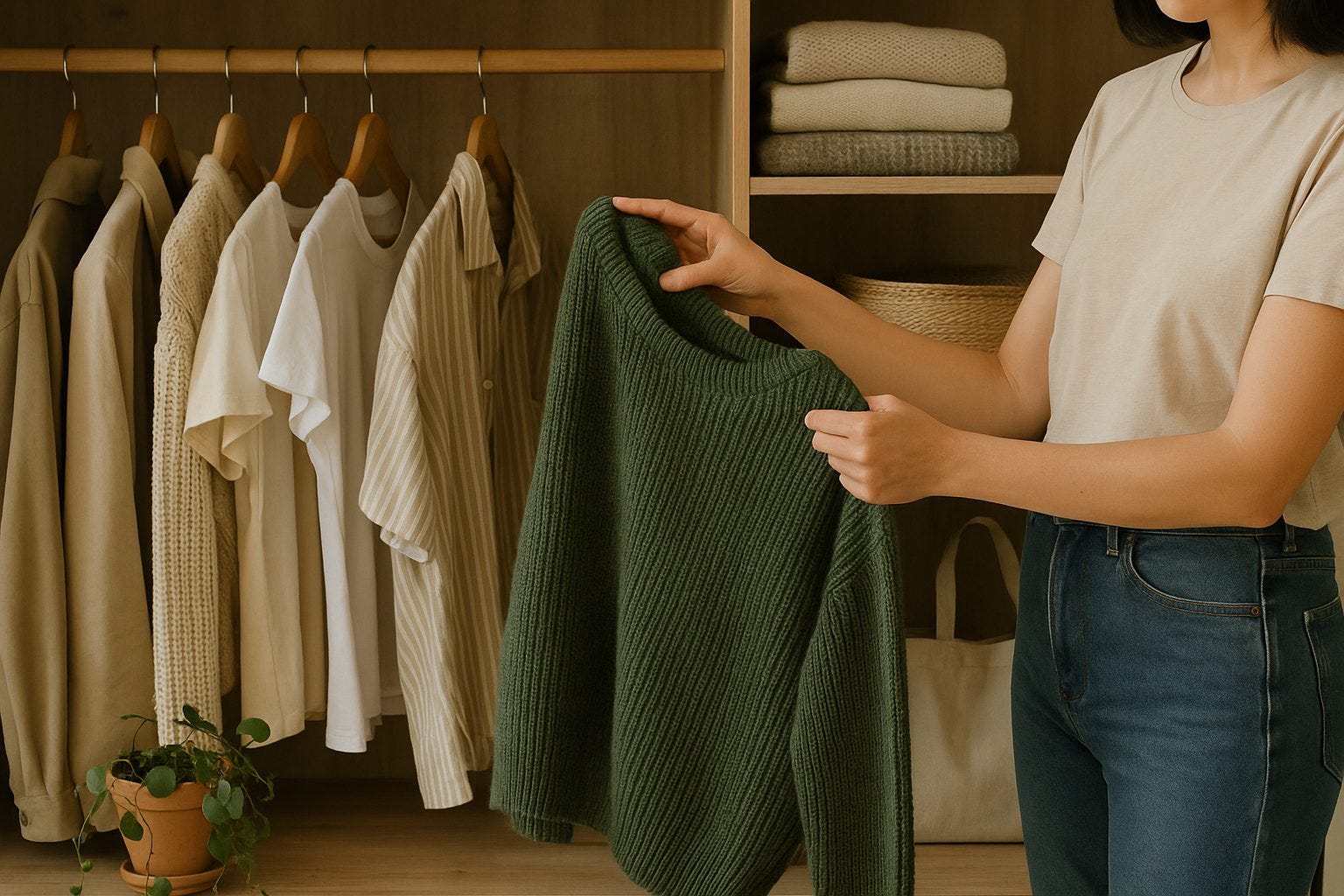
Your closet isn’t just a collection of clothes: it’s a hidden power center. Every garment you own carries water, energy, labor, and carbon — and often pollution, too — in its seams. The conventional fashion supply chain leaves a heavy footprint. Cheap “fast-fashion” pieces are churned out, worn a handful of times, then tossed aside. The result? Textile waste, microplastics, and a massive drain on the planet.
But here’s the good news: you don’t need to overhaul your style overnight. With a few simple, intentional habits, you can make your wardrobe twice as sustainable. Think of it as closet alchemy — turning what you already have into something better for the planet.
Embrace “Less Is More” — Buy Fewer, Versatile Pieces
Buying less seems almost too obvious. And yet, it’s the foundational habit of a sustainable wardrobe. Every new piece — even one labeled “eco-friendly” — has a cost: water, energy, labor, transport.
When you make fewer but smarter purchases, you shrink fashion’s footprint. Minimalist wardrobes — small sets of versatile, timeless clothes — drastically reduce demand, which in turn reduces production and waste.
Also: versatile clothes mean fewer purchases. Pick items that mix and match. A neutral jacket, good jeans, a classic shirt — these can go a long way. You don’t need a dozen trend pieces. Just a handful of staples that actually get worn.
Choose Quality Over Quantity — Invest in Durable, Ethical Clothes
Fast fashion often means cheap materials and short lifespans. That cheap tee that shrinks or tears after a few washes? That’s part of the problem.
Instead, aim for garments built to last. Natural, durable fabrics like linen, hemp, organic cotton, or high-quality wool tend to age well.
Buying quality may feel like a splurge at first. But think long-term: a well-made shirt or coat that stays wearable for years is often cheaper per wear than three disposable ones. Also, many ethical brands follow fair-labor and environmentally conscious production practices. That’s style with a conscience.
Sort, Edit, and Reuse — Do a Seasonal Closet Audit
Too much of sustainability is about what you already own. Rather than chasing new items, take stock of what’s already in your closet. Ask: which pieces do you wear often? Which sit untouched? Which could be repaired, reworked, or donated?
This doesn’t have to be painful. Think of it as a style reset. Keep what works — mix, match, remix. Reuse items in new combinations. Donate or recycle what you don’t wear. Your closet becomes leaner — and meaningfully sustainable.
Also: when you see what you have, you’re less tempted to impulsively buy more.
Embrace Second-Hand, Vintage & Upcycled Clothes
One of the greenest clothes is the one already made. Buying second-hand or vintage cuts demand for new production. No new fibers, no fresh dye vats, no extra shipping.
Upcycling takes it even further — turning worn-out clothes or leftover fabrics into new pieces. It’s a creative, personal way to give garments a second (or third) life — and keeps textiles out of landfills.
Plus, vintage or second-hand often comes with style and craftsmanship that fast fashion simply doesn’t. Unique, long-lasting, and planet-friendly. Win–win–win.
Care, Mend, and Maintain — Extend the Life of What You Own
You love that cozy sweater. Instead of letting it go after a few washes, treat it well. Wash less, use cold water, air-dry or line-dry rather than tumble dry, use gentle detergents. Little care goes a long way.
Better: learn simple repairs. Replace a button, fix a seam, patch a hole — these small acts stretch out clothing lifespan and keep garments out of landfills. A well-kept piece can live many seasons longer.
Mending isn’t a chore. It’s a superpower. The power to fight throwaway fashion.
Adopt Capsule-Wardrobe Thinking — Style With Intention, Not Impulse
A capsule wardrobe is a carefully curated collection: just the right number of pieces you love, that all work together. Think timeless basics, neutral colors, mix-and-match potential.
With a capsule wardrobe, you see clearly what you have. You stop doubling up on similar items. You make smarter purchases — or none at all. It pushes you to ask: will I wear this 20 or 30+ times? Or just once?
Capsule wardrobes naturally resist fast-fashion temptations. You shop with intention. You dress with purpose.
Mindset Shift — Fashion as Values, Not Impulse
Finally: mindset matters. Sustainability isn’t a trend — it’s a lifestyle. It’s about valuing what you have and understanding the ripple effects of fashion on the planet and people.
Every purchase becomes a choice: a vote for longevity, ethics, and environmental respect. Every repair becomes a small act of rebellion against waste.
When you think of your wardrobe as a personal ecosystem rather than a fast-fashion buffet, everything changes.
It’s not about perfection. It’s about progress.
Also read: 7 Stylish Sustainable Fashion Tips (Without Sacrificing Your Look)
Want to Take Action? Start Today 👇
Open your closet and pull out pieces you haven’t worn for a year.
Commit to repairing or donating — don’t toss.
Next time you need something new, ask: “Do I really need this?”
Explore second-hand shops or vintage stores.
Choose quality, natural materials when you do buy.
Sustainable wardrobes aren’t about deprivation — they’re about value, style, and impact.