

Most energy advice starts with a shopping list. New windows, new furnace, a roof full of solar panels. Lovely ideas, and I would happily take any of them, but your bill is due this month. 💸
So here is a different list. Four of these habits cost zero dollars. The other two cost a few dollars each. None of them needs a contractor or a weekend, and none of them asks you to sit in the dark wearing three sweaters. Savings depend on your climate, your rates, and your house, so treat the numbers below as ranges and not promises. I think you will still like what you find on your next bill. ⚡
Turn the heat down while you sleep
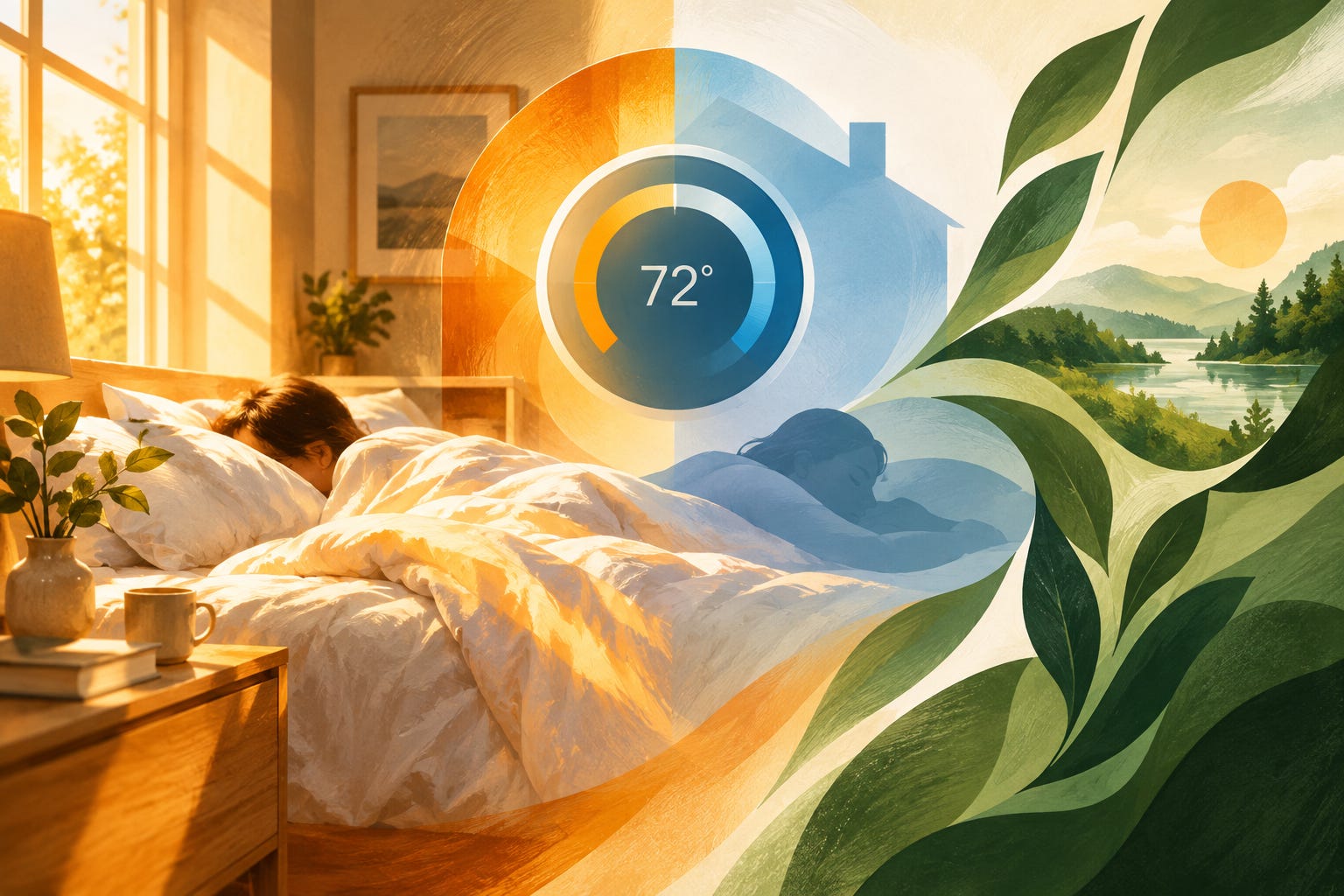
This is the oldest trick in the book, and it still works. The U.S. Department of Energy says you can save as much as 10 percent a year on heating and cooling by setting your thermostat back 7 to 10 degrees Fahrenheit for eight hours a day. Sleeping hours are the obvious window, because you are under a blanket and do not care. 🛏️
Heating and cooling make up roughly half of a typical home’s energy use, so a small percentage here beats a big percentage almost anywhere else. Programmable thermostats do the work for you. A manual one works too if you flip it before bed.
How to make it stick:
Pick a number you can live with, say 7 degrees lower at night
Set it back again when you leave for work 🏠
Skip the “recovery costs more” myth. Setbacks still save energy
Set a schedule once and then leave it alone
Do you already have a programmable thermostat sitting in “hold” mode? Be honest. A lot of us do.
Two hot water dials worth touching
Heating water is where a surprising amount of energy goes, and two settings control most of it.
First, the washing machine. According to ENERGY STAR, about 90 percent of the energy a washer uses goes to heating the water, a number also quoted on the Department of Energy laundry page. Switch the dial from hot to cold and most of that disappears. Modern detergents are built to work in cool water. Savings estimates run around $60 a year if you wash most loads cold. 🧺 Keep hot for greasy work clothes and sick-bed sheets, and use cold the rest of the time.
Second, the water heater. Most tanks ship set at 140 degrees. Dropping to 120 degrees can trim water heating costs by roughly 6 to 10 percent, and the lower setting also cuts the scald risk for kids. 🚿 Check your manual first. Some dishwashers want hotter water, and people with weakened immune systems should ask a doctor before going lower. The Department of Energy’s water heating guide explains the options.
Quick steps:
Run hot water at the tap farthest from the tank and measure it with a cooking thermometer
Turn the tank dial down a notch, wait a day, and test again
Wash the next five loads on cold and see whether anyone complains
Tell the rest of the house before you change anything, to avoid a cold-shower mutiny 😅
Lights and the things that never really turn off
LEDs. The Department of Energy says residential LEDs use at least 75 percent less energy than old incandescent bulbs and last far longer. Lighting is about 15 percent of a typical home’s energy use, so this adds up. A bulb costs a few dollars, and the bulbs you use most pay back fastest. Start with the kitchen, the living room, and the porch light that burns all night. 💡
Phantom loads. Your TV, cable box, game console, and printer all sip power while they sit “off.” Estimates from the Department of Energy and others put standby power at 5 to 10 percent of household electricity. The Lawrence Berkeley National Laboratory has tracked this problem for years. One switchable power strip turns a whole entertainment center off with a single flip. 🔌
Where to look first:
Cable and satellite boxes, which tend to be the worst offenders
Game consoles left in rest mode
Printers and old desktop computers
Any gadget with a little glowing standby light
I always assume I own fewer phantom devices than I do. Then I count the little red lights. 🔴
The dishwasher’s hidden button
Most of the energy a dishwasher uses goes to heating water, but the drying step adds its own bill. The heated dry setting runs a heating element for the end of the cycle, and several sources, including Kitchn, put its cost at up to 15 percent more energy than air drying. 🍽️
The fix is almost insulting in its simplicity. Turn off heat dry, or choose the air-dry or energy-saver option, and crack the door open when the cycle ends. Your dishes dry on their own. Add a splash of rinse aid if you hate water spots. ✨
A few more dishwasher habits:
Run it only when it is full
Scrape plates instead of rinsing them first
Use the eco cycle for ordinary loads
Save heated dry for the night you have company and need glasses in a hurry
A realistic first month
You do not need to do all six this weekend. Pick the free ones first, since they cost nothing to try, then spend a few dollars on bulbs and a power strip. 🌱
Here is a simple order:
Day one: set the thermostat back at night and flip the dishwasher to air dry
Day two: lower the water heater and switch the washer to cold
Day three: replace your five busiest bulbs and plug the TV setup into a power strip
End of month: compare your bill to the same month last year
None of these is dramatic on its own. Together they add up, and they keep adding up every month after that. 📈
So which of the six is your easiest win, and what is stopping you from doing it tonight?