

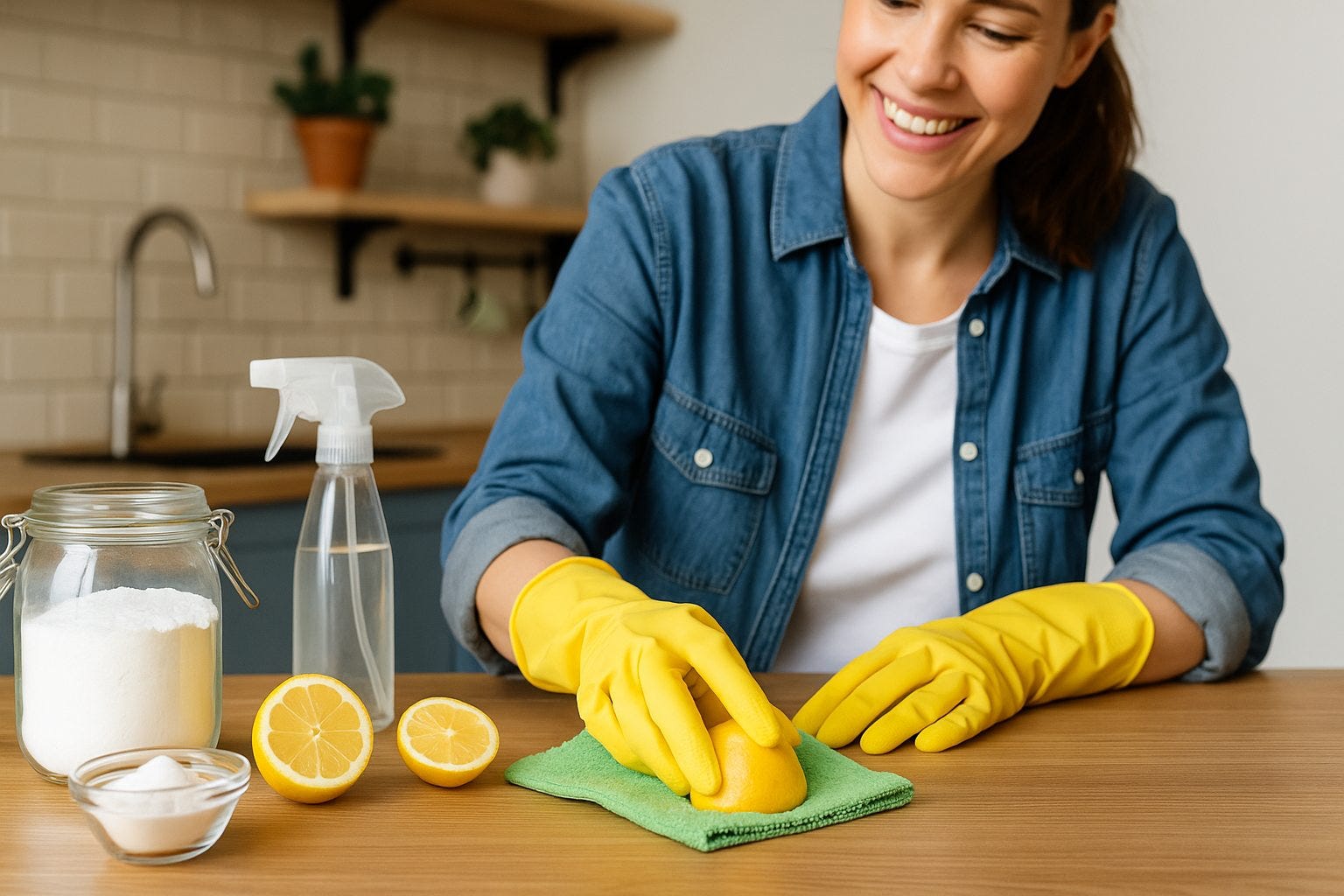
Let’s be real: most of us grew up believing that a shiny bathroom or spotless kitchen demanded a bottle of harsh chemicals and probably a few fumes to show for it. But what if I told you that some of the best cleaning tools have been hiding in your pantry all along — and often outshine those chemical-laden big-brand sprays? That’s right. Natural, eco-friendly cleaning tricks don’t just make you feel good about saving the planet. They often work better — or at least smarter — than you’d expect.
In this article, I dive deep into six eco-friendly cleaning tricks that consistently outperform conventional chemical cleaners, or at least deliver surprising results. Cleaner surfaces. Fewer toxins. A happier home. Ready?
What “Green Cleaning” Even Means — And Why It Matters
“Green cleaning” (or “eco-friendly cleaning”) refers to cleaning methods and products that emphasize environmental safety and human health — avoiding synthetic chemicals that release volatile organic compounds (VOCs) or other toxic residues.
The benefits aren’t just altruistic. Natural-ingredient cleaners tend to be biodegradable, less irritating to skin and lungs, and less likely to harm pets or kids.
And these aren’t just trade-offs for “being good.” With the right recipes and techniques, eco-friendly cleaning can be powerful. Think effective scrubbing, decent disinfecting, odor elimination, and even polishing — minus the harsh chemicals that linger long after you’ve wiped the surface.
Trick #1 — Use Plain White Vinegar as an All-Purpose Surface Cleaner
White vinegar (diluted with water) — simple, cheap, and so often overlooked.
Because vinegar is acidic, it naturally cuts through dirt, dissolves mild mineral deposits, and removes relatively light grime.
Mix equal parts vinegar and water in a spray bottle. Spray on kitchen countertops, bathroom tiles, and many other non-delicate surfaces. Wipe with a cloth. Done.
For glass or mirrors, vinegar helps leave a streak-free finish when wiped dry.
This trick especially shines when you want a quick cleanup that’s safe for kids, pets — even after you cook spaghetti or wipe down a high-chair.
Trick #2 — Baking Soda: The All-Natural Scrubbing and Deodorizing Powerhouse
Ever opened a box of baking soda just to absorb fridge smells? Turns out that same stuff is also a remarkably versatile cleaner.
Sodium bicarbonate (baking soda) is mildly alkaline, which helps it break down stubborn dirt, grease, or residue when used as a paste with a bit of water.
Go-to uses:
Sprinkle directly on a damp sponge and scrub kitchen sinks, stovetops, or grimy surfaces — excellent for greasy residue.
Make a paste for tough stains on ceramic tiles or grout lines.
Use it in refrigerators to absorb odors (no chemicals messing with your food smell).
It’s gentle, effective, and often safer for sensitive surfaces than abrasive chemical scrubbers.
Trick #3 — Lemon or Citric Acid for Grease, Soap Scum, and a Fresh Scent
If vinegar feels too “basic,” reach for citrus instead. The acid in lemon juice or citric acid helps cut through grease, soap scum, and light mineral buildup — while leaving behind a pleasant, fresh scent.
Add a splash of lemon juice to your vinegar or water cleaning solution — or simply rub half a fresh lemon over taps, sinks, or stainless-steel fixtures. Works especially well in kitchens and bathrooms.
Bonus: if you care about ambiance, the natural citrus scent is way nicer (and less chemical) than that bleach-factory smell.
Trick #4 — Castile Soap (or Black Soap) + Water: A Gentle but Effective Floor & Surface Cleaner
For floors, wood surfaces, or even delicate furniture, harsh chemicals often do more harm than good — stripping finishes, dulling wood, or even damaging natural stone.
Instead, a mixture of plant-based soap (like castile soap or black soap) with lukewarm water offers a gentle but capable alternative.
Use it for:
Mopping wood or vinyl floors (dilute well)
Wiping down cabinets or wood furniture
Everyday cleaning where you want mildness with cleanliness
It avoids harsh odors, protects natural surfaces, and still leaves things looking tidy.
Trick #5 — Use Baking Soda OR Vinegar — Not Both — for Best Results
Here’s a pro tip — and an important myth to bust: mixing baking soda and vinegar doesn’t create super-cleaning magic. It creates fizz. And sometimes … that’s it.
Chemically speaking, the acid (vinegar) neutralizes the base (baking soda), which means you lose much of their individual cleaning power.
If you want real cleaning power:
Use baking soda alone for scrubbing and odor removal
Use vinegar (or lemon/citric acid) alone for light cleaning and mineral deposit removal
Mixing them is mostly aesthetic — bubbles galore, but not much else.
Trick #6 — Combine Natural Cleaners with Smart Habits for a Healthier, Greener Home
Eco-friendly cleaning shines brightest when you treat it as a lifestyle, not a chore. It’s not just about what you use — it’s about how, when, and where.
Use microfiber cloths or old cloth rags (reuse instead of discarding)
Ventilate well when cleaning (even natural cleaners can irritate if concentrated)
Reserve “heavy chemicals” (when they’re really needed) for extreme jobs — but most everyday tasks don’t call for them
Embrace maintenance: regular wiping beats deep scrubbing with harsh chemicals
Green cleaning is also kinder to water systems, indoor air quality, and — if you care — the planet.
Reality Check: Natural Cleaners Are Great — But Not Magic
Let’s be honest. Eco-friendly cleaning isn’t a silver bullet. Sometimes tough grease, molded surfaces, or heavy bacteria require stronger disinfectants. Studies show that while vinegar or baking soda can reduce microbes, they generally don’t match the deep disinfecting power of commercial chemical cleaners.
Also: some natural hacks are more placebo than powerhouse. That bubbly show from a vinegar + baking soda mix? Pretty — but mostly superficial.
So: match the method to the mess. Understand the limitations. Be smart about whether you’re after light cleaning, deodorizing, rust removal — or disinfection.
Also read: 5 Ways to Detox Your Cleaning Routine Without Losing the Sparkle
Final Thoughts — Clean Smart, Live Green, Feel Good
I think eco-friendly cleaning isn’t just a trend. It’s a smarter way to keep a home — or office — clean. It’s cheaper, gentler, and often sufficiently effective.
Start small. Replace one or two chemical sprays with vinegar, baking soda, or a mild soap solution. Test it. See how your surfaces respond. Savor the absence of toxic fumes.
And maybe — just maybe — you’ll enjoy cleaning more than you expect. 😉