

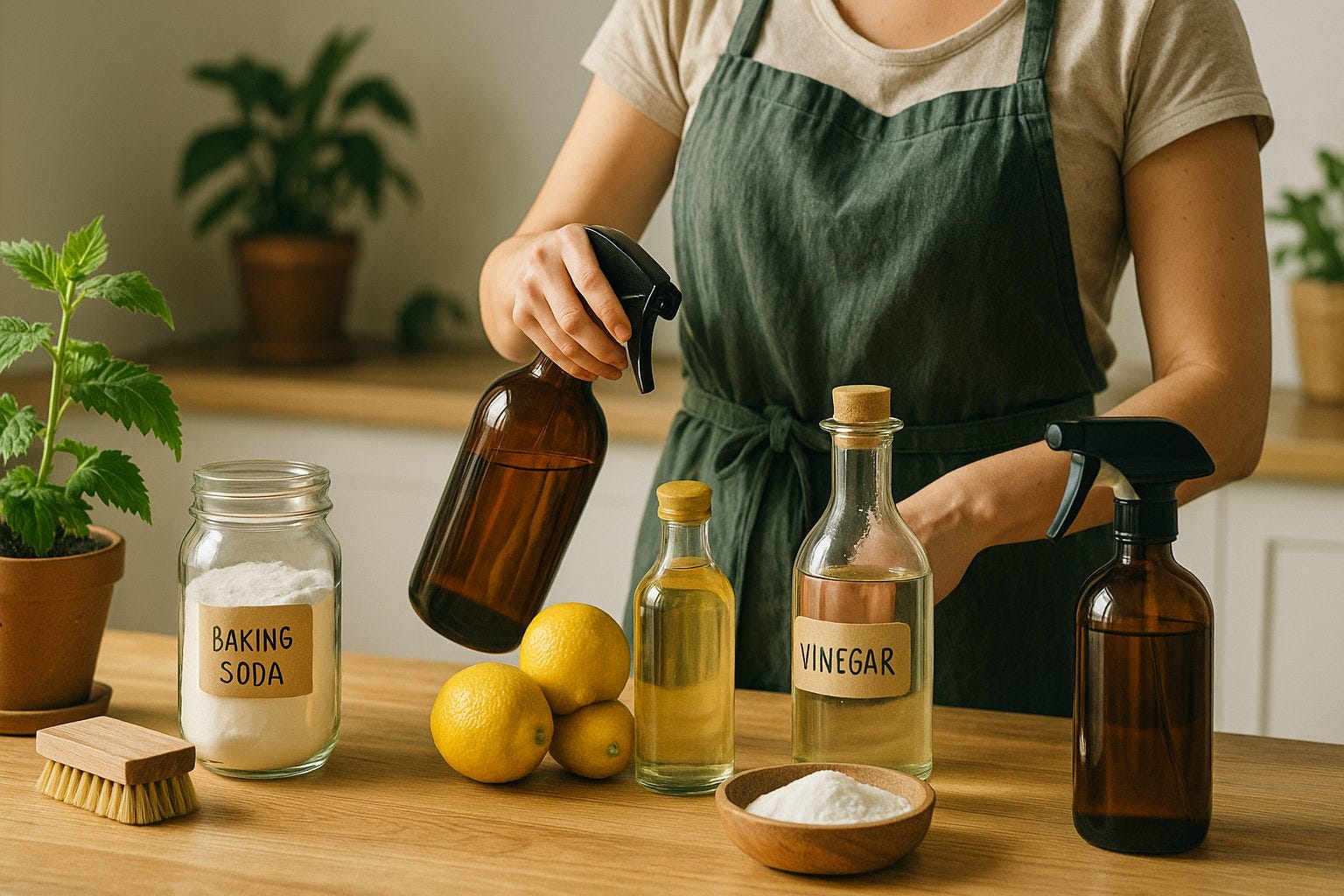
We live in a world where every spray bottle seems to leave a little stain — not just on our counters but on the planet too. That’s where “green cleaning” comes in. Green cleaning refers to cleaning methods and products that use environmentally friendly ingredients and avoid toxic chemicals.
Making your own cleaning products isn’t just trendy — it’s practical. You skip the harsh synthetic chemicals, you reduce plastic waste (by reusing spray bottles), and you often spend a fraction of what a commercial cleaner costs. Many of the key ingredients — like white vinegar, baking soda, lemon juice — are likely hanging out in your kitchen already.
So yes, you can maintain a sparkling home — and feel good about it — using everyday household staples. Below are six eco-friendly cleaning solutions you can whip up in minutes.
1. All-Purpose Cleaner: the Everyday Hero
This is the Swiss Army knife of DIY cleaning sprays — great for countertops, bathroom surfaces, shelves, and more.
What you need: Equal parts water and white vinegar, plus a few drops of essential oil (like lemon, lavender, or tea tree) if you want a pleasant scent.
Why it works: Vinegar is a natural deodorizer and degreaser, while the water dilutes its acidity enough for everyday surfaces. Essential oils mask the vinegar smell and add mild antimicrobial or deodorizing effects.
I like to keep this spray handy in a glass bottle under the sink. A quick shake, and I’ve got an all-round cleaner ready. Simple. Reliable. No fuss.
Tip: For tough messes — crayon on a wall, greasy counters — you can add a pinch of baking soda for gentle abrasion before wiping.
2. Glass & Mirror Cleaner — For Sparkling Reflections
Wanted sparkling windows, mirrors, or even shiny stainless steel? Here’s a recipe that rivals store-bought glass cleaners:
Recipe: Mix one cup water with one cup white vinegar. For extra shine (and a fresher scent), add a teaspoon of lemon juice or a few drops of essential oil.
Spray onto glass surfaces and wipe with a lint-free cloth or old newspaper (yes, newspaper works!).
It’s simple. No harsh chemicals. And often — better clarity and fewer streaks than conventional cleaners.
3. Natural Oven & Stove Cleaner — Tough on Grease, Gentle on Earth
Grease and baked-on mess? No problem. That’s when the humble baking soda steps up.
What to do: Make a paste by mixing baking soda with just enough water (or a little liquid soap) to spread. Slather it on greasy or burned-on areas in your oven or on your stovetop. Let it sit — ideally overnight — then wipe clean. For stubborn spots, spray a little vinegar on and wipe again.
This method avoids the caustic chemicals often used in commercial oven cleaners. It may require a little elbow grease — but it’s far kinder to your lungs and the environment.
4. Floor Cleaner — Safe for Most Surfaces
Whether you have tiles, vinyl, linoleum, or sealed wood floors, you don’t need harsh detergents — just a gentle, natural cleaner.
Basic mix: Warm water + a splash of vinegar (about ½ cup per bucket). Mop as usual.
For extra shine (especially on wood): Add a few drops of soap (preferably plant-based) and a splash of lemon juice or essential oil.
This kind of floor cleaning keeps dirt under control and avoids leaving slippery residue or harmful vapors behind.
5. Wood Furniture Polish — Bring Out the Grain, Not the Guilt
Commercial polishes are often loaded with waxes, dyes and petroleum byproducts. You don’t need that. Instead:
DIY polish: Mix about ½ cup olive (or vegetable) oil with ¼ cup of white vinegar and 20–30 drops of lemon essential oil. Shake well. Apply to wood furniture with a soft cloth, then buff. Lightning-fast satin finish without the waxy coating.
The vinegar helps dissolve grime; the oil nourishes the wood and restores its luster; the lemon smells fresh and clean. Result: furniture that gleams — naturally. ✨
6. Natural Air Freshener & Carpet Deodorizer — Keep It Fresh, Responsibly
Let’s face it — store-bought air fresheners are often just perfume in a can. You can do better with a homemade mix.
Air freshener: Fill a spray bottle with water (or distilled water), add a small amount of rubbing alcohol or vodka, then add 20–30 drops of essential oil (think lavender, citrus, tea tree). Shake and mist into the air or onto linens.
Carpet deodorizer: Sprinkle baking soda over rugs or upholstery. Let it sit for 15–30 minutes, then vacuum. Want a fresh scent? Add a few drops of essential oil before sprinkling.
You get freshness — not artificial scents or lingering chemicals. And just maybe fewer sneezes.
A Few Things to Keep in Mind (Because Life Isn’t Perfect) ⚠️
Natural cleaners — even DIY — are often great for cleaning, degreasing, deodorizing. But they don’t always disinfect the way harsh chemical cleaners do. Vinegar, for example, can kill some bacteria, but it’s not a registered disinfectant under stricter regulations.
If you have delicate surfaces (like unsealed stone, certain woods, or some countertops), test a small area first — especially when using acidic ingredients like vinegar or lemon.
Mix carefully. Avoid combining vinegar with bleach or other harsh chemicals — that’s dangerous (chlorine gas bad!).
Also read: 5 Ways to Detox Your Cleaning Routine Without Losing the Sparkle
Why This Matters — Beyond Spotless Floors
Making your own cleaning products isn’t just a little home hack. It’s a small act of resistance against the tidal wave of chemical-heavy, plastic-bottled cleaners flooding our homes and environment.
Every time you choose a spray bottle filled with water, vinegar, and a few drops of tea tree oil instead of something in a disposable plastic container stuffed with synthetic chemicals — you’re reducing waste, lowering pollution, and breathing a little easier.
Plus — there’s something satisfying in knowing your home smells fresh because of a lemon rind or lavender oil you clipped from your shelf, not because of some lab-created fragrance.
In short: you get a cleaner home, a healthier indoor environment, and a lighter footprint on the planet. Not bad for stuff you already own.
Ready to Get Started?
Grab a few empty spray bottles (glass if you can), label them “All-Purpose,” “Glass,” “Floor,” etc., and stash them under the sink or in your cleaning closet.
Try one recipe a week. See what works best for your home. Adjust the scent. Tweak the ratios. Maybe throw in a pinch of baking soda here, a dash of lemon oil there.