

Gardens aren’t just backdrops for barbecues and lazy Sundays. They are tiny, potent ecosystems with the power to host all kinds of life — insects, birds, amphibians, maybe even the odd hedgehog (depending where you live). In fact, when we make small, thoughtful tweaks, our backyards can become meaningful havens for wildlife.
Rather than striving for that manicured “perfect lawn” aesthetic — which often means mowing, chemicals, and… well, ecological dead zones — you can create something richer, wilder, and alive. A space that hums with pollinators, rustles with hidden critters, and supports nature from the ground up. Think of it as creating a little refuge. For plants. For insects. For birds. For you.
Here are six projects you can implement — simple, satisfying, and surprisingly effective.
🌸 1. Plant a Pollinator-Friendly Garden — go native and seasonal
If you want to set the tone for the rest of your garden’s life, start here. Choosing native flowering plants and shrubs is like sending out a welcome mat to bees, butterflies, and beneficial bugs. Native plants have co-evolved with local wildlife — they “speak the language” of your area’s pollinators.
Ideally, you pick a variety — some that bloom in spring, others in summer, and some even into autumn. That way, you’re offering “nectar and pollen year-round,” not just a fleeting buffet. The results? More pollinators, more seeds, more life.
You don’t need acres. Even a small corner, a border strip, or a few pots can make a difference. And once things take root, maintenance drops — the native plants generally thrive without fuss.
🌿 2. Let It Get a Little Wild — long grass, leaf piles, and “messy” corners
Here’s a revolutionary gardening idea: don’t tidy everything up. Leave some grass uncut. Pile up leaves or twigs. Let a corner of the garden go a little wild. Sounds messy? That’s the point.
Long grass, leaf litter, and natural debris create perfect hiding spots and nesting grounds for insects, amphibians, and small mammals. Beetles, caterpillars, earthworms — all get a cozy retreat, and predators like hedgehogs or insect-eating birds get a steady meal (if you’re lucky enough to have them nearby).
Also, ditch the chemicals. Herbicides and pesticides don’t care if their target is “pest” or “pollinator.” They wipe out the whole street of organisms — the good, the bad, the essential.
💧 3. Add Water — from birdbath to mini pond
Water is life. For everything. By adding even a small water feature to your garden — a shallow dish, a birdbath, or a mini pond — you invite a whole host of creatures. Birds come to drink and bathe. Amphibians (if you’re lucky) may use it as a habitat. Insects like dragonflies, damselflies and certain beetles find water attractive.
Even urban gardens with limited space can benefit. A container or an old basin works fine. Make sure there’s a gentle slope or pebbles so small critters can get in and out safely. And — resist the urge — don’t toss in fish. They’ll eat eggs or larvae and sabotage your burgeoning ecosystem.
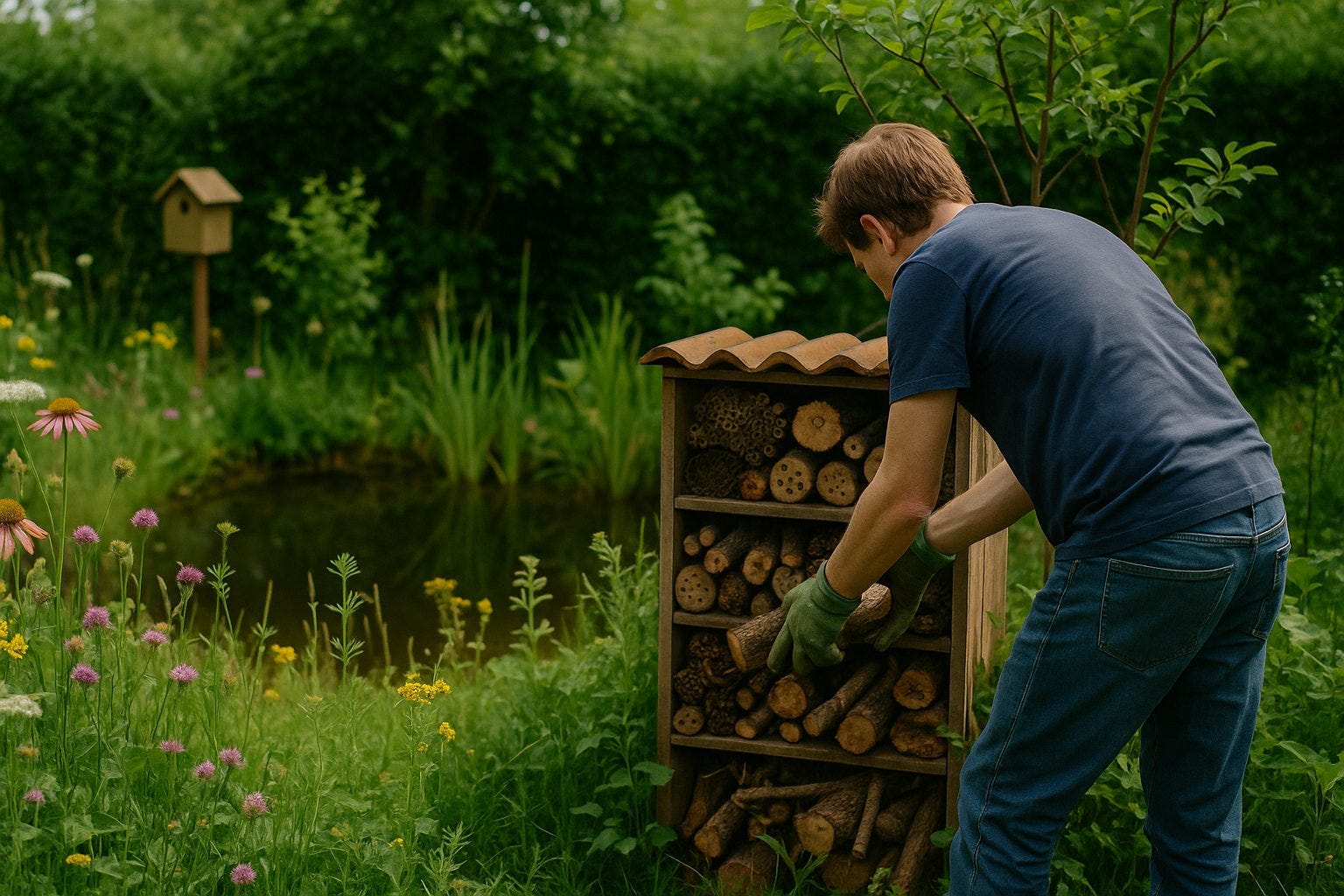
🐞 4. Build Bug Hotels, Nest Boxes, or Simple Shelters
If flowers, water, and wild corners are one part of the story — shelter is another. Many beneficial insects and small animals need a safe place to hide, overwinter, or nest. Enter the bug hotel (or insect “condo”), nest boxes, or simple shelters made from logs, twigs, or hollow stems. It’s DIY heaven.
You don’t need fancy materials — old wood, bamboo sticks, pinecones, or hollow plant stems work great. Find a quiet, sheltered spot (ideally sunny), and give the insects a little privacy. Soon enough, bees, ladybugs, lacewings — maybe even solitary wild bees you never knew existed — will take up residence.
It’s a subtle nudge toward supporting an insect population that pollinates, controls pests, and enriches your garden’s ecosystem. And really — who doesn’t love a functional little bug-house tucked in the corner?
🌳 5. Add Structure — Shrubs, Small Trees, Hedges, or Mixed Layers
A varied garden structure is a bit like offering different “rooms” for different kinds of wildlife. Low-growing groundcovers, flowering shrubs, small trees, even hedges — each adds vertical variety, food sources (flowers, berries), and shelter. It layers your garden like a mini-forest.
Plants such as fruit trees or berry bushes serve a dual purpose: they give you fruit, but they also feed birds and small mammals. Berry bushes, shrubs, and mixed hedges provide flowers and cover, helping birds nest or find refuge. Even smaller trees add value without taking over the space.
If you think it’s too much — consider doing it in layers. Groundcovers first, then shrubs, then maybe a small tree or two. You end up with a garden that feels natural, dynamic, and alive.
🌱 6. Replace Lawn With a More Biodiverse Ground Cover: Meadows, Tapestry Lawns, Wildflower Strips
Let’s face it — traditional lawns are ecological deserts. Mowed, watered, often chemically treated — they’re made for human lounging, not wildlife thriving. But there are alternatives that still look pleasant and save you work.
One such approach is a Tapestry lawn — a lawn made up of a mix of low-growing wildflowers, herbs, and non-grass plants. They need less mowing, less water, and attract a flood of pollinators and insects. Some studies have found dramatically more insect activity compared to traditional lawns.
Another option is sowing a Wildflower strip or even letting a patch of lawn go natural, turning it into a de facto meadow. A mix of species, flowering at different times, extends the season for pollinators and provides seeds or habitat for birds and small mammals.
Also read: 5 Smart Garden Tools That Help You Grow Food Sustainably
✨ Bottom Line: You Don’t Need Huge Investments — Just Some Thoughtful Choices
You don’t need to be a professional gardener or spend a fortune. Each of these six projects can be started on a budget, scaled to your available space, and grown at your own pace.
Start small. Maybe a pollinator border here, a bug hotel there. Let a corner of lawn go wild. Add a birdbath. Plant a shrub or two. Over time, your garden evolves — into something richer, livelier, and full of stories.
Give it a go. See what visits. Maybe a bee lands on a blossom. Maybe a bird sings. Maybe you spot something curious in the grass.
Your backyard: soon to be more than just a space. A habitat. A refuge. A small act of kindness toward nature.