

Zero-waste advice has an image problem. It conjures a spotless pantry of identical glass jars and a person who lives on lentils and smugness. 🫙 I do not want that life. You probably do not either.
Here is what I do want: a kitchen that sends less to the landfill without turning dinner into a project. The scale of the problem is real. The EPA estimates that Americans generated about 66 million tons of wasted food in 2019 across retail, food service, and homes, and roughly 60 percent of it went to landfills. Food is the single biggest material in our trash, which makes the kitchen the right place to start. 🌍
Popular Science makes a good point that zero-waste living is a spectrum, and perfectionism is not the goal. So these five swaps are low effort, cheap or free, and easy to undo if you hate them.
Paper towels out, rags in
Paper towels are the easiest habit to break and the hardest to notice. The EPA does not identify any significant recovery of paper towels for recycling, so every sheet is a one-way trip to the bin. 🧻
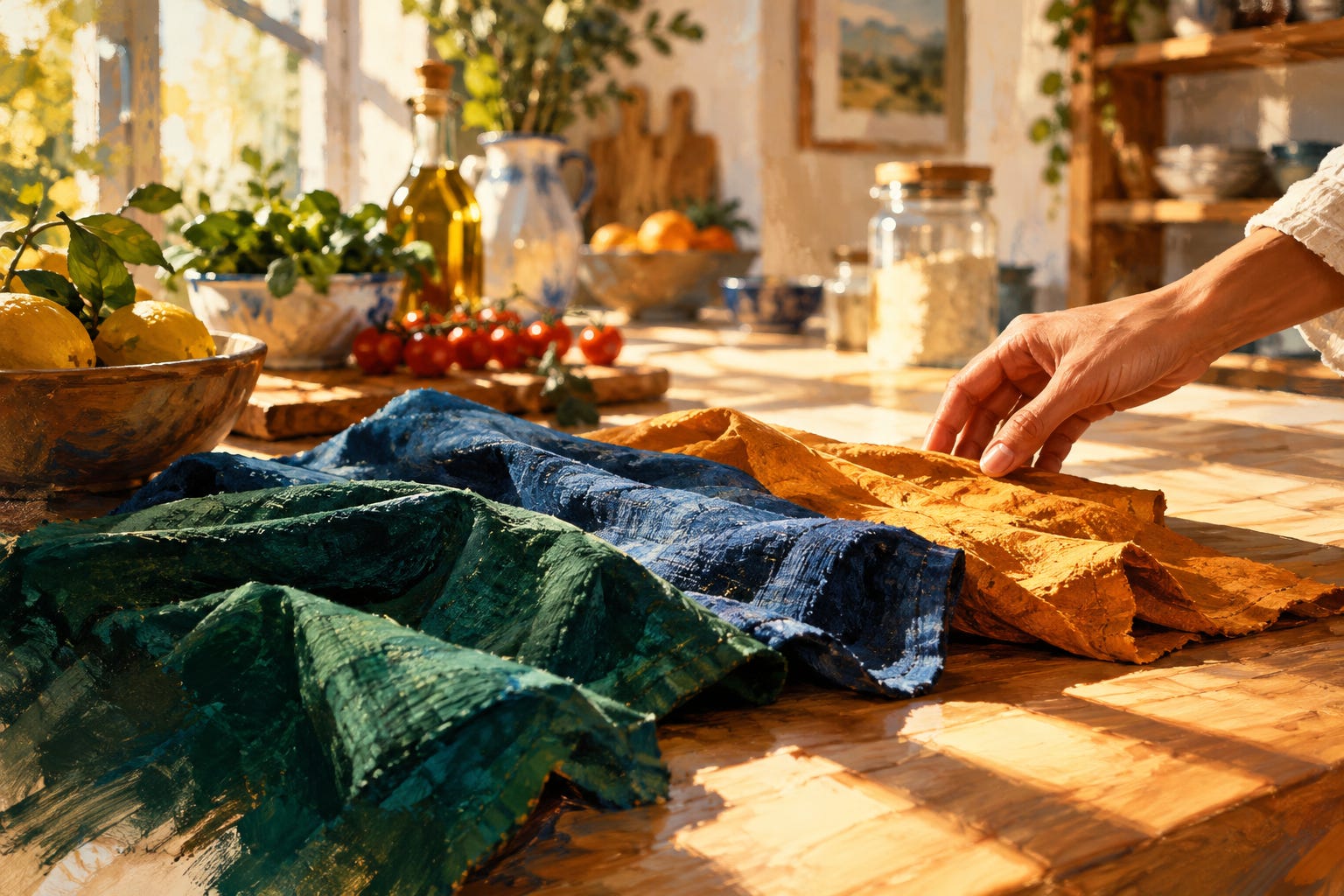
A basic set of cloths solves most of it. Old t-shirts, worn-out bath towels, and dish rags all work, and cutting them up costs nothing. If you want something nicer, Swedish dishcloths are made from cellulose and cotton, hold a lot of water, and go in the washing machine. Tasting Table found a 10-pack for about $10. 💧
A few habits that keep it painless:
Keep a stack of cloths where the paper towels used to live
Toss dirty ones into a small bin and wash them with your regular laundry
Save one roll for truly gross jobs, like raw chicken juice or a pet accident 🐕
Wash cloths in cold water to keep the energy cost low
I think most people go through a week of reaching for the roll out of habit, and then it fades. Have you tried this before and quit? What got in your way?
Plastic wrap out, plates and jars in
Plastic cling wrap is one of the most pointless things in my kitchen. It tears, it sticks to itself, and it is gone after one use. ✂️
You already own the replacements. A plate over a bowl works for leftovers. A glass jar holds soup. Beeswax wraps are a popular swap for covering cheese and half a lemon, and they can go in compost at the end of their life. Silicone covers last longer and fit bowls well. I would pick one of these and see if it sticks before buying a set of everything. 🐝
Where each one shines:
Plate or bowl lid: leftovers, rice, anything you will eat tomorrow
Beeswax wrap: sandwiches, cheese, cut produce, bread ends
Silicone cover: half an avocado or a bowl that needs a tight seal
Glass jar: soups, sauces, and dried goods 🥣
One honest caveat. Beeswax wraps go brittle in the freezer and do not work for raw meat, so they will not replace cling wrap in every situation. Keep your expectations modest and use what you already have first.
A scrap pail beside the trash
This one has the biggest payoff, and it feels odd for about three days. Collect your food scraps in a small pail on the counter instead of tossing them in the trash. ♻️
The reason matters. The EPA says that about 96 percent of household food waste ended up in landfills, combustion facilities, or down the drain in 2019. Food buried in a landfill breaks down without oxygen and makes methane. The city of Sonoma, California puts methane at roughly 25 times more potent than carbon dioxide, and calls landfill methane the easiest greenhouse gas to prevent. 🔥
You have a few choices:
Use a curbside food scrap program if your city offers one
Drop scraps at a farmers market or community garden that accepts them 🥕
Start a backyard pile or worm bin if you have the space
Keep scraps in the freezer between drop-offs so the pail never smells
A bag of newspaper or a paper bag works as a liner. Do not buy anything fancy until you know you will keep doing it.
I should be upfront about the limits here. Not everyone has a program nearby, and a pile takes some tending. If that is you, the best move is the one that comes before the bin: eat the food. The EPA’s 2025 cost report puts the average American at about $728 of wasted food a year. That is real money for a banana you never ate. 🍌
Bulk jars, or just fewer packages
Bulk bins are the classic zero-waste move, and they are great if your store has them. You bring a jar or a cloth bag, weigh it at the register, and fill it with grains, nuts, or spices. Buying only what a recipe needs also cuts food waste. 🛒
If your store does not have bulk bins, you are not out of luck. Plenty of packaging is still easy to dodge.
Smaller wins that count:
Pick cardboard or paper over plastic clamshells when you have a choice
Buy loose produce and skip the little plastic bags 🥦
Bring your own tote and a few cloth bags
Choose bigger containers of the foods you eat weekly, like oats or rice
None of this needs to be perfect. If you find one thing you can buy loose, you are ahead of where you were last week.
A dish soap bar and a real scrubber
This is the swap I would have mocked a few years ago. A solid dish soap bar is a block of soap you rub on a brush or cloth. One maker, SWOP, claims a bar replaces up to 3.5 plastic bottles of liquid soap, so treat that as a rough figure. 🧼
The sponge is the other quiet offender. Most kitchen sponges are plastic and they shed small bits of it down the drain. A compostable sponge made from cellulose and cotton, or a bamboo brush with a replaceable head, does the same job. 🪥 Reviews of compostable sponges are mixed on stubborn grease, so I would keep a sturdy brush handy for burnt pans.
Care tips that save you frustration:
Keep the soap bar on a draining dish so it does not turn to mush
Let brushes dry between uses so they last
Wash cloth sponges in the machine every week or two
Compost cellulose sponges when they wear out
Pick one swap this week, not all five. Which one will it be, and what will you do with the paper towels that are still in the cupboard? 🌱