

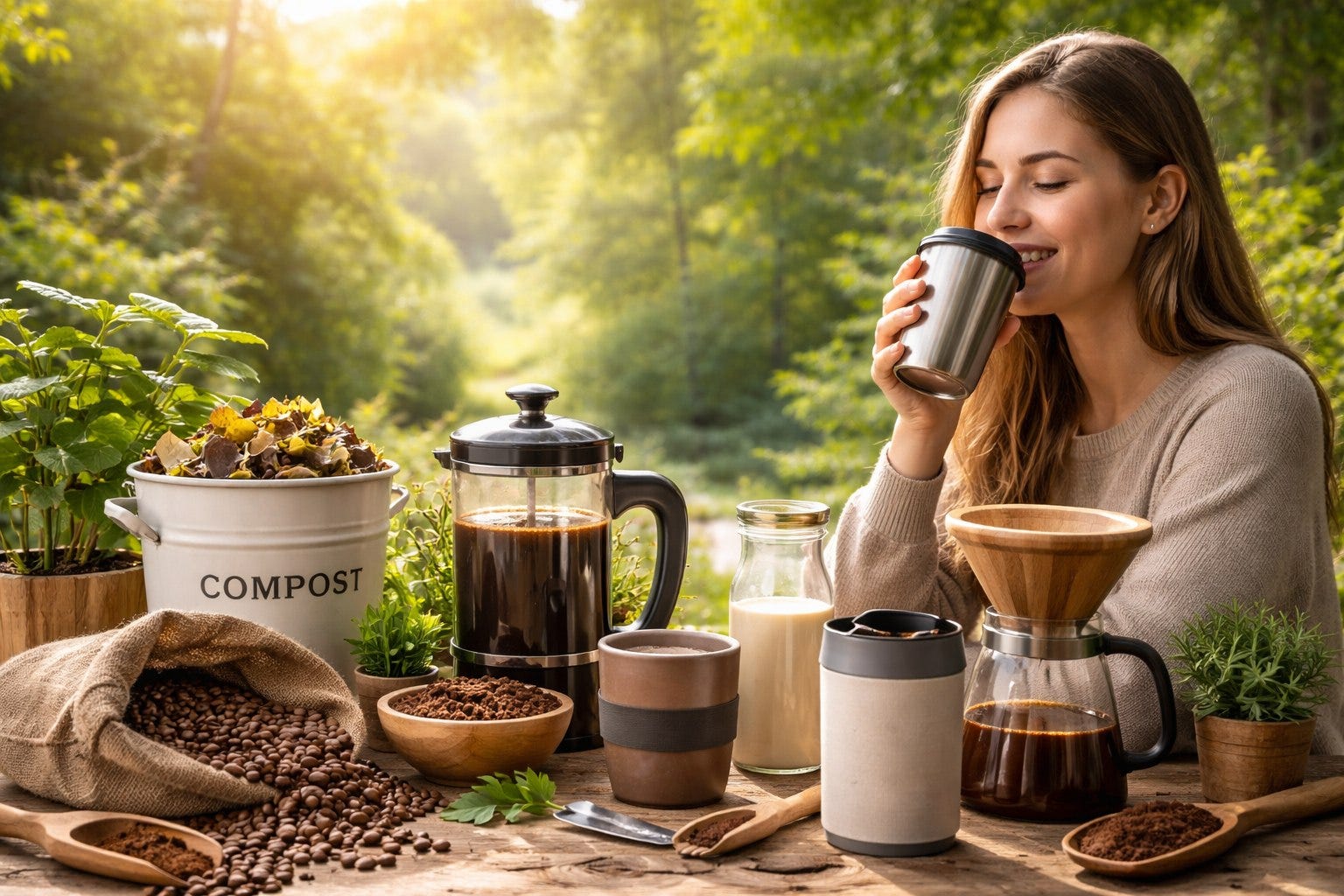
Every morning, millions of people cradle a steaming mug of coffee like it’s a sacred ritual ☕. That rich aroma, that first sip — pure magic. But here’s the catch: coffee’s journey from farm to cup leaves a surprisingly heavy footprint on our planet 🌍. The good news? You don’t have to choose between delicious coffee and environmental responsibility. In fact, with a few intentional swaps and mindful choices, your coffee habit can become part of the solution, not the problem.
This guide dives into ten practical, science-backed, and yes — totally lifestyle-approved — ways to make your coffee routine greener, smarter, and way more impactful. These aren’t feel-good platitudes — they’re concrete moves backed by sustainability science and current thinking. Ready to shake up your coffee game and give the planet a boost? Let’s get brewing.
1. Start with Sustainable Beans — It Matters More Than You Think 🌱
Not all coffee beans are created equal — some come at a real cost to forests, wildlife, and the people who grow them. Sustainable beans, on the other hand, are your first line of defense against environmental harm.
Look for beans that are:
Fair Trade – ensures farmers get a fair wage and work under humane conditions.
Rainforest Alliance – supports biodiversity and responsible farming practices.
Organic – cultivated without harmful synthetic pesticides or fertilizers.
Shade-grown – protects forest ecosystems and reduces the need for chemical inputs.
These certifications aren’t just stamps on a bag — they signal care for soil health, water quality, and community resilience.
2. Ditch Single-Use Cups — Reusable Is the New Black 🌎
Let’s be real: disposable coffee cups are a silent environmental disaster. Even paper cups often contain plastic linings that make them hard to recycle.
Instead:
Bring a durable travel mug you actually enjoy using.
Choose mugs made of stainless steel, glass, or sustainable plastics.
Brands like KeepCup have done life-cycle analysis showing reusable cups have a lower impact after repeated use.
Bonus: many coffee shops will give you a discount when you show up with your own cup. Cha-ching! 💸
3. Brew at Home — Fewer Trips, Less Waste
Coffee shops are fantastic — but every drive and disposable lid adds carbon and clutter to your world. Brewing at home:
✔ Cuts down commute emissions
✔ Lets you control waste
✔ Opens the door to zero-waste brewing methods
Try French Press, AeroPress, or pour-over — all of which use minimal waste and no disposable pods.
Pod machines? They are convenient — and convenient is often wasteful. Traditional pods are a nightmare for landfills.
4. Choose Better Brewing Gear — Reuse, Don’t Dispose 🛠️
If you must use pods, look for:
Reusable pods you fill with your own grounds
Compostable pods that genuinely break down
These options reduce plastic and aluminum waste — and still give you your coffee fix.
Or go fully manual with cloth or metal filters. They’re washable and built to last.
5. Compost Your Grounds — Your Garden Will Thank You 🌿
Did you know used coffee grounds are rich in nutrients? They’re a goldmine for compost heaps and soil enrichment — not landfill methane.
Ways to reuse them:
Add to your compost bin
Sprinkle in your garden soil
Use as natural pest deterrent
Turning waste into growth — now that’s poetic.
6. Be Mindful of Water and Energy Use 💧⚡
Coffee requires water and energy — and every drop counts.
Boil only what you need
Reuse rinse water to water plants
Choose energy-efficient brewers
Small habits create big collective impacts over time.
7. Rethink Milk & Add-Ins — Tiny Choices, Big Footprint 🥛
Your coffee’s companions matter too:
Plant milks (like oat and soy) often have smaller carbon footprints than dairy.
Choose organic or local dairy when possible
Swap processed sugar for fair-trade sweeteners
It’s not about giving up flavor — it’s about amplifying values.
8. Support Brands with Transparency 🧐
Coffee companies that share where, how, and by whom their beans are grown are rare gems. Look for brands that:
Detail farm origins
Disclose environmental practices
Use recyclables or compostable packaging
This level of honesty means they walk the sustainability talk. It’s like meeting a friend who actually returns your texts. 🙃
9. Educate & Engage Your Community ☕👥
Sustainability isn’t a solo sport. Share tips with friends, organize coffee swaps, or host a tasting party focused on sustainable brews. Create some buzz. Make it a movement.
People learn by doing — so why not make eco-friendly coffee the new fun ritual?
10. Embrace the Mindset — Sustainability Is a Journey 🚀
Let’s be clear: perfection isn’t the goal. Progress is. Every coffee swap, every reusable mug, every composted ground is a vote for a healthier planet.
Ask yourself:
🔹 What part of my coffee routine creates the most waste?
🔹 What’s one small change I can make this week?
🔹 Who can I inspire to join me?
You might just start a trend.
Final Sip ☕🌍
Coffee isn’t just a drink — it’s culture, comfort, and for many of us, a lifeline. What if it could also be a force for good? With intentional choices and a sprinkle of curiosity, your coffee habit can help heal the planet rather than harm it.
Ready to make your coffee routine more environmentally friendly? Start with one change — and feel the ripple.
What’s your first move going to be? 🤔