

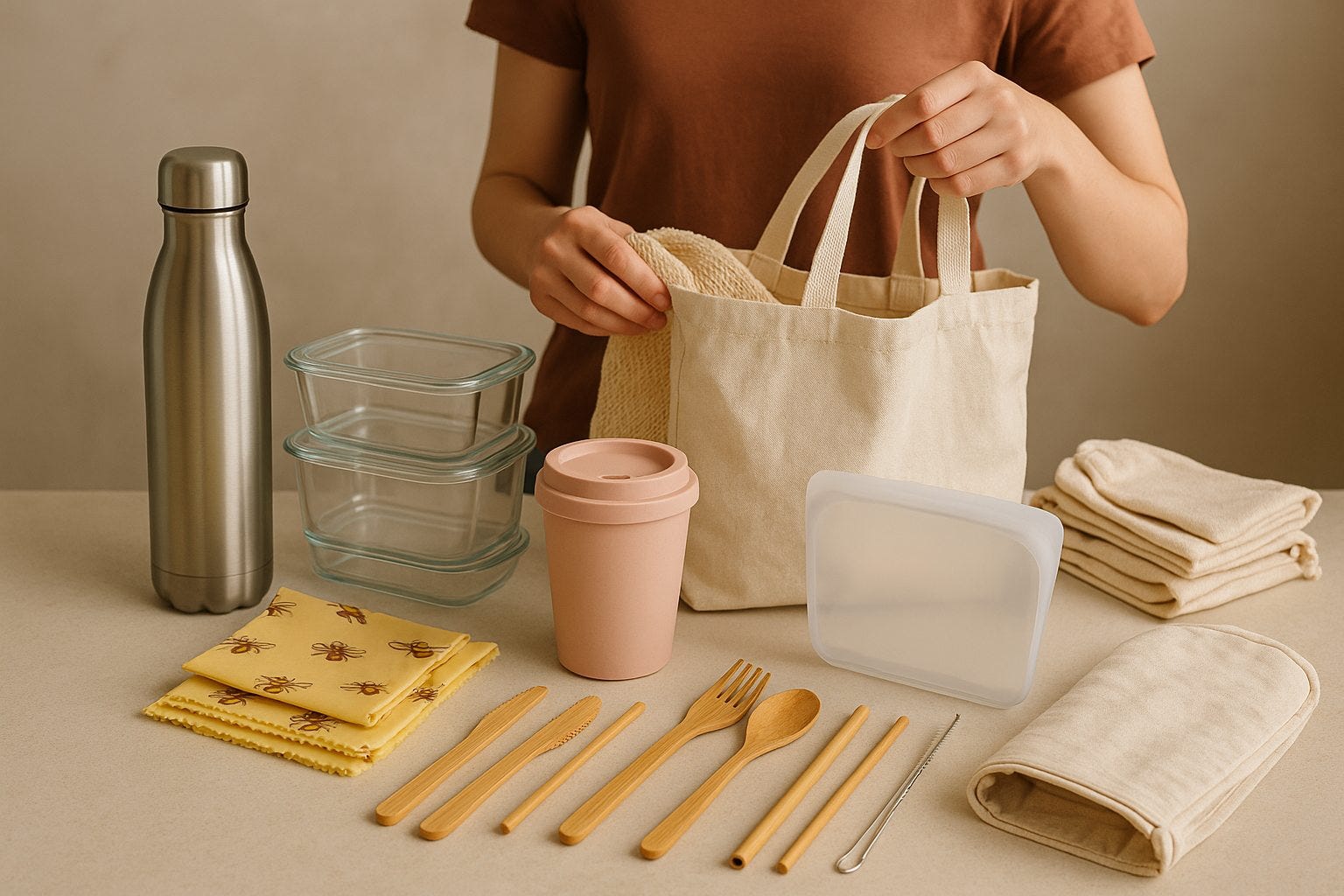
Plastic is everywhere — so normal it becomes invisible. But that invisibility comes at a cost. From grocery trips to kitchen routines, single-use and throw-away plastic sneaks into our lives dozens of times a week. The good news? You don’t need a green revolution or huge budget to turn the tide. With a handful of cheap, reusable alternatives — often under $20 — you can cut down drastically on plastic waste and start living smarter (and kinder to the planet), all by this weekend. Let’s dive into ten easy swaps you can start now.
Why replacing plastic matters (and why now 🛑)
Plastic convienience peaked in the 20th century — but so did plastic pollution. Single-use plastics (bags, bottles, wraps, straws, containers…) aren’t designed for decades of life; they’re manufactured to serve a few minutes, then quickly become waste.
Many of these plastics end up in landfills or — worse yet — oceans, where they slowly break down into microplastics. Over time, microplastics become part of soil, water, air — and even the food chain.
Fortunately, replacing everyday plastic items with affordable, reusable alternatives can sharply reduce your personal plastic footprint. The trick: choose durable materials — cloth, stainless steel, bamboo, silicone, glass — that last, repeat after repeat.
So — time to swap.
1. Disposable Shopping Bags → Canvas / Cloth Tote
Plastic grocery bags are one of the most common sources of everyday plastic that ends up in landfills.
Instead: carry a reusable cloth or canvas tote. A simple cloth bag often costs under $10 and lasts for years. It folds into your purse or glovebox. Suddenly, every shopping trip becomes a vote for less waste.
No more “Sure, just toss it — you can get another one for free.” Because you don’t.
2. Single-Use Water Bottles → Refillable Bottle
We buy water in plastic bottles by default — until we think twice. A refillable stainless steel or glass bottle costs less than many multi-packs of bottled water and lasts years.
With every refill, you skip a plastic bottle destined for landfill (or the sea). Simple. Effective. Smart.
3. Plastic Wrap / Ziploc Bags → Beeswax Wrap / Silicone Bags
Plastic wrap and zipper bags are kitchen workhorses… until you think about where they end up. According to recent guidance, reusable alternatives like beeswax wraps drastically cut your reliance on single-use plastic in the kitchen.
Beeswax wraps — made from cotton coated in beeswax, plant oils, and resin — cling to bowls, wrap sandwiches, and cover cut produce. With proper care, one wrap can last up to a year.
Reusable silicone storage bags (or glass containers) bring even more versatility. Wash, reuse, repeat.
4. Plastic Straws & Stirrers → Metal / Bamboo / Glass Straws
Straws, stirrers, and even cocktail picks are among the classic throwaway plastics we barely notice.
But switching to metal — or bamboo, for a more natural vibe — makes a surprising difference. They’re cheap, durable, easy to clean, and they help you skip thousands of plastic straws over time. Many reusable straw sets run under $10–$15.
And yes — you’ll look a bit cooler sipping iced tea from metal.
5. Disposable Cutlery → Wooden or Bamboo Utensils
Takeout cutlery — plastic forks, spoons, knives — is convenient. Too convenient. Because once you finish eating, those utensils are trash.
Carrying your own bamboo or wooden cutlery set solves that. Light, washable, and reuse-ready. Swap out disposable forks and spoons — and suddenly, your lunch break feels a lot less wasteful.
6. Single-Use Coffee Cups → Reusable Mug / Travel Cup
From quick coffee runs to daily coffee breaks — disposable cups add up. Reusable cups or mugs, often priced under $15-$20, handle everything from drip coffee to takeout lattes.
They’re good for you. Great for the planet. And often comfier to drink from.
7. Plastic Food Containers (Take-out Boxes, Clamshells) → Glass / Stainless Containers
All those plastic take-out boxes, food containers, and Styrofoam containers? They contribute heavily to plastic waste and microplastic exposure.
Glass or stainless steel containers — especially if leak-proof and reusable — are a far better long-term bet. They’re slightly more expensive up front, but they last. They don’t leach harmful chemicals. And they cut down plastic waste drastically.
8. Plastic Produce Bags → Mesh / Cotton Produce Bags
Even simple produce bags — the thin plastic ones you bag veggies in at the supermarket — add up fast, especially if you shop weekly.
Switch to reusable mesh or cotton produce bags. They’re washable, lightweight, and often cost just a few dollars apiece. Every fruit or veggie you carry without plastic is a small win for the environment.
9. Plastic Straws and Cup Lids → Collapsible / Reusable Lids & Straws
For to-go drinks — iced coffee, smoothies, sodas — the disposable plastic lid and straw are standard. But you don’t have to accept the default.
Compact silicone lids or reusable straws make a surprisingly big difference if adopted consistently. Less plastic in landfills — more durability in your daily routine.
10. Plastic Dry-Cleaning / Clothing Garment Bags → Reusable Cloth Garment Bags
Did you know your dry-cleaning often comes back in plastic garment bags? That’s single-use plastic creeping into your wardrobe.
A reusable garment bag made from cloth or durable fabric makes a neat swap. It stows well, protects your clothes, and keeps extra plastic out of circulation.
What Happens If You Swap Just Five This Week?
You skip dozens (maybe hundreds) of single-use plastic items.
You reduce demand for new plastic production — meaning fewer fossil-fuel inputs, less energy waste, lower environmental damage.
Over time, you save money: reusables pay for themselves.
You protect yourself (and community) from microplastics.
And you feel good — like you’re actually doing something.
Tips for Making Swaps Stick ✅
Start slow: pick one area — kitchen, shopping, meals out — and swap all the plastics there first.
Keep replacements visible: tote bag in your car, reusable bottle on your desk, cutlery kit in your bag.
Reuse finds you: once you see the alternatives work — and work well — you start noticing other plastic “extras” you take for granted.
Tell friends. Influence social norms. Because nothing spreads faster than peer pressure. 😉
Also read: 5 Daily Habits That Instantly Cut Your Plastic Use
Final Thought
Plastic isn’t evil. Convenience isn’t evil. But habitual convenience — without second thought — becomes laziness wrapped in fossil fuel. The cost? Long-lasting waste, pollution, and microplastics that don’t disappear.
By making small, low-cost swaps — many under $20 — you can start undoing that inertia. You don’t have to be perfect. You just have to begin.
Will you join me?